
Garage Door Repair & Inspection in Fountain Hills - Get Safe Today
Facing garage door issues in Fountain Hills? Book a detailed inspection and repair with us. Ensure safety with our licensed and insured services. Call now!
Is Your Garage Door Operation Unreliable or Unsafe?
Is your garage door failing to open on command, reversing unexpectedly, or making grinding noises during operation? You are likely facing a mechanical failure or safety hazard that requires professional attention to prevent property damage or injury. Contact us or inquire about our financing options to schedule your comprehensive diagnostic today.
Residents in Fountain Hills often ignore minor irregularities in their garage door operation until the system fails completely. A professional inspection identifies the root cause of the issue, whether it is a tension problem, electrical fault, or structural misalignment, before it becomes an emergency. Good Golly Garage Doors provides thorough assessments to ensure your system operates within manufacturer safety standards. All services are fully licensed, bonded, and insured, ensuring your total protection and satisfaction.
Comprehensive Diagnostics: What We Inspect Today
A garage door is the largest moving object in your home, composed of numerous components under high tension. A visual check is rarely enough to determine the health of the system. Our inspection service provides a granular analysis of every mechanical and electrical part to determine exactly why your door is malfunctioning or to certify its safety for continued use.
We assess the integrity of the counterbalance system. This includes a detailed examination of the torsion or extension springs. We measure the cycle life remaining in the springs and check for gaps, elongation, or rust that indicates imminent failure. Since the springs bear the weight of the door, their condition is paramount for safe operation.
The inspection covers the following critical hardware components:
- Cables and Drums: We check for fraying, kinking, or unraveling in the lift cables. Even minor fraying can lead to a snapped cable, causing the door to slam shut. We also verify that the drums are free of cracks and securely fastened to the torsion tube.
- Rollers and Hinges: We inspect the rollers for flat spots, worn bearings, or wobble. Nylon and steel rollers have different wear patterns, and we determine if they are gliding smoothly or dragging in the track. Hinges are checked for stress fractures, particularly in the numbered hinges that hold the rollers.
- Track Alignment: The vertical and horizontal tracks must be perfectly plumb and level. We measure the gap between the door and the jamb to ensure the door is not binding or rubbing, which puts unnecessary strain on the opener.
- Opener Gearing and Trolley: For the motor unit, we inspect the internal gears for stripped teeth (common in older systems) and check the trolley assembly for proper engagement with the chain, belt, or screw drive.
- Safety Sensors: We verify the alignment and wiring of the photo-eye sensors. These must reverse the door if the beam is broken. We also test the physical force settings to ensure the door reverses upon contact with an object.
The Inspection Workflow
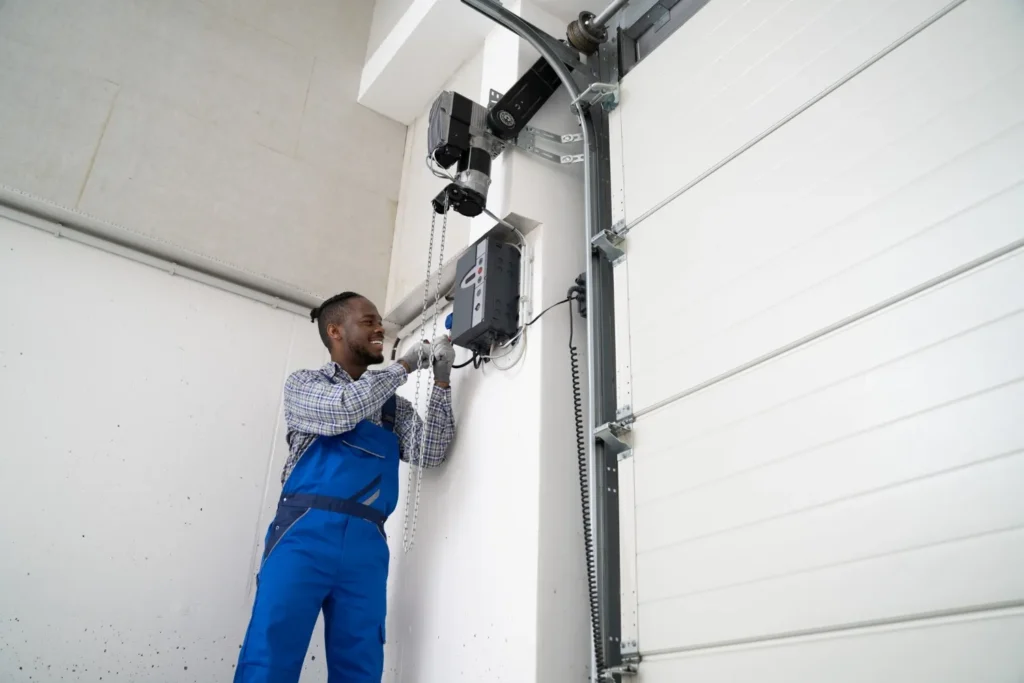
Understanding the condition of your garage door system requires a systematic approach. We do not guess; we test. The process begins with a static inspection and moves into dynamic testing to replicate the issues you are experiencing.
Initial Static Evaluation:
- The technician visually scans the door panels for cracks, dents, or separation that could affect structural integrity.
- We check the mounting hardware, ensuring the back-hangs securing the tracks to the ceiling are bolted into studs and not loose.
- All wiring from the opener to the wall button and sensors is checked for staples pinching the wire or exposed insulation.
Balance and Tension Test:
- The technician disconnects the opener to operate the door manually.
- We lift the door to the halfway point. A properly balanced door should hover in place, supported entirely by the springs.
- If the door slams down, the springs are weak or under-tensioned. If it shoots up, the tension is too high. This test isolates spring health from motor strength.
Dynamic Opener Testing:
- We reconnect the opener and run the door through multiple full cycles.
- The technician listens for specific acoustic cues: grinding indicates gear wear, squealing suggests dry rollers, and rattling often points to loose hardware.
- We test the limit switches to ensure the door opens fully without hitting the stop bolt and closes tightly without bowing the rail.
Lubrication and Adjustment:
- As part of the inspection, we identify friction points.
- Good Golly Garage Doors technicians note where lubrication is absent and where debris has accumulated in the tracks.
- We assess if minor adjustments to the limit screws or force knobs can resolve the issue or if part replacement is necessary.
Repair vs. Replace: Making an Informed Decision
Following the inspection, you will face a decision: repair the existing components or replace the system (or the entire door). This decision should be based on safety, cost-efficiency, and the age of the equipment. We provide the data you need to make this choice without speculation.
When Repair is the Logical Path:
- The 50% Rule: If the cost of the repair is less than 50% of the cost of a new system, and the current system is less than 10 years old, repair is usually the best option.
- Isolated Component Failure: If a single part, such as a capacitor, gear kit, or set of rollers, has failed but the rest of the system is healthy, replacement is unnecessary.
- Cosmetic Damage: If a single panel is dented but the door moves smoothly, we can often replace just the section rather than the whole door (depending on manufacturer availability).
When Replacement is Necessary:
- Safety Standard Obsolescence: If your garage door opener is older than 15 years, it likely lacks mandated safety reversal sensors. These systems should be replaced to comply with modern safety codes.
- Structural Rot or Rust: In wooden doors with rot or steel doors with extensive rust compromising the section joints, repairs are temporary patches. Replacement ensures structural stability.
- Recurring Breakdowns: If you are paying for repairs annually, a new system is more cost-effective over a three to five-year period.
- Catastrophic Spring/Cable Failure on Old Doors: If the door has fallen and torqued the track, bent the sections, and ruined the hardware, the cost to reconstruct the system often exceeds the price of a brand-new installation.
Why Professional Diagnostics Are Critical
Attempting to diagnose garage door issues without professional training is dangerous. The counterbalance system, specifically the torsion springs, operates under immense pressure. A standard residential spring holds enough potential energy to lift a 400-pound door. If a homeowner attempts to “check” these springs by loosening bolts on the bearing plate or winding cone, serious injury can occur.
Furthermore, professional diagnostics utilize tools that are not typically found in a standard toolbox. We use tension gauges, electrical multimeters for logic board testing, and levelers to detect misalignments invisible to the naked eye. An untrained eye might see a loose cable, but a professional sees a drum that has shifted on the torsion tube.
We move beyond symptom management. If a cable snaps, simply replacing the cable ignores the reason it snapped, such as a seized bearing or a rubbing track. Our inspection identifies the upstream cause to prevent downstream failures.
Secure Your Home Access Today
A malfunctioning garage door disrupts your daily routine and compromises the security of your home. Ignoring the signs of wear, whether it is a slow response time, a noisy operation, or a visible gap in the seal, only leads to more expensive repairs later. You need a definitive answer on the state of your system and a clear path to restoration.
We provide the technical expertise to diagnose the issue accurately and the inventory to resolve it quickly. Do not wait for the door to become stuck in the closed position. Call us to schedule your full-point inspection and restore safe operation to your home.
Proudly Serving Phoenix, AZ, and Surrounding Areas
We provide the best garage door services you can find across Phoenix, AZ. Whether it’s the impact of Phoenix’s heat and sudden storms on garage door components, we ensure our solutions are tailored to your needs. Wherever you are, Good Golly Garage Doors is ready to deliver.
Call (602) 399-7054 All Service Areas