

Garage Door Company in Scottsdale, AZ
Experiencing trouble with your garage door in Scottsdale? Contact us for fast, reliable repair and installation services. Ensure your home's security today!
Is Your Garage Door Stuck or Refusing to Open?
A malfunctioning overhead door creates a security risk and disrupts your entire daily routine, leaving your vehicle trapped or your home exposed. If you are hearing grinding noises, seeing the door come off its tracks, or experiencing a complete failure of the opener in Scottsdale, you need professional intervention right now. Contact us to schedule a diagnostic visit or financing options for a new system.
When a 300-pound moving wall fails, you need a solution that is safe and reliable. All services are fully licensed for your peace of mind. Good Golly Garage Doors is prepared to handle the heavy lifting so you do not have to risk injury attempting a DIY fix.
Repair Services Available
When your garage door fails, waiting days for a technician is rarely an option. A broken door compromises the thermal efficiency of your home and leaves your property vulnerable to theft. Comprehensive repair services are designed to address the root cause of the failure on the first visit.
The scope of repair services covers every mechanical and electrical component of the system. This includes:
- Torsion and Extension Spring Replacement: Springs are under immense tension and are the most common failure point. When they snap, the door becomes too heavy for the opener to lift.
- Cable Repair: Frayed or snapped cables often cause the door to tilt or become jammed in the tracks.
- Roller and Hinge Replacement: Worn rollers cause excessive noise and vibration, eventually leading to the door popping out of the track.
- Opener Troubleshooting: Diagnosis of logic board failures, gear stripping, or capacitor issues in your motor system.
- Track Realignment: If the tracks are bent or misaligned, the door cannot travel smoothly, posing a safety hazard.
Technicians prioritize safety and structural integrity. Upon arrival, a full 25-point safety inspection is conducted to identify not just the obvious break, but any underlying wear and tear that could cause future failures. This proactive approach ensures that once the repair is complete, the system operates smoothly for years to come.
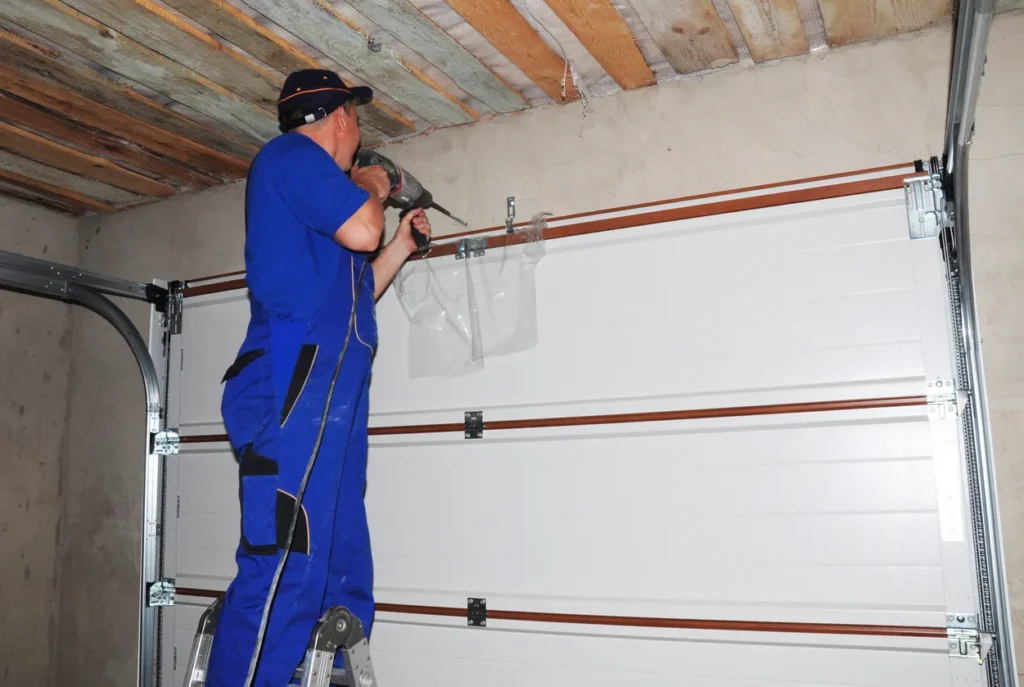
The Installation and Replacement Process
There comes a point where a simple repair is no longer cost-effective or safe. A new installation is a significant investment in your home’s curb appeal and functionality.
The process follows a strict protocol to ensure safety and correct operation:
- Site Assessment and Measurement: First, technicians measure the rough opening, side room, and headroom (backroom) to ensure the selected door fits perfectly. This step also involves checking for obstructions like light fixtures or storage racks.
- Removal and Disposal: The crew carefully disassembles and removes the old door and opener. This includes the safe release of tension from the old springs and environmentally responsible disposal of the old materials.
- Track and Hardware Installation: New heavy-duty tracks are bolted into the framing. The hardware, including the torsion tube and drums, is installed level and plumb to prevent premature wear.
- Panel Assembly: Sections are stacked and hinged together. Struts are added for reinforcement against wind and gravity.
- Spring Tensioning: This is the most critical step. The springs are wound to the exact calculation required to counterbalance the specific weight of your new door.
- Opener Integration: Finally, the motor is connected, limits are set, and safety sensors are aligned. The system is tested multiple times to ensure the auto-reverse safety feature works correctly.
Deciding Between Repair and Replacement
Homeowners often struggle to determine if they should patch up an existing system or invest in a new one. Making the right decision depends on the age of the system, the extent of the damage, and long-term financial goals.
When to Repair:
- Single Component Failure: If the door is relatively new (under 10 years old) and a single part like a spring or a sensor fails, a repair is the most logical choice.
- Cosmetic Damage: If a single panel is dented but the structural integrity is sound, a panel swap might be possible without replacing the whole system.
- Sudden Impact: If the door was working perfectly before a minor accident (like backing into it lightly), realigning the track or replacing a hinge often solves the issue.
When to Replace:
- Severe Structural Damage: If the door has major rust, rotting wood, or multiple bent sections, repair is often a temporary bandage.
- Safety Standards: Doors older than 10 to 15 years may lack modern safety features like photo-eye sensors. If your system is outdated, replacement is a safety necessity.
- Recurring Breakdowns: If you are paying for repairs every six months, the cumulative cost will exceed the price of a new one.
Considerations for Scottsdale Homeowners
Operating a garage door in the Sonoran Desert presents unique challenges that generic advice often misses. The extreme environmental factors here dictate specific maintenance schedules and material choices.
Dust and Debris
While rainfall is low, dust is prevalent. Airborne dust settles into the lubricated tracks and forms a gritty paste that acts like sandpaper on your rollers. Regular cleaning of the tracks (without lubricating them; lubricant goes on the rollers and hinges, not the track itself) is essential.
HOA and Permitting
Many neighborhoods in the area are governed by Homeowners Associations (HOAs) with strict architectural guidelines. Changing the exterior appearance of your home, including the garage door style or color, often requires prior approval. It is vital to check these regulations before ordering a new door to avoid fines or forced removal. Additionally, ensuring your installation meets local building codes regarding wind load rating is non-negotiable for safety.
Technical Specifications and Hardware Upgrades
Standard builder-grade hardware often wears out quickly under daily use. Upgrading specific components during a repair or installation can significantly extend the lifespan of the system:
- High-Cycle Springs: Standard springs are rated for 10,000 cycles (open/close). For households that use the garage as the main entry, upgrading to 20,000 or 30,000-cycle springs doubles or triples the life expectancy of the counterbalance system.
- Nylon Rollers: Steel rollers are noisy and require frequent lubrication. Nylon rollers with ball bearings are quieter, self-lubricating, and resistant to flat spots.
- Belt Drive Openers: Chain drives are durable but loud. Belt drive openers use a steel-reinforced rubber belt, making them nearly silent, perfect for homes where a bedroom is located directly above the garage.
- Smart Connectivity: Modern openers now come with Wi-Fi integration. This allows you to monitor and control your door from a smartphone, receive alerts if the door is left open, and even grant temporary access to delivery drivers or guests.
- Struts and Bracing: Additional steel struts can be installed on the interior of the door panels to stiffen the door, preventing sagging when in the open position and providing extra resistance against strong winds during monsoon season.
Why Professional Service is Mandatory
Garage door repair is not a suitable candidate for “do it yourself” attempts. The garage door is the largest moving object in your home, and the spring system holds enough potential energy to lift hundreds of pounds. When these springs are tampered with by untrained individuals, the stored energy can release instantly, causing severe injury or property damage.
Good Golly Garage Doors utilizes specialized tools, such as winding bars and tension gauges, to handle these forces safely. Professional technicians understand the complex geometry of the track radius, the lift dynamics of the cable drums, and the torque settings required for the opener force adjustments.
Beyond safety, professional service ensures efficiency. What might take a homeowner an entire weekend of frustration to diagnose can often be identified and repaired by a specialist in under two hours. This efficiency extends to the longevity of the repair; parts installed correctly do not suffer from premature wear caused by misalignment or improper tensioning.
By hiring a reputable service provider, you protect your investment and ensure that if a defect arises later, you are covered.
Establishing Routine Maintenance Protocols
Once your door is repaired or a new one is installed, maintaining its condition is key to avoiding future calls. While major adjustments should be left to pros, homeowners can perform visual and auditory checks:
- Listen: A noisy door is a crying door. Scrapes, squeals, or grinding sounds indicate friction that needs attention.
- Look: Check the cables for fraying. Inspect the rollers for wear. Look at the bottom seal to ensure it hasn’t become brittle in the sun.
- Test Balance: Disconnect the opener (with the door closed) and lift the door manually. It should lift smoothly and stay open around three to four feet off the ground. If it slams down or shoots up, the spring tension is off, requiring a service call.
- Test Safety Reversal: Place a 2×4 board flat on the ground where the door closes. When the door hits the wood, it should reverse. If it doesn’t, the force settings are dangerous.
Ignoring these small signs leads to catastrophic failure. A frayed cable eventually snaps; a noisy roller eventually seizes. Proactive care is far cheaper than replacement.
Secure Your Home Access Today
A functional garage door is essential for the security of your home and the convenience of your life. Whether you are dealing with a broken spring, a malfunctioning opener, or a door that simply has seen better days, the solution is a phone call away.
Secure your property with reliable, expert service that prioritizes your safety and satisfaction. Contact Good Golly Garage Doors today to schedule your repair or installation consultation.
Proudly Serving Phoenix, AZ, and Surrounding Areas
We provide the best garage door services you can find across Phoenix, AZ. Whether it’s the impact of Phoenix’s heat and sudden storms on garage door components, we ensure our solutions are tailored to your needs. Wherever you are, Good Golly Garage Doors is ready to deliver.
Call (602) 399-7054 All Service Areas