

Garage Door Cable Repair in Sun City West, AZ
Struggling with a broken garage door cable in Sun City West? Contact Good Golly Garage Doors for rapid, reliable repair and immediate response. Ensure your garage door's safety and functionality today.
Troubled by a Broken Garage Door Cable?
A frayed or broken garage door cable can prevent your door from operating safely and smoothly. Good Golly Garage Doors offers professional garage door cable repair in Sun City West, AZ, quickly identifying and fixing cable issues to restore reliable performance. Our experienced technicians handle repairs with precision and care, ensuring your garage door operates safely, quietly, and efficiently. Call us today to schedule your cable repair and keep your garage door running like new.
Expert Response for Critical Lift Failures
When a cable snaps or comes loose, the heavy lifting mechanism of your garage door system fails. This is not merely an inconvenience; it is a mechanical hazard. The cables act as the muscles of the door system, transferring the energy stored in the springs to lift the heavy door panels. When this connection is severed, the full weight of the door can crash down, or the remaining cable may struggle to support the load, causing the door to jam in the tracks.
Upon arrival, technicians assess the condition of the entire lift assembly. This includes examining the remaining cable, the drums, the bottom fixtures, and the springs. The goal is to identify why the failure occurred. While wear and tear are common, underlying issues such as rusted bearings, misaligned tracks, or improper spring tension can accelerate cable deterioration. Residents in Sun City West often deal with specific wear patterns, and our truck stock reflects the need for heavy-duty, aircraft-grade replacement cables that can withstand high-tension cycles.
We provide a comprehensive repair scope that goes beyond a simple swap. If a cable has come off the drum but remains intact, we determine if it can be safely reset or if stretching has compromised its structural integrity. If a cable is frayed or snapped, replacement is the only safe option. We utilize cables that meet or exceed original equipment manufacturer (OEM) specifications, ensuring that the new lift mechanism is rated for the specific weight and cycle requirements of your garage door.
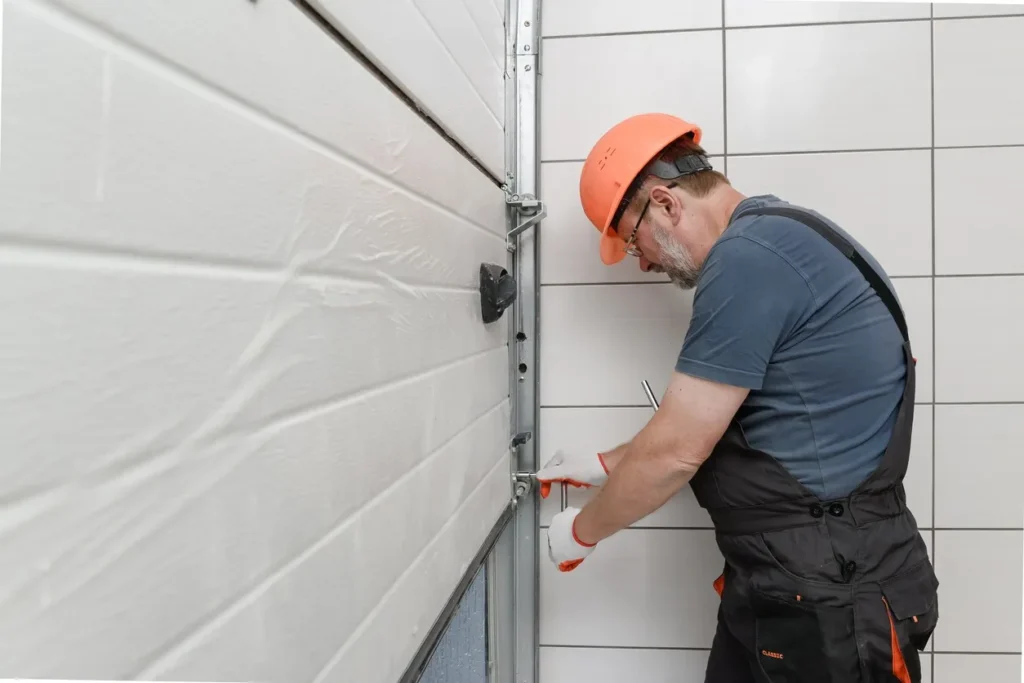
The Cable Restoration Process
Restoring a garage door cable requires precision and a strict adherence to safety protocols. This is not a task that involves simply stringing a new wire; it involves manipulating high-tension components that are under immense pressure. Our technicians follow a systematic workflow to ensure the repair is safe, effective, and long-lasting.
- Securing the Door: The first step involves completely immobilizing the garage door. If the door is stuck in a half-open position or hanging unevenly (cocked), we use locking pliers and supports to prevent the door from falling further. This protects both the technician and the property.
- Releasing Spring Tension: Cables cannot be replaced while the torsion or extension springs are under tension. We carefully unwind the springs using winding bars to release the stored energy. This renders the lift mechanism safe to work on and allows for the removal of the damaged cable from the bottom bracket and the cable drum.
- Component Inspection: Before installing new cables, we inspect the cable drums for cracks or sharp edges that could slice through new wire. We also check the bottom brackets, the anchor point for the cables, to ensure they are not rusted or loose. If the bottom fixtures are compromised, they must be replaced to ensure the new cable holds securely.
- Installation of High-Grade Cables: We install the new cables, threading them correctly up the height of the door and securing them to the drums. We ensure the cable is seated properly in the grooves of the drum to prevent future slipping. We typically replace cables in pairs. Even if only one has snapped, the other is likely nearing the end of its lifespan, and paired replacement ensures equal length and tension on both sides of the door.
- Re-tensioning and Balancing: Once the cables are secure, the springs are re-wound to the precise tension required to lift the door’s specific weight. This is a critical step; too much tension prevents the door from closing, while too little makes it too heavy to lift. We verify the door is balanced, meaning it can sit halfway open without drifting up or down.
- Final Safety Check and Lubrication: The final phase involves lubricating the cables and moving parts to reduce friction. We run the door through several cycles to ensure smooth operation and verify that the safety reverse mechanism is functioning correctly.
Identifying When Replacement is Necessary
Homeowners often ask if a cable can be repaired or spliced. In the garage door industry, splicing a lift cable is unsafe and effectively forbidden. The structural integrity of a spliced wire cannot handle the hundreds of pounds of force exerted during a lift cycle. Therefore, the decision usually lies between resetting an existing cable or replacing it entirely.
You likely need a complete cable replacement if:
- Visible Fraying: If you see individual strands of wire poking out or unraveling from the main cable twist, the cable has lost significant strength. A frayed cable is a ticking time bomb that will eventually snap under load.
- Corrosion and Rust: In older doors, moisture can lead to deep rust within the cable bundle. If the cable appears orange or brittle, the metal has weakened. Rust increases friction and decreases flexibility, causing the cable to snap unexpectedly.
- Elongation or Stretching: Over time, cables can stretch. If one cable is significantly longer than the other, the door will hang unevenly. While minor adjustments can be made at the drum, excessive stretching requires replacement to restore proper door balance.
- Kinks or Bends: If a cable has come off the drum and was subsequently run through the mechanism, it may have developed a sharp kink. Kinks create weak points in the steel wire. Even if the cable looks intact, a kink permanently compromises its load-bearing capacity.
Good Golly Garage Doors technicians are trained to identify these failure points instantly. We prioritize replacement over temporary fixes because a failed cable puts the entire door system, and anyone standing near it.
The Risks of DIY Cable Repair
Garage door cable repair is widely considered one of the most dangerous home maintenance tasks. It is not a candidate for DIY attempts. The cables are attached to the bottom brackets, which are under extreme tension from the springs. Removing the bottom bracket without properly unloading the spring tension can cause the bracket to shoot out with lethal force, or cause the door to free-fall.
Professional intervention ensures that the kinetic energy stored in the door system is managed safely. Our technicians possess the specialized tools, such as winding bars and vice grips, required to control the door’s weight and spring torque. We also understand the specific pairing requirements between cable thickness and drum types. Installing the wrong gauge of cable on a specific drum can cause the cable to jump the grooves, leading to immediate failure.
By choosing professional service, you also ensure that the root cause of the cable failure is addressed. Often, a snapped cable is a symptom of a seized bearing or a bad spring. Fixing the cable without addressing the underlying friction will simply lead to another snapped cable in the near future. We provide a holistic view of the system’s health, ensuring your repair investment lasts.
Technical Specifications and Compatibility
Garage door cables are not “one size fits all.” Different door weights and lift types require specific cable configurations. Standard residential doors typically use 3/32″ or 1/8″ galvanized steel aircraft cable. Heavier custom wood doors or carriage house doors may require thicker 5/32″ or 3/16″ cables.
The length of the cable is equally critical. For standard torsion spring systems, the cable length is determined by the height of the door plus the distance required to wrap around the drum. Installing a cable that is too short prevents the door from closing fully, while a cable that is too long causes slack on the drum when the door is open, leading to tangles.
We carry a wide variety of cable lengths and thicknesses to suit standard 7-foot doors, 8-foot doors, and high-lift conversions often found in modified garages. Our inventory includes:
- 7×7 and 7×19 Strand Construction: This refers to the number of wires in each bundle. Higher strand counts offer greater flexibility and fatigue resistance, which is beneficial for doors that are cycled frequently.
- Stainless Steel Options: For homes where corrosion is a specific concern, we offer stainless steel upgrades that resist rust better than standard galvanized options.
- Stop Cleats and Loops: We ensure the termination points of the cables match your specific drum and bottom bracket hardware. Using the wrong end fitting can result in the cable slipping out of its anchor point under load.
Maintaining Your New Cables
Once your cables are repaired, maintaining them is straightforward but necessary. Visual inspections should be performed every few months. Look for any signs of fraying or rust. Listen for scraping sounds during operation, which could indicate the cable is rubbing against the track or the door frame.
Lubrication is key. Using a garage door-specific spray lube (not heavy grease) on the cables helps them slide smoothly over the drums and prevents rust. Do not use WD-40, as it acts as a solvent and can strip away existing lubrication, eventually leading to dryness and corrosion.
Balance tests are also recommended. Disconnect the opener (with the door closed) and lift the door manually. It should move smoothly and stay put when lifted halfway. If the door feels heavy or slams down, the spring tension may need adjustment, which relieves unnecessary strain on your cables. If you notice any issues during these checks, call for professional adjustment rather than attempting to tighten components yourself.
Secure Your Garage Door Today
A broken cable compromises the security and safety of your home. It renders the automatic opener useless and leaves the door in a precarious state. Immediate professional repair restores the balance of your door, protects the opener from burning out, and ensures the safety of your family. Good Golly Garage Doors delivers the expertise and heavy-duty components necessary to fix the problem correctly the first time. We handle the tension so you don’t have to. Contact our team now to schedule your garage door cable repair and restore safe operation to your home.
Proudly Serving Phoenix, AZ, and Surrounding Areas
We provide the best garage door services you can find across Phoenix, AZ. Whether it’s the impact of Phoenix’s heat and sudden storms on garage door components, we ensure our solutions are tailored to your needs. Wherever you are, Good Golly Garage Doors is ready to deliver.
Call (602) 399-7054 All Service Areas