Garage Door Cable Repair in Spanish Oaks, TX
Stuck garage door due to a snapped cable in Spanish Oaks? Contact us for rapid, reliable cable repair services and ensure your garage's security today.
Garage Door Cable Failure Stops You in Your Tracks
Encountering a snapped or frayed cable turns your heavy garage door into an immovable wall, leaving your car trapped inside or your home exposed to the elements. If you are in Spanish Oaks and dealing with a door that is crooked, jammed, or completely stuck due to cable failure, schedule emergency repair immediately.
Our skilled technicians provide rapid, reliable repairs to restore your garage’s functionality swiftly.
- Expect same-day repair services to minimize your inconvenience.
- Enjoy peace of mind with each repair backed by a robust warranty.
- Get transparent, upfront pricing with no hidden fees.
Licensed and insured for your protection, ensuring compliance with local regulations.
Immediate Resolution for Broken and Frayed Cables
When a cable snaps, the counter-balance system of your garage door fails. The immense weight of the door is no longer supported by the torsion or extension springs, rendering the door incredibly heavy and dangerous to move manually. We provide immediate onsite assessments to determine whether the failure is isolated to the cable or if it has caused secondary damage to the tracks, rollers, or bottom brackets.
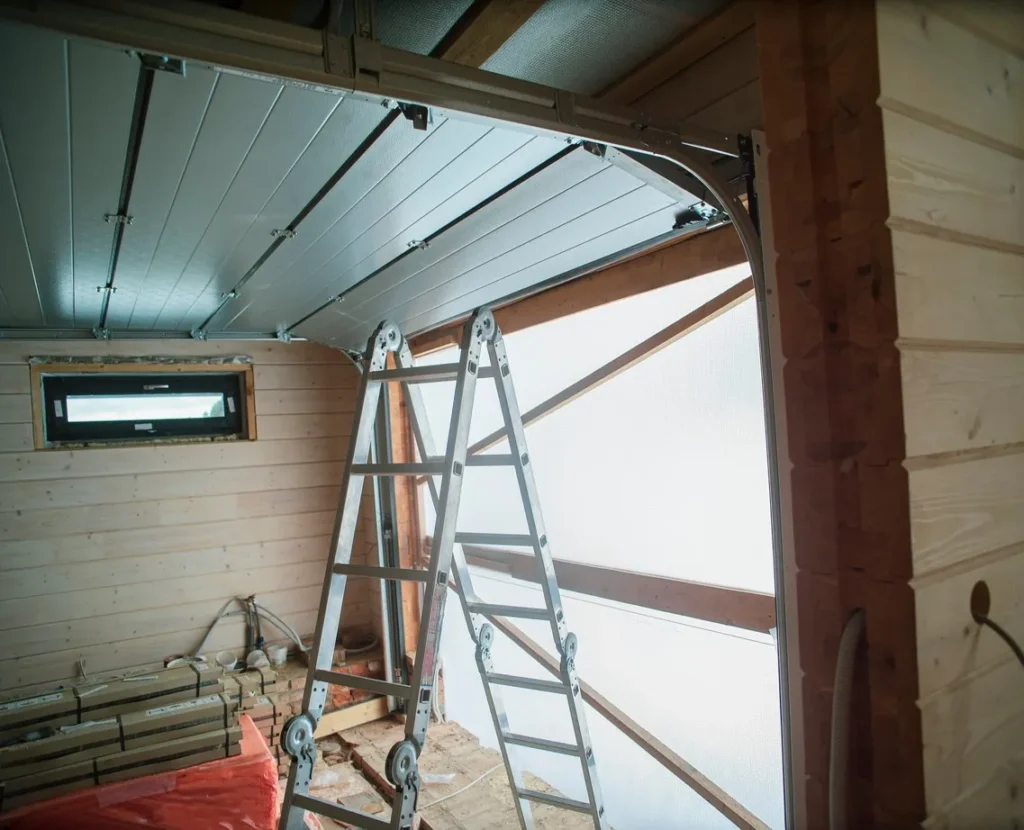
Upon arrival, the technician inspects the entire lift system. Cables often fail due to rust, fraying, or improper tension. In Spanish Oaks, where luxury homes often feature custom, heavy wood or overlay doors, the strain on these cables is significantly higher than on standard aluminum doors. We carry high-cycle, heavy-gauge cables in our service trucks to accommodate these specific load requirements immediately. You receive a clear explanation of the failure and a firm price for the repair before any tools are lifted.
The Professional Cable Replacement Process
Replacing a garage door cable is not as simple as swapping a broken string. It involves manipulating high-tension springs that store enough energy to cause severe injury. Our process prioritizes safety and structural integrity to ensure the door opens smoothly and stays level.
- Securing the Door: The technician first immobilizes the door in the down position. If the door is stuck halfway, we carefully lower it using clamping methods to prevent it from crashing down when tension is released. This is the most critical step for safety.
- Releasing Spring Tension: Before the old cable can be removed, the tension on the torsion springs must be unwound. This requires specific winding bars and professional experience. Attempting to remove a cable without releasing this tension is the leading cause of garage door repair injuries.
- Removing Damaged Hardware: We remove the frayed or snapped cable from the bottom bracket and the cable drum. If the cable failure caused the cable to wrap around the torsion bar or jam the drum, we carefully untangle and clear the obstruction.
- Installing High-Cycle Cables: We thread the new cables through the drum and attach them to the bottom bracket. We always replace both cables, even if only one is broken. Cables fatigue at the same rate; if one has snapped, the other is likely days away from failure. Replacing both ensures the door remains balanced.
- Resetting Tension and Balancing: Once the new cables are seated in the drum grooves, the springs are rewound to the specific manufacturer-recommended torque settings. We check the balance by lifting the door halfway; it should hover in place without falling or shooting up.
- Final Safety Inspection: We cycle the door multiple times to ensure the cables spool correctly on the drums. We also check the reverse safety mechanism and limit settings to ensure the opener stops if an object is in the path.
Replacing vs. Repairing: Making the Right Decision
Homeowners often ask if a cable can be spliced or clamped back together. The answer is a definitive no. Garage door cables are under immense tension and support hundreds of pounds. Any splice creates a weak point that will inevitably fail, likely causing the door to slam shut.
Signs You Need Immediate Replacement:
- Visible Separation: If the cable has snapped completely, the door will likely look crooked or hang unevenly. Do not attempt to operate the opener.
- Fraying Strands: If you see thin steel wires sticking out of the cable bundle (often looking like a wire brush), the structural integrity is compromised. A frayed cable can snap at any moment.
- Loose or Sagging Cables: When the door is closed, the cables should be taut. If they are sagging, they may slip off the drum the next time you open the door.
- Corrosion and Rust: In humid environments, oxidation eats away at the steel strands inside the cable. If the cable looks orange or brittle, it needs to be swapped out.
There are rare instances where a cable has simply slipped off the drum due to an obstruction rather than breakage. In this case, if the cable is in pristine condition, we can reset the drum and put the cable back on. However, Good Golly Garage Doors recommends replacement in most scenarios because the stress of slipping off the drum often kinks or deform the metal, making it prone to future failures.
Local Factors Affecting Garage Door Hardware
Operating a garage door in Spanish Oaks presents specific environmental challenges that accelerate wear and tear on metal components. While the winters are generally mild, the temperature fluctuations between Central Texas summer highs and winter lows cause metal expansion and contraction. This thermal movement can loosen set screws on cable drums, leading to slipped cables.
The topography and soil conditions in the area can also lead to minor foundation shifting. Even a fraction of an inch of shift in the garage frame can throw the door tracks out of alignment. When tracks are misaligned, the cables rub against the frame or the vertical track, causing friction that shreds the cable strands over time. Our technicians check for these alignment issues during the repair to prevent the new cables from wearing out prematurely.
Additionally, local building codes and HOA regulations in this area often mandate specific aesthetic standards which result in heavier, carriage-house style doors. These heavier doors require thicker, galvanized aircraft-quality cables. Standard cables found at big-box hardware stores are often insufficient for the weight of these custom doors. We ensure that the tensile strength of the replacement cables matches or exceeds the weight of your specific door panels.
Why Professional Installation is Critical
The dangers of DIY garage door cable repair cannot be overstated. The system relies on the interplay between the cables, the drums, and the springs. The cables act as the connection point for the energy stored in the springs to lift the door. If a homeowner attempts to remove a bottom bracket while the cable is under tension, the bracket can become a projectile.
Furthermore, improper installation leads to “cabled throw.” This happens when the wrong length of cable is used, or the drums are not wound equally. If one cable is tighter than the other, the door will raise unevenly. This racks the door panels, bends the tracks, and burns out the garage door opener motor. A professional repair ensures that the lift is perfectly vertical and the weight is distributed evenly across the system.
We utilize distinct winding bars and professional-grade tensioning tools to ensure the repair is safe. We also inspect the bearings and sheaves. Worn bearings can cause the shaft to wobble, which in turn causes the cables to spool unevenly. By addressing the entire system, we prevent the “fix one thing, break another” cycle that often happens with amateur repairs.
Ensuring Long-Term Performance
Once your cables are replaced, maintenance is key to extending their lifespan. We recommend a semi-annual visual inspection. Look for signs of rust near the bottom loops where moisture accumulates. Lubrication is also vital; however, grease should never be applied to the cable drum itself, as this can cause the cable to slip. Instead, a light coating of garage door lubricant on the cable itself can prevent rust and reduce friction between the strands.
We also verify that the bottom fixtures are not corroded. In many Spanish Oaks homes, salt from water softeners or pool chemicals stored in the garage can accelerate corrosion on the bottom brackets. If the bracket rusts out, the cable loop has nothing to hold onto. We use galvanized or powder-coated brackets to resist this chemical corrosion.
Assessing Secondary Damage
When a cable breaks, the sudden release of tension often shocks the rest of the system. It is common to find bent rollers or a twisted torsion tube following a cable failure. Our service includes a comprehensive evaluation of these components.
- Roller Inspection: If the door jammed when the cable snapped, the rollers might have been forced out of the track or bent. We check for smooth rotation and proper stem alignment.
- Track Alignment: A crooked door puts immense pressure on the vertical tracks. We ensure the gap between the track and the door is uniform from top to bottom.
- Opener Gear / Sprocket: If the opener tried to lift the door with a broken cable, the internal plastic gears may have stripped. We test the opener’s drive mechanism to ensure it wasn’t damaged during the failure.
High-Performance Parts for Heavy Usage
Not all cables are created equal. We utilize 7×19 strand aircraft cable for most residential repairs, which offers superior flexibility and strength compared to the coarser 7×7 strand cable often used in builder-grade installations. The 7×19 construction allows the cable to bend around the drum more smoothly, reducing fatigue and preventing the strands from snapping individually over time.
For the oversized doors common in the region, we upgrade to a thicker diameter cable. While standard doors use 1/8 inch cable, heavier custom doors require 5/32 inch or even 3/16 inch cable. Using the correct diameter is non-negotiable for safe operation. We also inspect the cable drums to ensure they are the correct size for the height of the door. A drum designed for a 7-foot door will not work correctly on an 8-foot door, leading to cable slack at the top of the cycle.
Restoring Safety and Security
A garage door with a broken cable is a breach of your home’s security. It cannot be locked effectively, and it cannot be closed completely if it is jammed in the tracks. This leaves your garage accessible to intruders and pests. Our rapid response aims to secure your home the same day you call. We do not leave the job site until the door closes firmly, locks securely, and reverses correctly upon encountering an obstacle.
The goal of every service call is to return your garage door to a “better than new” operating condition. By upgrading the quality of the cables and fine-tuning the balance of the door, we ensure that the system runs quieter and smoother than it did before the failure.
Good Golly Garage Doors is committed to operational excellence. We understand that you need to get to work, get your kids to school, and go about your life without worrying about a heavy mechanical failure in your garage. Our technicians are trained to handle the specific technical requirements of modern garage door systems, ensuring that your repair is a permanent solution, not a temporary patch.
Don’t let a snapped cable disrupt your week or compromise your safety. Professional intervention is the only way to safely restore the balance and movement of your garage door system. Contact Us Today
Critical Cable Replacements Completed to Mechanical Standard
Resolve lift instability with expert garage door cable repair in Spanish Oaks, TX by Good Golly Garage Doors. We replace worn or failed cables with industrial-grade assemblies engineered for weight-specific performance. Our repair process addresses synchronization, track retention, and full door clearance to eliminate irregular movement and reduce hardware degradation.
Reinforced Cable Systems Installed for Controlled Door Motion
Proudly Serving Austin, TX, and Surrounding Areas
From the neighborhoods of Austin to Round Rock and Buda, we provide the best garage door services you can find across the area. Whether it’s the impact of Texas heat and sudden storms on garage door components, we ensure our solutions are tailored to your needs. Wherever you are, Good Golly Garage Doors is ready to deliver.
View All Cities
 All Service Areas