

Why Your Garage Door Won’t Budge in Running Springs: A Comprehensive Fix-It Guide
Expert Garage Door Services Powered by Good Golly Garage Doors
When Your Garage Door Refuses to Budge: Understanding the Problem
Why Won’t My Garage Door Open in Running Springs, CA? Common causes range from simple power supply issues and dead remote batteries to more serious mechanical failures like broken torsion springs. Other culprits include a disconnected emergency release cord, blocked safety sensors, track obstructions, or stripped opener gears. In Running Springs’ colder climate, freezing temperatures can also cause the door to stick to the ground.
Quick Diagnostic Checklist:
- Check Power: Is the opener plugged in? Has a circuit breaker tripped?
- Test Controls: Try the wall button instead of the remote. Replace remote batteries if needed.
- Look for Broken Springs: A visible gap in the spring above the door is a clear sign of failure.
- Inspect Safety Sensors: Ensure the small sensors near the floor are clean and aligned.
- Check the Emergency Release: The red cord may have been pulled, disconnecting the door from the opener.
- Examine Tracks: Look for bends, debris, or anything blocking the door’s path.
There’s nothing more frustrating than a garage door that won’t open, disrupting your routine and compromising your home’s security. The good news is that many problems have straightforward causes, though some require professional attention to ensure your safety.
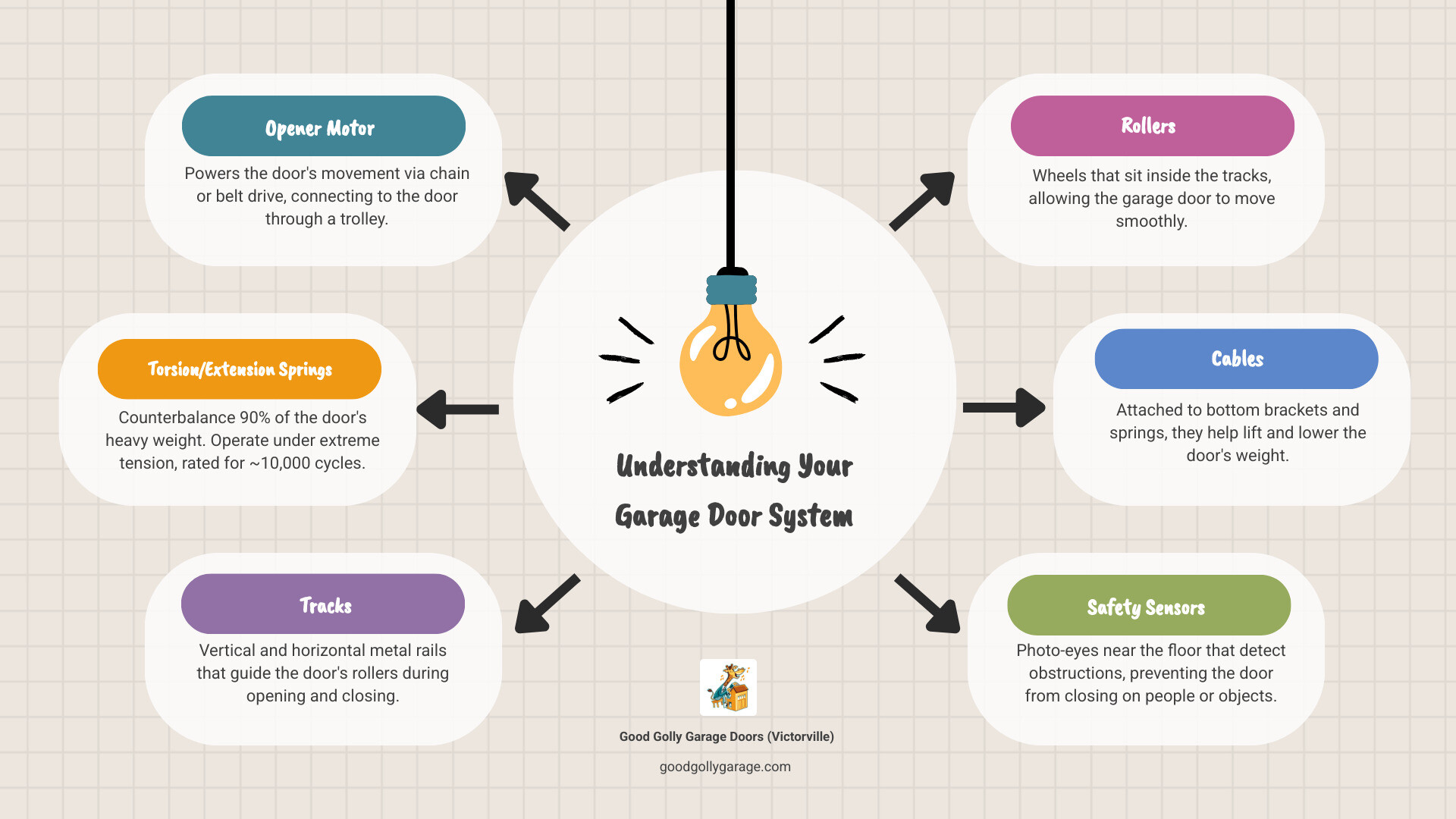
Your garage door is a complex system. Springs counterbalance the door’s weight, so the opener only needs to apply minimal force. When any part of this system—opener, springs, tracks, rollers, or sensors—fails, the entire operation can stop. Understanding these components is the first step to diagnosing the problem.
Safety must be your top priority. Garage door springs are under extreme tension and can cause serious injury if handled improperly. These springs are rated for about 10,000 cycles, or roughly seven years of average use, and will eventually break. A garage door can also weigh over 200 pounds, making it a significant hazard if it’s not secure.
I’m Jason Henderson, and through my experience with Good Golly Garage Doors, I’ve helped countless homeowners solve issues just like this. This guide will help you identify what you can safely check yourself and when it’s time to call for professional help.
First Steps: Simple Checks You Can Do in 5 Minutes
Sometimes, the solution to why your garage door won’t open is surprisingly simple. Before assuming the worst, run through these quick checks that often resolve the issue without a service call.
Checking for Power Supply Problems
No power means no movement. It sounds obvious, but a lack of power is a frequent culprit for a non-responsive garage door.
- Check the Outlet: Ensure your garage door opener is securely plugged into its ceiling outlet. Vibrations can sometimes work it loose.
- Reset the GFCI: Many garages have Ground Fault Circuit Interrupter (GFCI) outlets. If the “RESET” button has popped out, press it firmly to restore power.
- Check the Circuit Breaker: Go to your home’s electrical panel and look for a tripped breaker, which will be in the “OFF” or a middle position. Flip it completely “OFF” and then back “ON.”
- Inspect the Wall Switch: If the light on your wall-mounted control panel isn’t on, it’s a strong sign that the opener unit isn’t receiving power.
Troubleshooting Your Remote and Wall Button
If the opener has power, the next step is to check your remote and wall controls.
- Dead Remote Batteries: This is the most common and easily fixed issue. Try replacing the batteries in your remote. If you have a second remote, test that one as well.
- Signal Range: Stand closer to the garage. Weak batteries or interference can reduce the remote’s effective range.
- Wall Button Lock Feature: Many wall controls have a “lock” or “vacation” button that disables remotes. Check if this feature has been accidentally engaged and press it to turn it off.
- Reprogramming Needed: Occasionally, a remote can lose its programming. Refer to your opener’s user manual for instructions on how to re-sync it with the motor unit.
If you suspect your remote is the issue, we can help with More info about garage door remote repair services.
Is the Manual Lock Engaged?
Accidentally engaging the manual lock is a common reason an automatic opener will fail to move the door.
- Check for Manual Locks: Many doors have a manual slide lock on the inside—a bolt that slides into a slot in the track. Some older doors may also have a keyed T-handle lock on the outside.
- Disengage Before Use: Always ensure any manual locks are fully disengaged before using the automatic opener.
- Prevent Opener Damage: Trying to operate the opener while the door is manually locked can strip the drive gear or damage the door itself. Modern openers often have safety features to prevent this, but older models may not.
Why Won’t My Garage Door Open in Running Springs, CA, If the Motor Is Running?
It’s particularly frustrating to hear the garage door motor running but see the door stay put. This scenario usually points to a disconnect between the motor and the door.
The Emergency Release Cord: Is Your Door Disconnected?
The red emergency release cord is a key safety feature, but it’s also a common source of this specific problem.
- What It Does: This cord hangs from the opener’s trolley and allows you to disengage the door from the opener track, which is essential during a power outage.
- Accidental Disengagement: It’s easy to accidentally pull this cord, disconnecting the opener from the door. When this happens, the motor will run, but the chain or belt will move without taking the door with it.
- How to Re-engage: To reconnect the door, first make sure it’s fully closed. Pull the red cord down and toward the opener motor until you hear a click. This should re-engage the trolley, allowing the opener to move the door again.
- Check the J-Arm: Ensure the metal arm connecting the trolley to the top of the garage door is securely attached at both ends.
Internal Opener Malfunctions
If the emergency release is engaged but the door still won’t move, the problem likely lies within the opener unit itself.
- Stripped Drive Gears: Most residential openers use nylon gears designed to fail before more expensive parts are damaged if the door meets excessive force (like from a broken spring). If these gears are stripped, the motor will spin, but it won’t be able to move the chain or belt. You’ll hear a whirring sound with no movement.
- Broken Trolley Assembly: The trolley is the part that travels along the rail to move the door. If this component is broken or worn out, the motor’s power can’t be transferred.
- Broken Chain or Belt: On chain-drive or belt-drive models, a broken or dislodged chain or belt is an obvious reason the motor’s work isn’t reaching the door. You may see it sagging or completely detached.
Internal opener issues are complex and best left to professionals. We specialize in diagnosing and repairing these systems. Learn more about our More info about garage door opener repair services.
Major Mechanical Failures: Springs, Tracks, and Rollers
Beyond the opener, the physical hardware that supports and guides your door is essential. When these heavy-duty components fail, the door won’t open, or will struggle to do so.
The Danger of Broken Garage Door Springs
The springs do the actual heavy lifting, counterbalancing hundreds of pounds of weight. When a spring breaks, the opener cannot lift the door on its own.
- Signs of a Broken Spring: The most obvious sign is that the door becomes incredibly heavy to lift manually. Your opener may strain but fail to lift the door more than a few inches.
- A Loud “Pop” Sound: Homeowners often report hearing a loud bang from the garage when a spring snaps under tension.
- Visible Gap in the Spring: A broken torsion spring (the type mounted above the door) will have a clear gap of an inch or two in the coil.
- Finite Lifespan: Garage door springs are rated for about 10,000 cycles. With average use, this translates to a lifespan of about 7-10 years. They will eventually wear out and break.
- DANGER: Do Not Attempt DIY Repair: Never try to repair or replace garage door springs yourself. They are under extreme tension and can cause severe injury or death if they are mishandled. The door itself can also crash down unexpectedly. For your safety, always call a professional for spring-related issues.
When you have a broken spring, it’s time to call the experts. Our team can safely and efficiently handle More info about garage door spring repair services.
Track or Roller Issues Causing Your Garage Door to Stick
The tracks and rollers guide the door’s movement. If they are damaged or obstructed, the door can easily jam.
- Misaligned or Bent Tracks: The metal tracks must be perfectly parallel. If they are bent or have come loose, the rollers can bind, causing the door to stick or stop completely.
- Debris in Tracks: Dirt, small stones, or hardened grease can build up in the tracks and block the rollers from moving freely.
- Worn or Broken Rollers: The small wheels that run inside the tracks can crack, wear out, or break over time. A bad roller can cause the door to lurch, make grinding noises, or get stuck.
- Warning Noises: Grinding, scraping, or squealing sounds are strong indicators of a problem with the tracks or rollers.
When Safety Features and Obstructions Stop Your Door
Modern garage doors include safety features designed to prevent accidents. Ironically, these same features can sometimes be the reason why your garage door won’t open or close correctly.
Checking the Safety Sensors (Photo-Eyes)
These sensors are a mandatory safety feature that prevents the door from closing on an object, person, or pet.
- Misalignment: Two small sensor units are located on either side of the garage door opening, about 4-6 inches from the floor. They must be perfectly aligned to maintain an invisible beam. If the beam is broken or misaligned, the door will not close. A blinking light on one of the sensors is a common sign of a problem.
- Obstructions: Anything from a trash can or a stray toy to a buildup of snow can block the sensor path and prevent the door from operating.
- Dirty Lenses: Dust, cobwebs, and grime can cover the sensor lenses and block the beam. Gently wipe them with a soft, dry cloth to clean them.
- Realigning Sensors: If the sensors are misaligned, you can often loosen the wingnut on the bracket, adjust the sensor until the indicator lights on both units are solid (not blinking), and retighten it.
Adjusting Travel Limits and Force Settings
Your opener is programmed to know how far to open and close the door and how much force to use. If these settings are incorrect, the door may not function properly.
- Incorrect Travel Limits: If the door reverses before closing fully, or stops before it reaches the floor, the travel limits may need adjustment.
- Force Sensitivity: The opener is set to reverse if it detects a certain amount of resistance. If this setting is too sensitive, it may cause the door to reverse unexpectedly.
- Consult the Owner’s Manual: Adjusting these settings typically involves turning screws or pressing buttons on the opener unit. It is crucial to consult your owner’s manual for specific instructions, as the process varies by brand and model.
If you’re having persistent issues with your garage door’s operation, professional help is just a call away. We can assist with these adjustments and more. Find out how we can help with Don’t Let Your Garage Door Scream: Professional Fixes in Running Springs, CA.
Frequently Asked Questions About Garage Doors in Running Springs
Living in a mountain community like Running Springs presents unique challenges for garage door systems. Here are some common questions we hear from local homeowners.
How Does the Cold Weather in Running Springs Affect My Garage Door?
The cold air and snow in our mountain communities can definitely impact your garage door’s performance.
- Metal Contraction: Cold temperatures cause metal parts like tracks and springs to contract. This can make movement stiffer and strain the opener.
- Thick Lubricant: The wrong lubricant can become thick and gummy in the cold, increasing friction. We recommend a silicone-based lubricant designed for garage doors.
- Door Frozen Shut: Moisture can freeze along the bottom of your door, sealing it to the concrete. Trying to force it open with the automatic opener can damage the system. Always check that the door is not frozen to the ground before operating it in winter.
- Weather Seals: Good weather stripping is important for keeping out moisture and cold air, which helps prevent freezing issues.
Can I Manually Open My Garage Door if the Spring Is Broken?
This is a critical safety question with a very serious answer.
- Extreme Danger: No. If a spring is broken, you should not attempt to open the door. The springs are what make the door light enough to lift. Without them, you are trying to lift the full weight of the door—often over 200 pounds.
- Risk of Crashing: A door with a broken spring is incredibly heavy and unstable. It can crash down without warning, causing severe injury or property damage.
- Call a Professional: This task should always be left to trained professionals. They have the proper tools and knowledge to handle the weight and secure the door safely. Trying to use the opener can also burn out the motor.
How Often Should I Have My Garage Door Serviced?
Regular maintenance is the best way to prevent unexpected failures and extend the life of your garage door.
- Annual Maintenance: We recommend a professional service and tune-up at least once a year.
- What’s Included: A professional service includes lubricating all moving parts, testing the door’s balance, inspecting the springs and cables, and verifying that all safety features are working correctly.
- Extend Lifespan: Proactive maintenance helps your opener, springs, and other components last longer, saving you from more expensive and inconvenient emergency repairs down the road.
For comprehensive care of your garage door system, consider our preventative maintenance services. Learn more about More info about garage door maintenance services.
Your Next Step for a Working Garage Door
We’ve covered the common reasons why your garage door won’t open, from simple fixes to major mechanical failures. Our goal is to help you understand the problem and know what you can safely do yourself.
While you can handle issues like dead remote batteries or a blocked sensor, anything involving springs, cables, or the opener’s internal parts should always be left to a professional. The risk of serious injury or causing more damage is too high for a DIY attempt.
At Good Golly Garage Doors, we provide reliable, fast, and transparent service to homeowners in Running Springs, Victorville, Lake Arrowhead, and the surrounding High Desert region. We believe in a “human touch” that prioritizes your safety and satisfaction.
Don’t let a broken garage door disrupt your life. If you’ve tried the basic troubleshooting steps without success or suspect a serious issue, it’s time to call in the experts.
For all your garage door needs, from urgent repairs to routine maintenance, trust the experienced team at Good Golly Garage Doors. We’re here to help.
Learn more about our More info about expert garage door repair services in the Victorville and Running Springs area.
 All Service Areas