

The Mystery of the Noisy Garage Door: What’s Causing the Racket in Spring Valley Lake?
Expert Garage Door Services Powered by Good Golly Garage Doors
Your Guide to a Quieter Garage Door in Spring Valley Lake
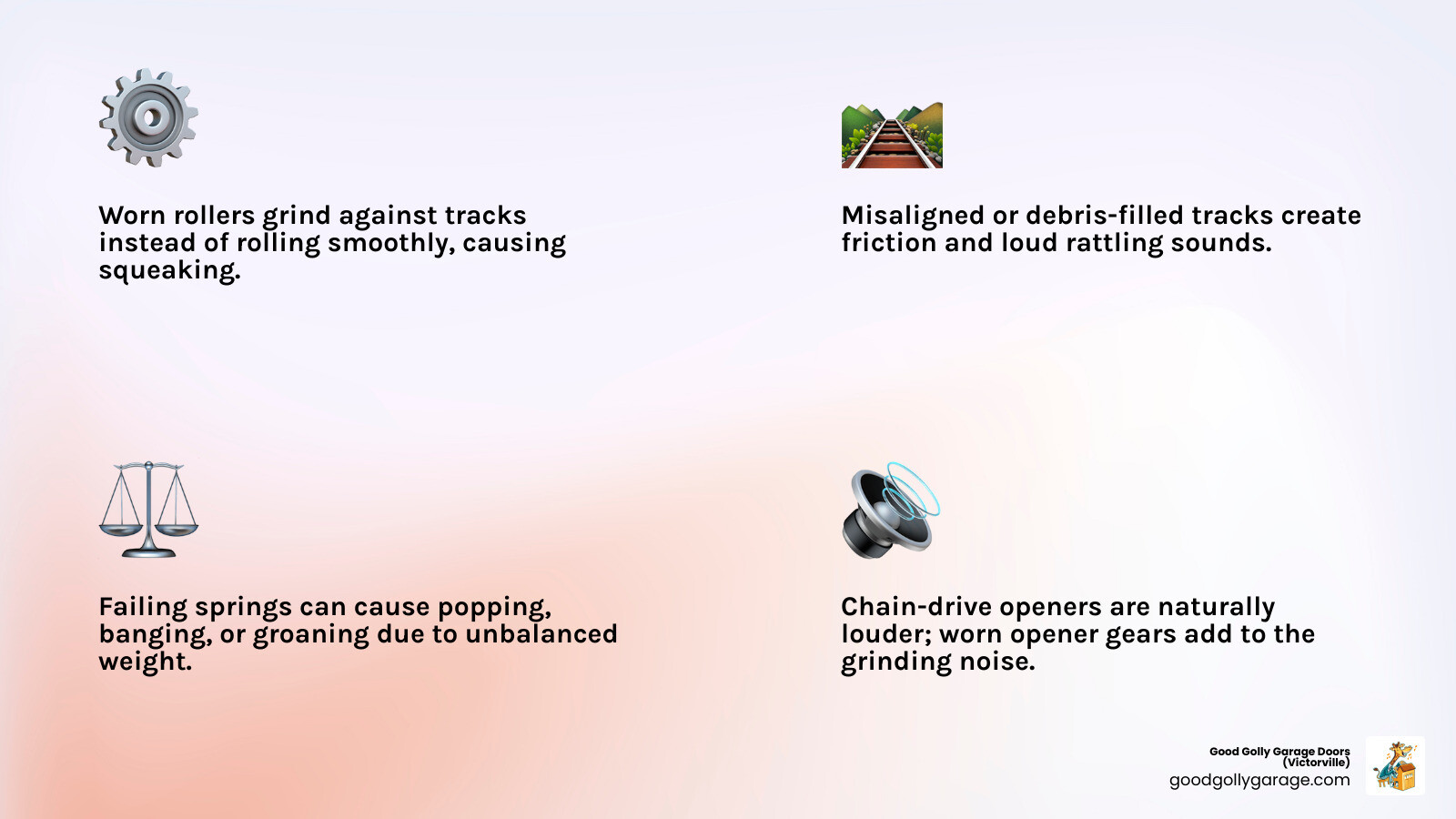
If you’re wondering Why Is My Loud Garage Door In Spring Valley Lake CA, you’re dealing with one of the most common and disruptive garage door problems. The racket usually stems from a handful of fixable issues:
- Lack of lubrication on rollers, hinges, and springs
- Loose hardware like nuts, bolts, and screws that vibrate during operation
- Worn rollers that grind against tracks instead of rolling smoothly
- Misaligned or debris-filled tracks causing friction
- Failing springs that no longer balance the door’s weight properly
- Chain-drive openers that naturally produce more noise than belt-drive models
Most of these problems can be addressed with simple maintenance, though some—especially spring issues—require professional help for safety reasons.
A loud garage door isn’t just annoying for you and your neighbors in Spring Valley Lake. It’s often your door’s way of telling you something needs attention before a minor issue becomes a major breakdown. Every time your door rumbles through its cycle, it’s putting extra strain on components that might already be wearing out. The good news? Many noise issues are surprisingly easy to fix once you understand what’s causing them.
I’m Jason Henderson, and through my work leading Good Golly Garage Doors and managing similar service-based companies, I’ve seen how understanding Why Is My Loud Garage Door In Spring Valley Lake CA helps homeowners solve problems quickly—and know when to call for backup. My focus on operational excellence and team training means our technicians can diagnose these issues fast and get your garage running quietly again.
Decoding the Racket: What Different Garage Door Noises Mean
Our garage doors are surprisingly chatty when something’s amiss. Each distinct sound can be a clue to the underlying problem, helping us pinpoint the issue and address it effectively. Understanding these auditory signals is the first step toward a quieter garage door in Spring Valley Lake.
Squeaking or Screeching: The Cry for Lubrication
A high-pitched squeak or an irritating screech is one of the most common complaints we hear from homeowners. If you’re experiencing this, your garage door is likely begging for lubrication, or perhaps some of its parts are simply worn out.
- Lack of Lubrication: This is the usual culprit. Moving metal parts—like rollers, hinges, and springs—need regular lubrication to reduce friction. Without it, metal grinds against metal, creating that tell-tale squeal.
- Worn Rollers: Over time, the bearings inside your rollers can dry out or wear down, leading to harsh squealing or grating sounds as they move along the tracks.
- Dry Hinges: Just like rollers, hinges can become stiff and noisy without proper lubrication.
- Weatherstripping Friction: Sometimes, the weatherstripping around the door’s perimeter can dry out and rub against the door frame, causing a squeak.
These noises are often a direct result of increased friction.
Grinding or Rattling: Signs of Misalignment and Loose Parts
When your garage door starts to grind, rub, or rattle, it’s telling us there might be a physical obstruction, loose connections, or alignment problems.
- Loose Hardware: Your garage door is a complex system of interconnected parts held together by nuts, bolts, and screws. The constant movement can loosen these fasteners over time, leading to vibrations and rattling. This is especially common on hinges, brackets, and track mounts.
- Misaligned Tracks: If the vertical or horizontal tracks are not perfectly parallel or properly aligned, the rollers can bind or rub, causing a grinding noise.
- Debris in Tracks: Even a small pebble, dirt, or hardened grease in the tracks can cause rollers to catch and grind. Cleaning your tracks is a simple but often overlooked step.
- Worn Opener Gears: If the grinding comes from the garage door opener unit itself, it could indicate worn-out gears within the motor, especially in older models.
Popping or Banging: A Serious Warning Sign
A sudden, loud pop or bang from your garage door is rarely good news. These sounds are often indicative of significant mechanical stress or a broken component, and they demand immediate attention.
- Torsion Spring Issues: A loud bang, often described as sounding like a firecracker or even a gunshot, is the classic sign of a broken torsion spring. These springs are under immense tension, and when one snaps, the release of energy is powerful and noisy.
- Extension Spring Problems: While less dramatic than a torsion spring break, a failing extension spring can also produce loud noises, especially if it’s stretching unevenly or its safety cable snaps.
- Door Panel Flexing: In some cases, extreme stress on the door, perhaps from an unbalanced system or impact, can cause panels to flex or buckle with a popping sound. This is often accompanied by the door struggling to open or close.
This sound often indicates a need for immediate professional attention, as a loud bang is a top reason people seek professional help. Never try to operate a garage door if you hear a popping or banging noise; it could be extremely dangerous.
Simple DIY Fixes for a Quieter Garage Door
Before you dive into a DIY project, remember safety first! Always unplug your garage door opener from the power outlet to prevent accidental operation. A visual inspection is also crucial to identify obvious problems before you start tinkering.
Addressing many common noise issues can be a straightforward process, helping you quiet your garage door and extend its lifespan. Our goal is to help you keep your garage door running quietly for years to come.
Step 1: Tighten All Nuts and Bolts
Over time, the constant vibration and movement of your garage door can cause nuts, bolts, and screws to loosen. This loose hardware is a prime source of rattling and vibrating noises.
Grab a socket wrench and systematically go through all visible fasteners on your garage door system. Pay close attention to:
- Hinges: Check the screws connecting the hinges to the door panels.
- Brackets: Ensure the brackets holding the rollers are tight.
- Track Mounts: Tighten the bolts that secure the tracks to the garage wall.
A rattling noise is often just loose hardware, and tightening these connections can make a surprising difference. This simple step can help answer Why Is My Loud Garage Door In Spring Valley Lake CA by eliminating a common cause of annoying sounds. For more on this, you can refer to insights about Noisy Garage Door Spring Valley Lake CA.
Step 2: The Right Way to Lubricate Moving Parts
Lubrication is the lifeblood of a quiet garage door. But it’s crucial to use the right product and apply it correctly.
Best Lubricants:
- Silicone-Based Spray: Excellent for most moving parts, including metal rollers, hinges, and springs. It dries to a clean film that resists dust and moisture.
- White Lithium Grease: Ideal for metal-on-metal contact, especially for chain-driven openers. It provides long-lasting lubrication and reduces friction.
What to Lubricate:
- Rollers: Apply lubricant to the bearings inside the rollers. For metal rollers, spray directly into the bearing.
- Hinges: Spray the pivot points of all hinges.
- Springs: Lightly coat the torsion or extension springs. This helps reduce friction and can extend their life.
- Opener Rail: If you have a chain or screw-drive opener, lubricate the rail where the chain or screw travels.
What NOT to Lubricate:
- Nylon Rollers: High-quality nylon rollers are designed to be self-lubricating and do not require additional grease. In fact, adding lubricant can attract dirt.
- Tracks: Never lubricate the garage door tracks. Lubricant attracts dirt and debris, which can accumulate and cause more problems than it solves. Instead, keep tracks clean and free of obstructions.
Avoid WD-40: While WD-40 is great for loosening rusty bolts, it’s a degreaser, not a long-term lubricant. Using it on your garage door can actually strip away existing lubrication and make noise issues worse in the long run.
Regular lubrication, ideally every three to six months, is key to preventing noise.
Step 3: Inspect Rollers, Hinges, and Tracks
A thorough inspection of these components can reveal hidden sources of noise and potential future problems.
- Worn Rollers: Examine your rollers for signs of wear. Metal rollers can wear down, causing grinding. Nylon rollers can crack or chip. If rollers are visibly damaged, flat-spotted, or wobbly, they need replacement. Upgrading to nylon rollers with sealed bearings is one of the most effective ways to quiet a noisy door.
- Cracked Hinges: Over time, hinges can crack, especially at the pivot points. A compromised hinge can cause uneven movement and strain on other parts. Replace any cracked or severely bent hinges.
- Bent Tracks: Look for any bends, dents, or misalignments in the vertical and horizontal tracks. Even a slight imperfection can cause rollers to bind. If tracks are slightly bent, a rubber mallet can sometimes gently tap them back into place.
- Clean Tracks: With the power off, thoroughly clean any dirt, dust, or hardened grease from inside the tracks using a dry cloth or brush.
These inspections are vital for maintaining a quiet garage door and reducing noise.
Why Is My Loud Garage Door in Spring Valley Lake CA? Advanced Solutions and Upgrades
Sometimes, basic maintenance isn’t enough, and we need to consider more advanced solutions to truly silence a noisy garage door. These can involve upgrading components or even soundproofing measures. Our Expert Tips are always here to help you steer these decisions.
Upgrade Your Rollers and Opener for Silence
If you’ve tightened everything and lubricated properly but still hear excessive noise, it might be time for some upgrades.
| Feature | Steel Rollers | Nylon Rollers (with sealed bearings) |
|---|---|---|
| Noise Level | Typically louder, especially when unlubricated | Significantly quieter, almost silent operation |
| Maintenance | Requires regular lubrication | Self-lubricating, generally maintenance-free |
| Lifespan | Can last 10-15 years, depending on quality | Often last longer, 15-20 years or more |
| Durability | Very strong, but can rust | Durable, rust-resistant |
| Cost | Generally less expensive upfront | Slightly higher upfront cost, but long-term value |
Upgrading from noisy steel rollers to quieter nylon rollers with sealed bearings is one of the biggest improvements you can make. Nylon is inherently quieter and the sealed bearings mean no future oiling.
Your garage door opener is another significant source of noise:
- Chain-Drive Opener: These are the most common and often the loudest, as a metal chain runs along a metal rail.
- Belt-Drive Opener: A rubber belt operates much more quietly than a chain, making these a popular choice for homes with living spaces above or adjacent to the garage.
- Vibration Isolators: If your opener unit itself is vibrating and transmitting noise through the ceiling, consider installing anti-vibration pads or an isolator kit. These rubber dampeners are installed between the opener’s mounting brackets and the ceiling joists, absorbing vibrations before they can resonate through your home. This can be a game-changer for noise reduction.
The Importance of Regular Maintenance
Regular maintenance is not just about fixing problems; it’s about preventing them. For our neighbors in Victorville, CA, and surrounding areas, we emphasize that consistent care of your garage door system offers numerous benefits:
- Prevents Noise: Proactive lubrication and tightening of hardware stops noise before it starts.
- Extends Lifespan: Regular maintenance reduces wear and tear on components, helping your entire garage door system last longer. For instance, while tracks can last 10-30 years, and hinges 15-25 years, neglect can significantly shorten these lifespans. Rollers typically last up to 20 years, but only with proper care.
- Improves Safety: A well-maintained door operates smoothly and predictably, reducing the risk of unexpected malfunctions or accidents.
- Balance Test: A simple balance test can tell you a lot about your door’s health. Disengage your opener and manually lift the door halfway. If it stays put, it’s balanced. If it drifts up or down, your springs might need adjustment by a professional. This crucial check helps prevent strain on your opener and other components.
The Danger Zone: When to Call a Professional
While many garage door noises can be tackled with DIY solutions, some issues cross into a dangerous territory where professional expertise is not just recommended, but essential. Garage doors can weigh 200-400 pounds, and the U.S. Consumer Product Safety Commission reports over 30,000 garage door-related injuries annually, many involving spring malfunctions. When dealing with high-tension springs, frayed cables, or an unbalanced door, safety should always be your top priority. If you’re unsure, it’s always best to call a professional.
Understanding Garage Door Springs: The Most Dangerous Part
Garage door springs are the unsung heroes of your system, counterbalancing the immense weight of the door to make it feel light enough for the opener to lift. They are also the most dangerous component to tamper with.
- Torsion Springs: Located directly above the garage door opening, these heavy-duty springs are wound tightly, storing enormous amounts of energy. A loud bang is the definitive sign of a broken torsion spring. These springs typically last 8-15 years, or about 10,000-20,000 cycles.
- Extension Springs: These springs run along the horizontal tracks on either side of the door. They stretch and contract as the door moves. While they also carry significant tension, their failure is often less dramatic than a torsion spring, though still dangerous. Extension springs typically last 7-12 years, or around 10,000 cycles.
Never attempt DIY spring repair or adjustment. The tension in these springs can cause severe injury or even death if mishandled. If you hear a loud bang, or notice a visible gap in a spring coil, stop using your garage door immediately and call a professional. A loud rumble with every cycle of the door is annoying, but when it’s a spring, it’s not just annoying, it’s a critical safety issue.
When to Call a Professional for Your Loud Garage Door in Spring Valley Lake CA
While we encourage homeowners to try simple DIY fixes, there are clear signs that it’s time to bring in the experts, especially for your Loud Garage Door in Spring Valley Lake CA:
- Persistent Noise After DIY: If you’ve tried tightening hardware, lubricating parts, and cleaning tracks, but the noise persists, it indicates a deeper, more complex issue that requires professional diagnosis.
- Broken Spring: As mentioned, a broken spring is a major safety hazard. Do not operate the door. Call us immediately.
- Door is Crooked or Off-Track: This is a serious problem that can cause significant damage to your door and potentially lead to injury. Misaligned tracks or a crooked door need immediate professional attention.
- Opener Straining: If your garage door opener is working harder than usual, making grinding noises, or the door is moving very slowly, it could be a sign of failing springs or other significant issues that are overloading the opener.
- Frayed or Broken Cables: The cables that lift and lower your garage door are under high tension. If they are frayed, rusted, or broken, they need professional replacement.
For these kinds of complex and dangerous repairs, trust our experienced technicians. For expert help with a Noisy Garage Door Fix in Spring Valley Lake CA, give us a call.
Frequently Asked Questions About Noisy Garage Doors
We often get questions from our customers about their noisy garage doors. Here are some of the most common ones:
How Often Should I Lubricate My Garage Door?
We recommend lubricating your garage door’s moving parts every 3-6 months. This includes hinges, metal rollers, and springs. Using a silicone or lithium grease is best. This regular maintenance schedule helps reduce friction, prevent rust, and keep your door operating quietly. For our clients in areas like Victorville and Spring Valley Lake, where conditions can sometimes be dry, consistent lubrication is especially important.
Can I Just Replace My Old Metal Rollers With Quieter Nylon Ones?
Yes, absolutely! Upgrading from old metal rollers to nylon rollers with sealed bearings is one of the most effective ways to quiet a noisy door. Nylon is inherently quieter, and the sealed bearings mean they require no future oiling.
However, there’s a crucial caveat: while replacing the top and middle rollers can be a safe DIY project, do not attempt to replace the bottom rollers. The brackets holding them are under extreme spring tension and can cause serious injury if mishandled. For bottom rollers or if you’re uncomfortable with the process, professional help is highly recommended.
Why Is My Garage Door Suddenly So Loud?
A sudden increase in garage door noise often points to a specific issue that has recently developed. Common culprits include:
- Weather Changes: Temperature fluctuations can cause metal components to expand or contract, leading to new noises.
- Loose Hardware: Just one or two loose bolts can suddenly create a noticeable rattle.
- Debris in Tracks: A new obstruction in the tracks can cause immediate grinding or binding.
- Worn Part Failure: A roller bearing giving out or a hinge cracking can quickly lead to a loud, new sound.
A sudden change warrants a thorough inspection to identify and address the root cause promptly before it escalates into a larger problem.
Enjoy the Sound of Silence in Spring Valley Lake
A noisy garage door can be a real nuisance, disrupting the peace of your home in Spring Valley Lake. But as we’ve explored, understanding Why Is My Loud Garage Door In Spring Valley Lake CA is the first step toward reclaiming your quiet. From simple DIY fixes like tightening hardware and proper lubrication to more advanced solutions like upgrading rollers and openers, there’s often a clear path to silence.
Regular DIY maintenance not only keeps your door quiet but also extends its lifespan and improves safety, preventing minor annoyances from becoming major headaches. However, we always emphasize safety first. For persistent noises or any issues involving springs and cables, professional service ensures your safety and peace of mind.
At Good Golly Garage Doors, we’re committed to providing reliable, fast, and transparent service to our community. If you’ve tried the DIY steps and your garage door is still making a racket, or if you suspect a more serious issue like a broken spring, don’t hesitate to reach out. Our expert technicians are ready to help you enjoy the sound of silence once again.
For professional assistance with your Noisy Garage Door in Spring Valley Lake CA, visit our page on Noisy Garage Door Spring Valley Lake Ca to learn more or schedule a service. We’re here to help!
 All Service Areas