

Silence the Squeak: Understanding Your Noisy Garage Door in Apple Valley
Expert Garage Door Services Powered by Good Golly Garage Doors
That Rattle and Hum in the High Desert
If you’re asking, Why Is My Loud Garage Door In Apple Valley CA, the answer usually lies in one of five common culprits: worn rollers, dry parts needing lubrication, loose hardware, dirty or misaligned tracks, or an aging opener. Each of these issues creates distinct sounds—from high-pitched squeaks to alarming bangs—and most can be fixed with basic maintenance or a quick repair.
Quick Answer: Top Causes of a Loud Garage Door
- Lack of Lubrication – Dry hinges, rollers, and springs create metal-on-metal friction.
- Worn Rollers – Old metal rollers grind and squeal as they move.
- Loose Hardware – Vibrating nuts, bolts, and brackets rattle during operation.
- Misaligned or Dirty Tracks – Debris or bent tracks cause grinding sounds.
- Aging Springs or Opener – Worn springs and motor components produce popping, banging, or straining noises.
If you’re hearing strange sounds from your garage door, you’re not alone. That grinding screech or unsettling bang isn’t just annoying—it’s your door signaling that parts are wearing out, lubrication has dried up, or something is loose. The good news is that many of these issues are straightforward to diagnose and fix.
Living in the High Desert presents unique challenges for garage doors. The temperature swings, blowing sand, and dry air accelerate wear on moving parts, dry out lubricants, and loosen hardware. That’s why understanding Why Is My Loud Garage Door In Apple Valley CA is especially important for local homeowners—your environment directly impacts your door’s performance.
I’m Jason Henderson, founder and CEO of Good Golly Garage Doors. I’ve spent years helping homeowners solve this exact problem. In this guide, I’ll walk you through the common causes of garage door noise, how to troubleshoot them, and when to call a professional for help with Why Is My Loud Garage Door In Apple Valley CA.
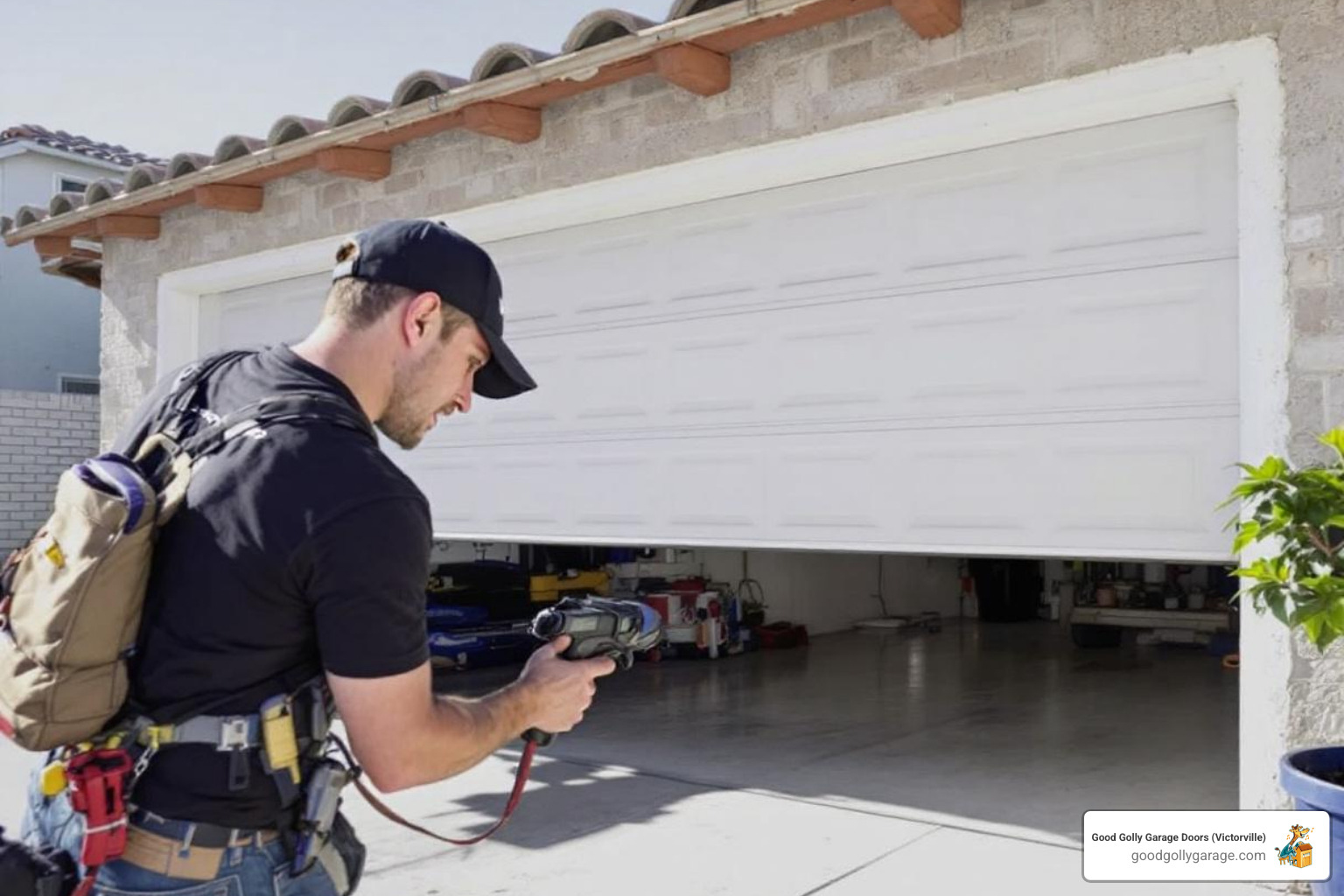
For a comprehensive look at what might be going wrong, check out our garage door inspection services, or if you’re ready to schedule a repair, visit our garage door repair page.
Why Is My Loud Garage Door In Apple Valley CA? Decoding The Racket
That grinding screech isn’t just annoying—it’s your garage door signaling a problem. A properly functioning garage door is quiet, so when it starts making unusual noises, it’s communicating an issue. Decoding these sounds is the first step to understanding Why Is My Loud Garage Door In Apple Valley CA.
Here’s a breakdown of common garage door noises and what they usually mean:
- Squeaking or Screeching: Often indicates a lack of lubrication on metal parts like rollers, hinges, or springs.
- Grinding or Rubbing: Points to issues with the tracks or rollers, such as debris, misalignment, or worn-out parts.
- Rattling or Vibrating: Typically caused by loose nuts, bolts, or brackets. It can also indicate a motor or chain issue.
- Popping or Banging: These alarming sounds usually signal problems with the high-tension garage door springs. A loud bang can mean a spring has broken.
- Straining or Groaning: If your opener sounds like it’s struggling, the door may be unbalanced or the motor itself is wearing out.
These noises are more than an annoyance; they are indicators of mechanical issues that need attention. An aging component is more likely to become noisy, so understanding these sounds is crucial for maintaining a safe and functional garage door. For a thorough assessment of any unusual noises, we recommend our garage door inspection services.
Squeaking and Screeching: The Cry for Lubrication
If your garage door squeaks or screeches, you’re likely dealing with metal-on-metal friction. This is the most frequent cause of a noisy garage door and a clear sign that moving parts like hinges, rollers, and springs need lubrication. In Apple Valley’s dry climate, lubricants can dry out faster, making this a common issue.
The solution is to apply a silicone-based lubricant spray or white lithium grease. Silicone sprays are excellent for hinges, rollers, and springs because they won’t attract dust. White lithium grease is ideal for the opener’s chain. It’s crucial to avoid products like WD-40. It is a solvent, not a long-term lubricant, and can attract dirt, making the noise worse over time.
Grinding and Rubbing: A Sign of Misalignment or Debris
A persistent grinding or rubbing sound often points to a problem with the door’s path of travel. This can stem from worn rollers, debris in the tracks, or misaligned tracks.
Worn rollers, especially older metal ones, can become rusty and grind as they move. Debris like small pebbles, dirt, or dust can also obstruct the rollers’ movement. Given the dusty conditions in Apple Valley, it’s easy for objects to accumulate in the tracks.
Misaligned tracks are a more serious issue. If the tracks are not perfectly aligned, the rollers will create friction and grinding. This puts undue stress on the entire system, including the opener and springs. Our track repair services page provides more details on how we can help with these issues.
Popping and Banging: The Most Alarming Sounds
Loud popping or banging noises are a red flag, usually indicating a problem with the springs. These sounds are alarming because they signal a component under extreme stress.
Garage doors use torsion or extension springs to counterbalance their immense weight. These springs are under high tension. A loud “bang” is a classic sign of a broken spring, which releases its stored energy at once. If a spring breaks, your door will become incredibly heavy and may not open. Attempting to operate it can cause further damage and is a serious safety risk.
Popping sounds can also indicate an unbalanced door due to aging or improperly adjusted springs. This forces the opener to work harder and can cause the door to move unevenly. Because of the extreme dangers associated with garage door springs, we strongly advise against any DIY repairs. They should only be handled by trained technicians. Our spring repair services are designed to address these critical problems safely.
Your Step-By-Step Guide To A Quieter Garage Door
Many common garage door noises can be tackled with some DIY maintenance. Before you start, remember to prioritize safety: always unplug your garage door opener to prevent accidental operation while you’re working. A basic tool kit with a socket wrench, a screwdriver, and some rags will be useful.
Step 1: Tighten All Nuts and Bolts
One of the most effective ways to quiet a rattling garage door is to tighten loose hardware. Over time, constant movement and vibrations can cause the hundreds of nuts and bolts in your garage door system to loosen, creating rattling noises.
Using a socket wrench, systematically go through all the nuts and bolts on your door. Pay special attention to:
- Hinges connecting the door panels.
- Roller brackets that hold the rollers.
- Track brackets securing the tracks to the walls and ceiling.
- Opener mounting brackets holding the opener.
Tighten everything snugly, but don’t overtighten, as this can strip screws or damage parts. We recommend checking hardware every few months as part of a regular maintenance routine.
Step 2: Lubricate All Moving Parts
A lack of lubrication is the most common cause of squeaking and screeching. Properly lubricating your garage door’s moving parts reduces friction and ensures smooth, quiet operation.
Here’s how to do it:
- Rollers: Apply a silicone-based spray lubricant to the bearings and stems. For nylon rollers, only lubricate the metal parts, not the nylon itself.
- Hinges: Spray the pivot points of all hinges with a silicone-based lubricant.
- Springs: Lightly spray the torsion or extension springs to reduce friction.
- Opener Chain/Screw Drive: Apply white lithium grease along a chain-drive opener’s chain or a screw-drive opener’s screw mechanism.
We recommend lubricating these parts every four to six months. In Apple Valley’s dry, dusty conditions, more frequent application may be beneficial. Always use lubricants designed for garage doors and avoid WD-40, which can attract dirt and worsen the problem.
Step 3: Inspect and Clean The Tracks
Grinding and rubbing sounds often come from the garage door tracks. Dirt, dust, and debris can accumulate, creating friction and hindering the rollers. In the High Desert, blowing sand makes track cleaning an essential part of maintenance.
Here’s how to inspect and clean your tracks:
- Visual Inspection: Open the door and look for dirt, debris, or damage like bends and dents in the tracks.
- Clean the Tracks: Use a damp cloth to wipe down the inside of the tracks. Remove all grime. Do not lubricate the tracks themselves, as this can cause the rollers to slip instead of roll.
- Check Alignment: The tracks should be perfectly parallel and plumb (vertical) or level (horizontal). Minor misalignments can sometimes be gently tapped back into place with a rubber mallet, but significant damage requires professional attention.
Regularly cleaning your tracks helps ensure the rollers can glide effortlessly, reducing noise and extending the life of your system.
When To Call A Professional For Your Noisy Garage Door
While DIY maintenance can resolve many common noise issues, there are times when calling a professional is essential. When it comes to certain garage door components, the risks associated with DIY repairs are too great. Safety is paramount, and some repairs are too complex or dangerous for the average homeowner.
You should call a professional if you’ve tried basic troubleshooting and the noise persists. More importantly, if the noise indicates a potentially dangerous issue with the springs, cables, or an unbalanced door, it’s time to bring in the experts.
The Dangers of High-Tension Springs and Cables
The most critical components for safety are the high-tension springs and cables, which counterbalance the door’s weight.
- Torsion Springs: Mounted above the door, these springs store tremendous energy and can break explosively.
- Extension Springs: Located along the side tracks, these springs can whip around with considerable force if they snap.
Both spring types can cause severe injury or death if mishandled. Any attempt at DIY repair without specialized tools and training is extremely dangerous. Similarly, garage door cables are under high tension and can snap, causing the door to fall. If you suspect a problem with your springs or cables, or if you hear a loud bang, contact us immediately for emergency repair services.
Why Is My Loud Garage Door In Apple Valley CA If I’ve Tried Everything?
You’ve tightened, lubricated, and cleaned, but your garage door is still making a racket. If you’ve tried all the DIY fixes and the noise continues, it’s a sign that the problem is more complex and needs a professional diagnosis. So, Why Is My Loud Garage Door In Apple Valley CA still making noise?
Here are some possible reasons:
- Unbalanced Door: Your springs might be worn or improperly tensioned, causing an imbalance. You can test this by manually lifting the door halfway (with the opener unplugged). If it doesn’t stay put, it’s unbalanced, which strains the opener.
- Opener Motor Issues: An old opener motor may be failing. Worn-out gears can create grinding or rattling sounds. If the opener strains or makes noise even when disconnected from the door, the motor could be the culprit.
- Worn Rollers: Some rollers are simply too worn or damaged to be quieted by lubrication. Replacing old metal rollers with quieter nylon ones may be necessary.
- Bent or Damaged Tracks: Significant bends or damage in the tracks will continue to cause grinding, regardless of cleaning or lubrication.
- Aging Components: Many parts have a finite lifespan. Even if not visibly broken, older components can become inefficient and noisy from wear and tear.
When these persistent noises occur, it’s time to call in professionals. Our technicians can accurately diagnose the issue and provide the necessary repairs. For issues with your opener, our opener repair services can restore quiet, reliable operation.
Long-Term Solutions For A Whisper-Quiet Door
Achieving a truly quiet garage door involves a proactive approach to preventative care and strategic upgrades. By future-proofing your garage door system, you can enjoy lasting peace and quiet.
The Importance of Regular Maintenance in The High Desert
Regular maintenance is the cornerstone of a quiet, reliable garage door, especially in Apple Valley. Our climate presents challenges that accelerate wear and tear.
- Dust and Sand: Blowing sand can infiltrate moving parts, acting as an abrasive and causing premature wear on rollers, hinges, and tracks.
- Temperature Fluctuations: Extreme temperature swings cause metal components to expand and contract, which can loosen hardware and stress materials.
- Dry Air: The arid environment quickly dries out lubricants, leaving metal parts exposed to friction and rust.
Because of these factors, we recommend semi-annual tune-ups. A basic maintenance routine, including lubrication and hardware checks, should be performed every six months. This regular care is crucial for preventing bigger problems and keeping your door quiet. A well-maintained door also lasts longer and operates more safely. Our preventative maintenance services are custom to address these specific High Desert conditions.
Upgrading Components for Quieter Operation
Sometimes, even with diligent maintenance, older components will be loud. In these cases, upgrading certain parts can make a significant difference.
Here are some key upgrades for a quieter garage door:
- Nylon Rollers: Upgrading from metal to nylon rollers with sealed ball bearings is one of the most effective ways to quiet a noisy door. Nylon is inherently quieter, and the sealed bearings are low-maintenance. While replacing some rollers can be a DIY project, the bottom rollers are under extreme spring tension and should be handled by a professional.
| Feature | Metal Rollers | Nylon Rollers (with sealed ball bearings) |
|---|---|---|
| Noise | Noisy, prone to squeaking and grinding | Significantly quieter, smooth operation |
| Maintenance | Require frequent lubrication, prone to rust | Low maintenance, sealed bearings don’t need oiling |
| Durability | Durable but can develop flat spots and rust | Very durable, resistant to wear and corrosion |
- Belt-Drive Openers: If you have a loud, older chain-drive opener, upgrading to a belt-drive model can drastically reduce noise by replacing the metal chain with a quiet rubber belt.
- Jackshaft or Direct Drive Openers: For the quietest operation, consider a jackshaft opener, which mounts on the side of the door and eliminates the noisy overhead rail system.
- Insulated Garage Doors: Insulation not only regulates temperature but also dampens sound. An insulated door can significantly reduce noise transfer from the garage to your living spaces.
Investing in these upgrades can transform your noisy garage, providing long-term benefits in comfort and property value.
Frequently Asked Questions About Noisy Garage Doors
Homeowners in Apple Valley and the High Desert often ask similar questions about their noisy garage doors. Here are some of the most common ones:
What Is The Best Lubricant To Use On A Garage Door?
The best lubricants are silicone-based sprays and white lithium grease.
- Silicone-based spray: This is excellent for hinges, rollers (metal stems and bearings), and springs. It dries to a clean film that resists attracting dust, which is beneficial in the Apple Valley environment.
- White lithium grease: This is ideal for metal-on-metal contact, like the chain on a chain-drive opener or the screw on a screw-drive opener.
Crucially, avoid using WD-40 as a lubricant. It is a solvent that can break down existing lubricants and attract dirt, making noise worse over time.
How Often Should I Perform Maintenance To Keep My Door Quiet?
We recommend a semi-annual maintenance routine (every six months).
- Lubrication: Lubricate all moving parts every 4-6 months. In Apple Valley’s dry conditions, every four months may be better.
- Hardware Check: At the same time, check and tighten all nuts and bolts on the door and opener.
- Professional Annual Inspection: In addition to your DIY routine, we recommend a professional inspection annually. A technician can spot subtle issues before they become major, noisy failures, which is especially important given the High Desert’s harsh environmental factors.
Can A Noisy Garage Door Be A Sign Of A Serious Problem?
Yes, absolutely. A noisy garage door is an early warning system. While a squeak might just require lubrication, noises like grinding, popping, or banging can indicate serious mechanical problems.
- Failing Parts: Noises often signal that components like rollers, hinges, or the opener motor are worn out.
- Broken Springs: A loud bang often means a spring has snapped, which makes the door dangerous to operate.
- Safety Hazards: An unbalanced door, worn cables, or misaligned tracks can cause the door to operate erratically or fall unexpectedly, posing significant safety risks.
A quiet garage door is a sign of a safe, well-maintained system. Addressing noise early can prevent costly repairs and ensure your family’s safety.
Conclusion: Enjoy The Sound Of Silence In Apple Valley
A loud garage door can be a major nuisance. Understanding Why Is My Loud Garage Door In Apple Valley CA is the first step toward restoring peace and quiet to your home. From simple lubrication and tightening hardware to addressing complex issues like worn springs or misaligned tracks, each noise is a clue guiding you to the solution.
We’ve explored how the High Desert climate impacts your garage door and the importance of regular maintenance. We’ve also highlighted the critical difference between DIY fixes and when it’s necessary to call a professional, especially for high-tension springs and cables.
A quiet garage door is about safety, reliability, and the longevity of your system. By being proactive and addressing noises as they arise, you can prevent minor annoyances from becoming major, dangerous, and expensive problems.
For persistent noise or complex issues beyond your comfort level, trust the experts at Good Golly Garage Doors to restore quiet and reliable operation. Our team is dedicated to providing homeowners in Apple Valley and throughout the High Desert with high-quality service, ensuring your garage door operates smoothly and silently. Visit our garage door repair services page to learn more or to schedule an appointment.
 All Service Areas