

Silence the Squeak: Understanding Your Loud Garage Door in Hesperia
Expert Garage Door Services Powered by Good Golly Garage Doors
Why a Loud Garage Door in Hesperia Demands Your Attention
Why Is My Loud Garage Door In Hesperia CA causing such a racket? If you’re dealing with squealing, grinding, rattling, or banging sounds every time you open or close your garage door, you’re not alone—and you’re right to be concerned. Here’s what’s likely happening:
Common Causes of Loud Garage Doors in Hesperia:
- Lack of Lubrication – Metal rollers, hinges, and springs need regular lubrication to operate quietly
- Loose Hardware – Nuts, bolts, and screws vibrate loose over time, creating rattling sounds
- Worn Rollers – Metal or nylon rollers wear down after 10-15 years of use
- Hesperia’s High Desert Climate – Blowing dust, extreme temperature swings, and intense sun accelerate wear
- Broken or Aging Springs – A loud pop or bang often signals a snapped torsion spring
- Misaligned Tracks – Debris or damage causes grinding as the door struggles to move
- Failing Opener Motor – Straining or squealing sounds indicate motor issues
A noisy garage door isn’t just annoying—it’s often an early warning sign that something needs attention before it becomes a bigger, more expensive problem or even a safety hazard. In Hesperia’s harsh high desert environment, where blowing sand, extreme temperature swings, and relentless sun exposure take their toll on every moving part, garage doors face unique challenges that accelerate normal wear and tear.
For expert guidance on related issues, check out our broken garage door Hesperia CA guide. If your door needs immediate attention, contact our Hesperia garage door experts today for fast, reliable service.
I’m Jason Henderson, founder and CEO of Good Golly Garage Doors, and I’ve spent years helping homeowners understand why the question, Why Is My Loud Garage Door In Hesperia CA, is so common—and how to solve it quickly and safely. Through managing service-based operations and building high-performing teams, I’ve seen how addressing garage door noise early prevents costly repairs and keeps families safe.
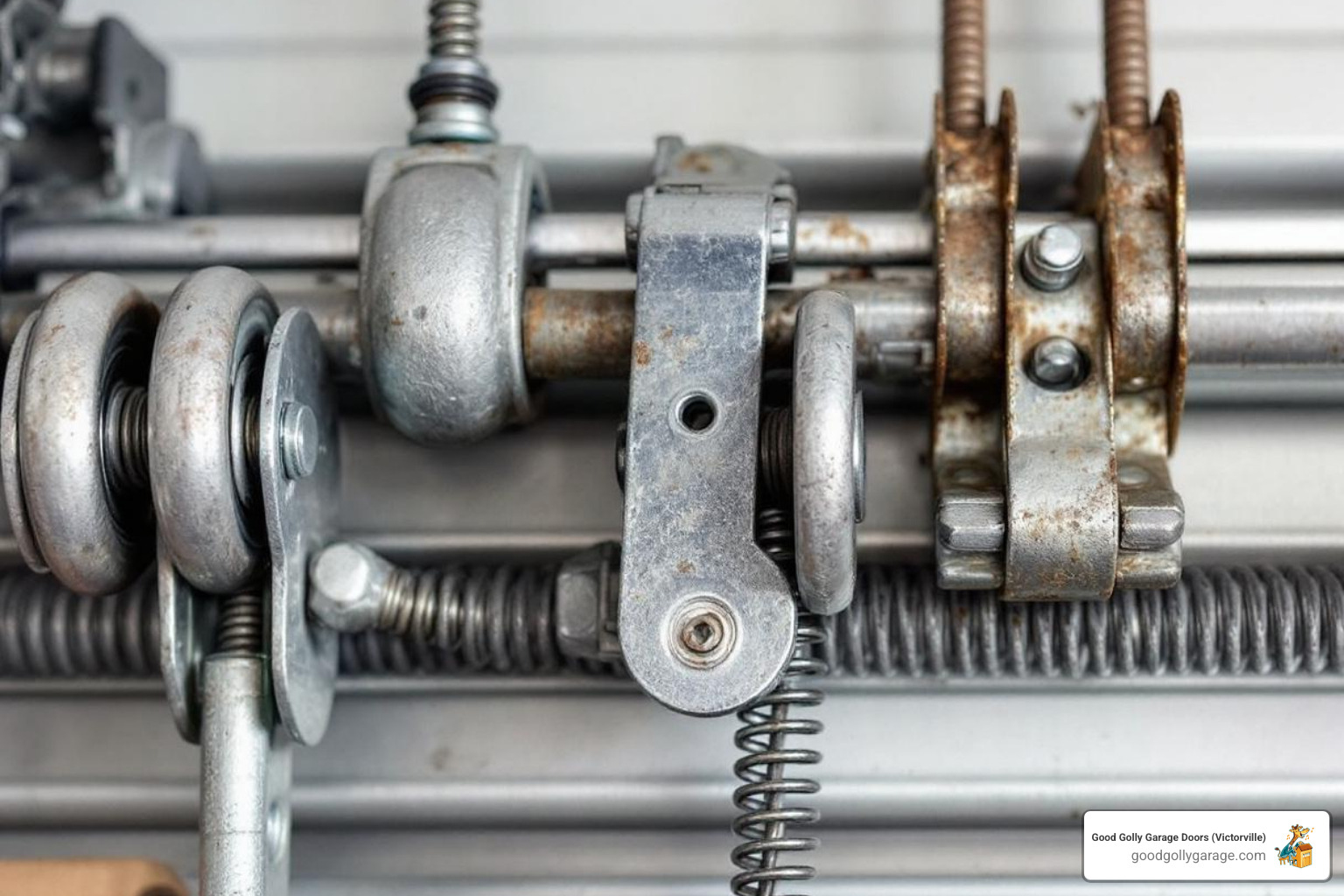
Decoding the Distress Signals: What That Noise Means
Your garage door speaks to you, not with words, but with a symphony of sounds. Understanding these noises is the first step in diagnosing what’s truly going on. Each distinct sound can point to a specific issue, helping us determine if it’s a simple fix or a sign of something more serious.
Squealing and Screeching
If your garage door sounds like a banshee wailing every time it moves, you’re likely hearing the cry of metal-on-metal friction. This often indicates:
- Worn Rollers: Rollers, whether metal or nylon, guide your door along its tracks. Over time, they wear down, especially metal ones, leading to squealing as they grind against the track. Rollers typically last 10-15 years, but frequent use or harsh conditions can shorten their lifespan.
- Lack of Lubrication: The most frequent cause of a noisy garage door is inadequate lubrication. Hinges, rollers, and springs need regular lubrication. Without it, metal parts rub together, creating that high-pitched squeal.
Grinding and Rumbling
A deeper, more ominous grinding or rumbling sound usually suggests a problem with alignment or debris.
- Misaligned Tracks: If your garage door tracks are bent or misaligned, the rollers will struggle to move smoothly, causing a grinding noise. Even a minor bump from a vehicle can bend tracks, throwing the entire system out of alignment.
- Debris in Tracks: Hesperia’s dusty environment means that dirt, dust, and small rocks can accumulate in your garage door tracks. This debris acts like sandpaper on your rollers, creating grinding noises and accelerating wear.
- Failing Opener Motor: Sometimes, a grinding noise can come from the garage door opener itself, signaling that the motor is struggling or starting to fail.
Rattling and Clanking
When your garage door sounds like a marching band of loose parts, it’s usually less severe but still demands attention.
- Loose Hardware: Your garage door is held together by numerous nuts, bolts, and screws. Over time, the constant vibration of the door’s movement can cause these to loosen. When they’re not snug, they rattle and clank as the door moves. This is often an easy DIY fix.
- Worn Hinges: Hinges connect the door panels and allow them to articulate. If these become worn, rusty, or lack lubrication, they can rattle and clank.
Popping and Banging
These are the noises that should send a shiver down your spine and prompt immediate action.
- Torsion Springs: A loud pop, often described as sounding like a firecracker or a shotgun, almost always signals a broken torsion spring. These springs bear the immense weight of your garage door, and when one snaps, the door becomes incredibly heavy and dangerous.
- Broken Spring Danger: Garage doors can weigh from 150 to over 800 pounds. When a spring breaks, the door can fall suddenly and without warning, posing a significant safety hazard. Never attempt to operate a door with a broken spring or try to replace it yourself. This is a job for skilled professionals.
For more detailed information on identifying and addressing issues, our broken garage door Hesperia CA guide offers valuable insights into what to look out for.
Why Is My Loud Garage Door in Hesperia CA? Local Climate and General Wear
Hesperia’s unique high desert climate is a beautiful backdrop for our homes, but it can be surprisingly tough on garage doors. The environmental factors here accelerate wear and tear, often making the question, Why Is My Loud Garage Door In Hesperia CA, a common one for local homeowners.
Hesperia Climate Impact
Our high desert conditions present a triple threat to garage door components:
- Blowing Dust and Sand: The frequent winds in Hesperia kick up dust and sand. This fine particulate matter can get into everything—including your garage door tracks, rollers, and hinges. Once inside, it acts as an abrasive, grinding down moving parts and leading to increased friction and noise. It’s like sandpaper slowly wearing away at your system.
- Extreme Temperature Swings: Hesperia experiences significant temperature fluctuations, with hot days and cool nights. These rapid changes cause materials to expand and contract, which can stress metal components, leading to fatigue, warping, and loosening of hardware over time. This constant movement can exacerbate noise issues and accelerate component degradation.
- Intense Sun Exposure: The relentless Hesperia sun can be brutal. Intense UV radiation and heat can dry out lubricants, crack plastic components (like older nylon rollers), and cause rubber seals to become brittle. Wood garage doors can crack and paint can peel, affecting not just aesthetics but also the door’s structural integrity and noise dampening capabilities.
Component Wear and Tear
Beyond the climate, general wear and tear contribute significantly to a loud garage door. As your garage door ages, its components naturally degrade, leading to increased noise.
- Age of Door: Doors older than eight years typically need more frequent repairs. As components reach the end of their lifespan, they become noisier. This is why a well-maintained door can still become loud simply due to its age.
- Rollers Lifespan: Rollers, which are crucial for smooth operation, have a finite life. While they can last 10-15 years, frequent use or exposure to Hesperia’s dust can shorten this. Worn rollers become wobbly, creating excessive noise and potentially damaging your tracks.
- Springs Cycle Count: Garage door springs are designed for a specific number of cycles (one cycle is opening and closing the door once). Extension springs typically last about 10,000 cycles (roughly five years), while more durable torsion springs last up to 30,000 cycles (about ten years). As springs approach their cycle limit, they can become weaker, leading to a straining opener and increased noise before they eventually break.
The effects of these factors are similar across our high desert service areas, from Hesperia to noisy garage door wrightwood ca.
Parts Most Affected by Hesperia’s Climate
- Rollers: Accumulation of dust and sand leads to grinding and premature wear.
- Hinges: Lubricant dries out faster in the heat, leading to squeaking and rust.
- Springs: Extreme temperature swings can stress the metal, potentially shortening their lifespan.
- Weatherstripping: Intense sun exposure causes rubber and vinyl to crack and become brittle, reducing its ability to dampen noise and seal the garage.
- Tracks: Dust and debris settle in the tracks, creating friction and grinding noises.
- Opener Motor: While often protected, extreme temperatures can affect the internal components and lubricants of the opener, leading to strain and noise.
Quiet on the Home Front: DIY Maintenance for Hesperia Homeowners
Before calling in the cavalry, there are several things you can do to quiet a noisy garage door. Many common noise issues can be resolved with a bit of routine maintenance and care. These DIY steps are safe, effective, and can significantly extend the life of your garage door system.
Routine Inspection
Regular visual checks are your first line of defense. We recommend performing a quick inspection monthly and a more thorough one every few months.
- Visual Check: Look for anything out of the ordinary—bent tracks, loose hardware, frayed cables, or worn rollers. Pay attention to any rust on metal parts.
- Listening for Changes: Become familiar with the normal sounds of your garage door. Any new or increasing noises are usually a sign that something needs attention. Listen for the specific types of noises we discussed earlier—squeals, grinding, rattles, or pops.
Lubrication Best Practices
Proper lubrication is perhaps the most crucial step in silencing a noisy garage door. It reduces friction, prevents rust, and ensures smooth operation.
- Silicone-Based Lubricant or White Lithium Grease: These are the heroes of garage door lubrication. White lithium grease is excellent for metal-on-metal contact points, while silicone-based spray works well for most other moving parts.
- Where to Apply:
- Rollers: Lubricate the bearings inside the rollers. If you have metal rollers, apply lubricant to the point where the axle goes through the wheel. If you have nylon rollers, avoid lubricating the nylon itself, as it can degrade the material. Focus on the metal stem and bearings.
- Hinges: Apply lubricant to the hinge pivot points.
- Springs: Lightly spray the entire length of the torsion or extension springs. This helps reduce friction as they expand and contract.
- Opener Chain/Belt: If you have a chain-drive opener, lubricate the chain. For belt-drive openers, check your manufacturer’s recommendations, as belts often require no lubrication.
- What to Avoid (WD-40, Tracks): Contrary to popular belief, WD-40 is not a true lubricant; it’s a degreaser and can attract dirt, making your noise problem worse. Never lubricate the garage door tracks. Lubricant on the tracks will attract dirt and dust, creating a sticky mess that hinders roller movement and causes more noise.
We recommend lubricating your garage door system every 3-6 months, or more frequently in Hesperia’s dusty conditions.
Tightening Hardware
Loose hardware is a common culprit for rattling and clanking noises.
- Wrenches and Sockets: Arm yourself with a set of wrenches and a socket set.
- Checking Hinges and Brackets: Systematically go through all the nuts and bolts on your garage door. Tighten any loose fasteners on the hinges, roller brackets, and the brackets that hold the tracks to the wall or ceiling. Be careful not to overtighten, as this can strip the bolts or damage components.
Cleaning Tracks
Hesperia’s blowing dust and sand can turn your garage door tracks into abrasive runways.
- Removing Dust and Debris: Use a damp cloth to wipe down the inside of your garage door tracks. Remove any visible dirt, dust, or small pebbles. A small brush can help dislodge stubborn grime.
- Wiping Down Sensors: While you’re at it, give your safety sensors a quick wipe. These are the small electronic “eyes” located near the bottom of your garage door tracks. Dust can obstruct their beam, causing the door to reverse unexpectedly or not close at all.
By performing these simple DIY maintenance tasks regularly, you can often significantly reduce the noise coming from your garage door and prevent more serious issues down the line.
When to Call for Professional Garage Door Service in Hesperia
While DIY maintenance can solve many common garage door noise issues, there are specific situations where calling a professional is not just recommended, but absolutely essential for your safety and the integrity of your garage door system.
Safety Hazards
Garage doors are heavy and operate under extreme tension, making certain repairs incredibly dangerous for untrained individuals.
- Garage Door Weight: As we mentioned, garage doors can weigh anywhere from 150 to over 800 pounds. Imagine that weight falling unexpectedly.
- High-Tension Springs: Torsion springs, located above the door, are wound tightly and store immense energy. Extension springs, running along the sides, are also under significant tension. Attempting to repair or replace these without proper training and specialized tools can result in severe injury, including broken bones, lacerations, or even death.
- Snapped Cables: Cables work in conjunction with springs to lift and lower the door. If a cable frays or snaps, the door can become unbalanced or fall. Manipulating cables under tension is also very dangerous.
The U.S. Department of Housing and Urban Development classifies a non-operational garage door as a “Moderate” health and safety issue, emphasizing the inherent risks. A hole in a garage door is also considered a “Moderate” health and safety deficiency, highlighting the importance of structural integrity. For any situation involving these high-risk components, professional intervention is non-negotiable. If you’re facing an urgent issue, our team is ready for emergency broken garage door in victorville ca.
Signs You Need a Pro
Beyond the general noise, certain indicators scream “call a professional!”:
- Loud Pop or Bang: This is almost always a sign of a broken torsion spring. Do not attempt to open or close the door. Disconnect the opener and call us immediately.
- Door Is Crooked: If your garage door looks lopsided or hangs unevenly, it could indicate a broken spring, a snapped cable, or severe track misalignment. Operating it in this state can cause further damage or lead to the door falling.
- Door Feels Heavy: If you try to open the door manually and it feels incredibly heavy, it means the springs are not providing adequate lift. This could be due to weakened or broken springs, and operating the opener in this condition will strain and eventually burn out the motor.
- Opener Is Straining: A struggling or straining garage door opener often signals an underlying mechanical problem with the door itself, such as unbalanced springs or friction from worn components. The opener is compensating for the door’s weight, which will lead to premature failure of the opener.
- Visible Damage: Any severe damage to tracks (like significant bends), panels, or cables should prompt a professional inspection.
Benefits of Prompt Repair
Addressing a noisy garage door promptly by calling professionals like us offers several advantages:
- Preventing Further Damage: A small problem, if ignored, can quickly escalate. A noisy roller can lead to a bent track, which can burn out your opener motor. Timely repair prevents a minor inconvenience from becoming a major expense.
- Ensuring Home Security: A malfunctioning garage door can compromise your home’s security. A door that doesn’t close properly or is easily forced open leaves your home vulnerable to intruders.
- Maintaining Safety: A properly functioning garage door is a safe garage door. Professional repairs ensure all components are working correctly, minimizing the risk of accidents or injuries.
Non-Negotiable Professional Repairs
- Broken Springs: Due to extreme tension and stored energy.
- Snapped or Frayed Cables: Also under high tension and critical for door balance.
- Severely Bent or Damaged Tracks: Requires specialized tools and expertise to repair or replace.
- Off-Track Doors: Can be complex to re-align safely, especially if the door is heavy.
- Opener Motor Issues: Internal electrical or mechanical problems should be handled by a qualified technician.
- Door Balance Issues: An unbalanced door puts undue stress on the opener and can be dangerous.
When in doubt, remember: it’s always better to rely on expert service than to risk injury or cause more expensive damage.
Frequently Asked Questions About Loud Garage Doors in Hesperia
We hear a lot of questions from Hesperia homeowners about their noisy garage doors. Here are some of the most common ones, answered to help you better understand your situation.
What Are the Common Causes of a Loud Garage Door in Hesperia CA?
The common culprits behind a Loud Garage Door in Hesperia CA often boil down to a combination of general wear and tear and our unique high desert environment:
- Lack of Lubrication: This is by far the most frequent cause. Metal components like rollers, hinges, and springs need regular lubrication. Without it, they grind against each other, creating squealing, screeching, and grinding noises.
- Loose Hardware: Over time, the constant movement of the door can cause nuts, bolts, and screws on hinges, brackets, and panels to loosen. This results in rattling and clanking sounds as the door operates.
- Worn Rollers: Rollers guide the door along its tracks. After years of use, they can wear down, become wobbly, or develop flat spots, leading to grinding, thumping, or squealing. Metal rollers are particularly prone to noise as they age, while nylon rollers offer a quieter alternative.
- Debris in Tracks: Hesperia’s dusty conditions mean dirt, sand, and small rocks can easily accumulate in your garage door tracks. This debris acts as an abrasive, causing friction and grinding noises as the rollers try to pass through.
- Hesperia Dust and Sand: Our local climate significantly contributes to these issues. The dry, dusty air and blowing sand accelerate wear on moving parts and dry out lubricants faster, making regular maintenance even more critical here than in other regions.
For more insights into common garage door problems, including those exacerbated by our local environment, you can refer to our why broken garage door barstow tips which covers similar high desert challenges.
Can a Noisy Garage Door Be a Safety Hazard in Hesperia?
Absolutely, yes. A noisy garage door is more than just an annoyance; it’s often a warning sign that underlying mechanical issues are developing, which can pose significant safety risks.
- Warning Sign: The noise itself is your garage door’s way of telling you something is wrong. Ignoring it allows the problem to worsen, potentially leading to a sudden and dangerous malfunction.
- Broken Spring Risk: As we’ve discussed, a loud pop or bang often signals a broken spring. Springs counterbalance the immense weight of the garage door. If a spring breaks, the door can come crashing down with dangerous force, posing a severe risk of injury to people, pets, or property. Garage doors weigh from 150 to over 800 pounds, so this is no small matter.
- Falling Door Potential: Issues like worn cables, misaligned tracks, or an unbalanced door can also lead to the door falling unexpectedly. The U.S. Department of Housing and Urban Development classifies a non-operational garage door as a “Moderate” health and safety issue, underscoring the potential dangers.
Addressing a noisy garage door promptly is crucial not just for your peace of mind, but for the safety of everyone in your home.
How Does the Age of a Garage Door Contribute to Why My Loud Garage Door in Hesperia CA Needs Attention?
The age of your garage door plays a significant role in why it might become noisy and require attention. Like any mechanical system, garage doors experience wear and tear over time.
- Component Degradation: All the moving parts of your garage door—rollers, hinges, springs, cables, and even the opener motor—have a finite lifespan. As they age, they naturally degrade. Rollers wear down, springs lose their tension or break, hinges become loose or rusty, and opener motors can become less efficient and noisier. Doors older than eight years typically need more frequent repairs.
- Metal Fatigue: Constant expansion and contraction due to Hesperia’s temperature swings, combined with the stress of daily operation, can lead to metal fatigue in springs, tracks, and other components. This can cause parts to weaken, bend, or break, leading to excessive noise.
- Outdated Safety Features: Older garage doors often lack the modern safety features found in newer models, such as photo-eye sensors that prevent the door from closing on an obstruction. In addition to noise, an older, noisy door might also be a less safe door.
When repairs become frequent on an aging door, it often makes more sense to consider a replacement. Newer garage doors offer improved durability, quieter operation, and improved safety features. For guidance on upgrading your system, our best hesperia garage door installation guide can help you explore your options.
Your Next Step for a Quiet and Reliable Garage Door in Hesperia
We’ve covered a lot of ground today, from decoding the specific noises your garage door might be making to understanding how Hesperia’s unique climate impacts its performance. The key takeaway is this: a noisy garage door is rarely just an annoyance; it’s a symptom, a warning sign that something needs your attention.
- Noise is a Symptom: Whether it’s a squeal from lack of lubrication, a grind from worn rollers, a rattle from loose hardware, or a terrifying bang from a broken spring, each sound points to a specific issue that requires diagnosis.
- Maintenance is Key: Regular DIY maintenance, including lubrication and tightening hardware, can prevent many noise issues and significantly extend the life of your garage door. But remember, always use the right lubricants and avoid dangerous components like springs.
- Safety First: When in doubt, or when dealing with high-tension parts like springs and cables, safety must always be your top priority. These are not DIY projects.
If you’ve tried the DIY tips and your garage door is still making a racket, or if you suspect a more serious issue, it’s time to call in the professionals. At Good Golly Garage Doors, we specialize in providing reliable, fast, and transparent service to homeowners across the High Desert, including Hesperia, Victorville, and surrounding areas. We’re dedicated to building trust with a human touch, ensuring your garage door operates safely and quietly.
Our expert technicians can provide a thorough diagnosis, identify the root cause of your noisy garage door, and offer professional repairs that restore quiet operation and ensure your safety. We proudly serve our community in victorville ca and beyond.
Don’t let a noisy garage door disrupt your peace or compromise your family’s safety any longer. Let us help you silence the squeak and get your garage door running smoothly again.
Contact our Hesperia garage door experts today! Schedule a tune-up or request a service call, and let us restore the quiet operation you deserve.
 All Service Areas