

What’s That Noise? Why Your Wrightwood Garage Door is Loud
Expert Garage Door Services Powered by Good Golly Garage Doors
Why Your Noisy Garage Door in Wrightwood, CA, Needs Attention
Why Is My Loud Garage Door In Wrightwood CA making so much noise? That grinding, squeaking, or rattling sound isn’t just annoying—it’s often your door’s way of telling you something needs attention. A noisy garage door typically signals one or more underlying issues that, left unaddressed, can lead to bigger problems down the road.
Common Causes of a Loud Garage Door in Wrightwood:
- Lack of Lubrication – Dried-out rollers, hinges, and springs create metal-on-metal grinding
- Loose Hardware – Vibration loosens nuts, bolts, and brackets over time
- Worn Rollers or Hinges – Years of use wear down these components
- Misaligned Tracks – Temperature swings cause metal to expand and contract
- Aging or Broken Springs – Springs under tension can pop loudly when they fail
- Climate Factors – Wrightwood’s high-altitude desert environment accelerates wear
Wrightwood’s unique setting at 6,200 feet creates a perfect storm for garage door wear. The combination of intense sun, low humidity, dramatic temperature swings, and fine desert dust means your garage door faces challenges that doors in other climates simply do not encounter. Lubricants evaporate faster here, dust infiltrates tracks and sensors, and metal parts expand and contract more dramatically with the temperature shifts.
If you are dealing with a noisy garage door, you are facing both a nuisance and an early warning system. That sound is telling you it is time for maintenance—and the good news is that many noise issues can be resolved with simple DIY fixes. For more complex problems, professional help is available. Learn more about Common Garage Door Issues and When to Seek Help today.
I am Jason Henderson, founder of Good Golly Garage Doors, and I have spent years helping homeowners understand Why Is My Loud Garage Door In Wrightwood CA and similar high-desert areas requires specialized attention and maintenance. Our team has seen how this region’s climate accelerates wear on garage door components, and we are here to help you understand what is happening and how to fix it.
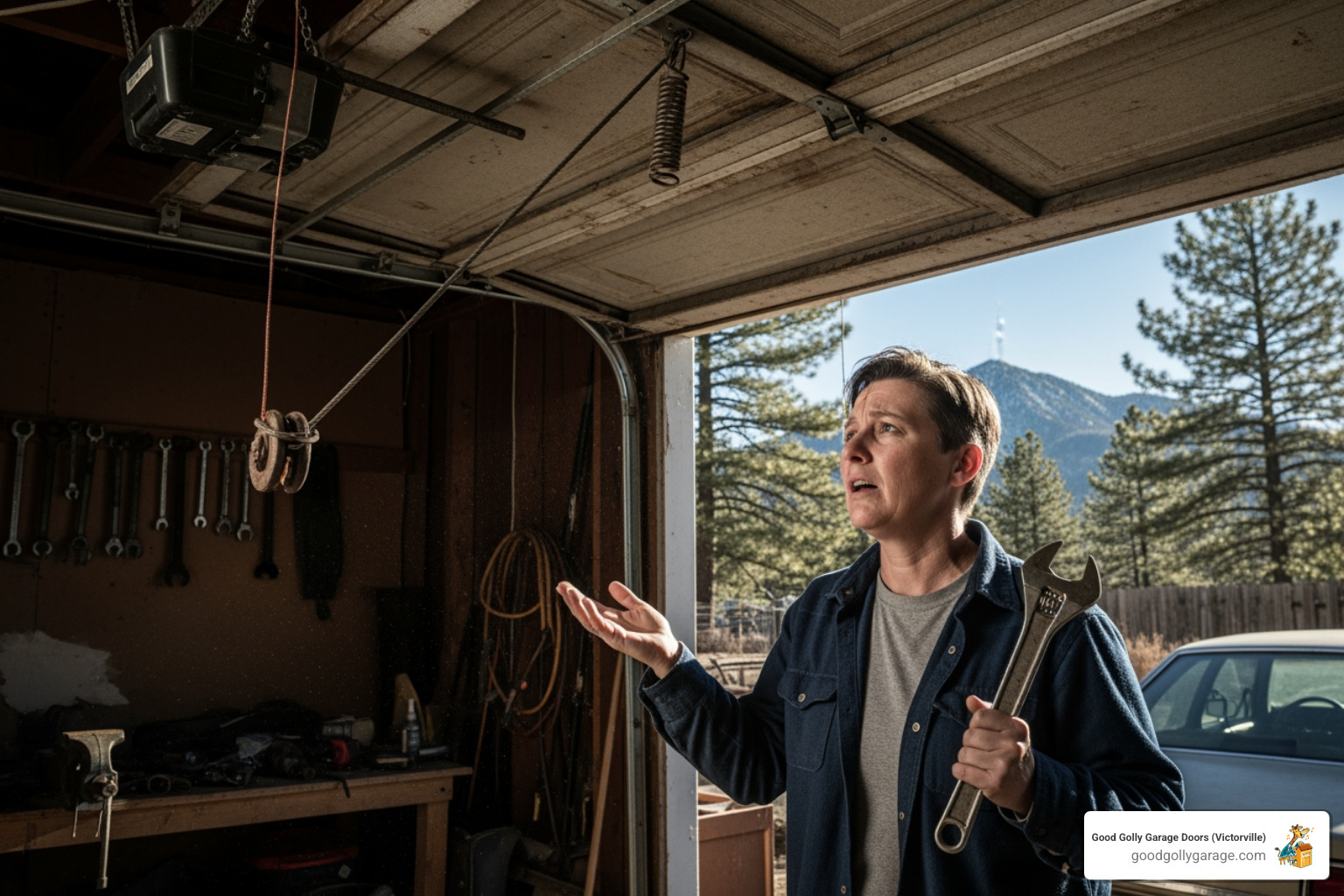
How Wrightwood’s Climate Wears Down Your Garage Door
Living in Wrightwood, California, offers breathtaking views and a unique lifestyle, but it also presents specific challenges for your home, especially your garage door. The local climate is not just picturesque; it is a significant factor in Why Is My Loud Garage Door In Wrightwood CA. The high-altitude desert environment, sitting at a remarkable 6,200-foot elevation, brings a combination of intense sun, low humidity, dramatic temperature swings, and fine desert dust. All of these elements work together to accelerate wear and tear on your garage door components.
Let us break down how Wrightwood’s specific climate contributes to those annoying noises:
- High-Altitude Desert and Low Humidity: At 6,200 feet, the air is thinner and drier. This low humidity causes lubricants on your rollers, hinges, and springs to evaporate much faster than in more temperate climates. When these crucial moving parts dry out, you get metal-on-metal friction—the primary culprit behind squeaking and grinding.
- Temperature Swings: Wrightwood experiences dramatic temperature fluctuations, often seeing wide differences between day and night. Metal components in your garage door, like tracks and springs, expand when hot and contract when cold. This constant movement can loosen hardware, cause misalignment, and put stress on parts, leading to rattling, banging, and increased friction.
- Fine Desert Dust: The desert is not just dry; it is dusty. This fine grit, common in Desert Climates, infiltrates everything. It coats tracks, clogs roller bearings, and mixes with any remaining lubricant to create an abrasive paste. This significantly increases friction and wear, making your door work harder and louder.
- Intense Sun and UV Exposure: The high altitude also means more intense sun and UV radiation. This relentless sun can dry out weather seals, causing them to crack and become brittle. It can also warp certain door panels and degrade plastic components, further contributing to noise and reduced efficiency.
- Metal Corrosion: While the air is dry, morning dew can still form, and combined with dust, it can lead to corrosion on metal parts. This rust adds to friction and can weaken components.
Understanding these environmental factors is the first step in keeping your garage door running quietly and preventing major repairs. A quiet door is a healthy door, and regular maintenance custom to the unique Wrightwood conditions is key to ensuring its longevity. For more general tips on how to keep your garage door running quietly, you can also refer to resources like How to Keep Your Garage Door Running Quietly.
Squeaking and Grinding Noises
When your garage door starts to sound like a haunted house, it is usually trying to tell you something specific. Squeaking and grinding noises are among the most common complaints and they often point to a clear set of culprits.
- Lack of Lubrication: This is the most frequent cause, especially in Wrightwood’s dry climate. As mentioned, lubricants evaporate quickly here. Without proper lubrication, metal components like rollers, hinges, and springs rub directly against each other, creating that metal-on-metal grinding sound. It is harsh, grating, and signals that parts are wearing down unnecessarily.
- Worn Rollers: Your garage door rollers guide the door along its tracks. Over time, especially in dusty environments, the bearings in metal rollers can wear out, or the nylon on plastic rollers can degrade. Worn rollers will squeal, grind, or clatter as they struggle to move smoothly.
- Worn Hinges: Hinges connect the sections of your garage door and allow them to articulate as the door opens and closes. Like rollers, hinges rely on lubrication to operate smoothly. If they are dry, bent, or corroded, they will produce a loud squeaking or creaking sound with every movement.
These noises are an early warning sign that something needs attention before it escalates into a more serious and costly repair. Ignoring them can lead to further damage to your garage door system. For a broader understanding of different garage door noises, you can check out 7 Garage Door Noises You Shouldn’t Ignore.
Rattling and Banging Noises
If your garage door sounds like a marching band with a few loose cymbals, you are likely dealing with rattling or banging noises. These sounds often indicate components that are not securely fastened or are out of alignment.
- Loose Hardware: Garage doors are made up of many nuts, bolts, and screws that hold everything together, from hinges and roller brackets to the opener’s mounting hardware. Over time, and especially with the vibrations of daily use, these fasteners can loosen. When they do, parts will rattle against each other, or against the door itself, creating a series of small bangs and shakes.
- Unbalanced Door: A garage door that is not properly balanced can be very noisy. If the springs are not providing the correct amount of lift, the opener has to work harder and the door might move unevenly, causing it to bang or clatter as it travels. An unbalanced door can also put undue stress on other components.
- Misaligned Tracks: The tracks guide your garage door, and if they are not perfectly parallel and plumb, your rollers will struggle. Rollers might rub against the track walls, jump out of the track, or cause the door to jerk and bang as it moves. Temperature swings in Wrightwood can worsen this by causing metal tracks to expand and contract, potentially throwing them out of alignment.
These noises can often be resolved with some basic troubleshooting and tightening, but if left unaddressed, they can lead to more significant problems, including the door coming off its tracks entirely.
Popping and Straining Sounds
Some garage door noises are more urgent than others. Popping and straining sounds often fall into this category, indicating significant stress on critical components and sometimes a safety hazard.
- Torsion Springs and Extension Springs: These are the key parts of your garage door system, counterbalancing the door’s weight. They are under extreme tension, and when one breaks, it typically releases with a loud, startling pop. This means the spring has failed and your door is now extremely heavy and dangerous to operate. Never attempt to repair or adjust these springs yourself.
- Opener Motor Strain: If you hear a loud straining or groaning sound coming from your garage door opener, it usually means the motor is working too hard. This could be due to an unbalanced door, worn gears within the opener, or issues with the chain or belt drive.
These types of noises are rarely simple fixes and often require professional attention. They are clear indicators that your garage door system is under stress. For more insights into what different noises mean, the article 7 Garage Door Noises You Shouldn’t Ignore and What They Mean offers further guidance.
DIY Fixes for a Quieter Garage Door
We understand the satisfaction of tackling a home project yourself, and when it comes to a noisy garage door, there are several DIY solutions you can try. Many common noises can be quieted with a bit of effort and the right tools. Before you begin, always perform a visual inspection of your garage door system. Look for anything obviously out of place, bent, or broken.
Safety first. Garage doors can be heavy and contain components under high tension. Always disconnect your garage door opener from its power source before performing any maintenance or repairs. If you are ever unsure or uncomfortable, it is always best to call a professional.
Step 1: Lubricate All Moving Parts
This is perhaps the most effective and easiest DIY fix for a noisy garage door, especially in Wrightwood’s dry climate. Proper lubrication reduces friction and stops that irritating metal-on-metal grinding.
- What to Use: A silicone-based lubricant spray or white lithium grease works well. These are designed for garage door components and will not attract dust as much as general-purpose sprays.
- Where to Apply:
- Rollers: Spray the bearings inside the rollers (if they have them). If you have nylon rollers, avoid spraying the nylon itself if the product label advises against it.
- Hinges: Apply lubricant to the hinge pivot points where metal rubs against metal. Move the door slightly to work the lubricant in.
- Springs: For torsion springs (the large spring or springs above the door) and extension springs (the springs running parallel to the tracks), spray them down thoroughly. This helps reduce friction and rust.
- Opener Chain or Belt: If you have a chain-drive opener, lubricate the chain. For belt-drive openers, check your manual, as some belts are self-lubricating.
- How Often: In Wrightwood’s high-altitude desert climate, lubricants evaporate faster due to low humidity, and fine dust creates more friction. While standard advice is once or twice a year, lubricating all moving parts every 3 to 4 months is a smart schedule to keep your system quiet and protected. For more detailed guidance, refer to How to Fix Your Noisy Garage Door – Do’s & Dont’s | Clopay.
Step 2: Tighten All Hardware
Vibrations from daily use can cause nuts, bolts, and screws to loosen over time, leading to rattling and banging noises. Tightening these fasteners can dramatically reduce noise and improve the overall stability of your garage door.
- Tools You Will Need: A basic wrench and socket set should cover most of the hardware.
- What to Tighten:
- Hinges: Check all the bolts on your door’s hinges.
- Roller Brackets: Ensure the brackets holding your rollers are snug.
- Mounting Brackets: Inspect the brackets that attach your tracks to the garage wall and ceiling.
- Opener Hardware: Check the bolts securing your garage door opener to the ceiling.
- How to Do It: Go through each component systematically, gently tightening any loose hardware. Be careful not to over-tighten, as this can strip threads or damage components. A snug fit is enough to stop the rattle.
This simple step can often eliminate a surprising amount of noise by ensuring everything is held firmly in place and reducing unwanted vibration.
Step 3: Clean and Align the Tracks
Your garage door tracks are the path for your rollers, and they need to be clean and properly aligned for smooth travel. In Wrightwood, fine desert dust is a constant issue, making track maintenance especially important.
- Clean the Tracks: With your garage door open, use a damp cloth to wipe down the inside of both vertical and horizontal tracks. Remove any accumulated dirt, dust, spiderwebs, or debris. This helps prevent friction and ensures rollers can glide freely.
- Check for Bends: Carefully inspect the tracks for any bends, dents, or crimps. Even a small imperfection can cause rollers to catch or bind, leading to grinding or banging noises.
- Minor Alignment: For minor misalignments, you might be able to gently tap the track back into place using a rubber mallet. You can also use a level to check if the tracks are plumb vertically and parallel horizontally. If you find a slight deviation, sometimes loosening the track mounting brackets, adjusting the track, and then re-tightening can help. However, significant bends or alignment issues are best left to professionals, as improper adjustments can make the problem worse.
Regular cleaning and occasional checks for alignment will keep your door moving smoothly and quietly. In this dry and dusty environment, this step is crucial for preventing noise.
When to Call a Professional and Consider Upgrades
While many garage door noises can be addressed with DIY solutions, there are times when it is essential to call in the experts. Some problems pose significant safety risks or require specialized tools and knowledge. Knowing when to step back and seek professional help is crucial for your safety and the longevity of your garage door system.
Signs It Is Time for an Expert for Your Noisy Garage Door in Wrightwood, CA
If you have tried the DIY fixes and the noise persists, or if you notice any of these more serious symptoms, it is time to call for help. It is always better to have a minor issue checked than to risk injury tackling something major.
- Loud Pop or Bang: This is almost always a sign of a broken torsion or extension spring. These springs are under immense tension and can cause severe injury if you try to handle them without proper training and tools.
- Door Is Crooked or Feels Heavy: If your garage door is hanging unevenly, moving in a jerky motion, or feels very heavy to lift manually (after disconnecting the opener), it often indicates a broken spring or snapped cables. Operating a door in this condition can cause further damage to the opener and other components.
- Major Track Damage: If your tracks are severely bent, detached from the wall, or show signs of significant structural damage, professional repair or replacement is necessary.
- Opener Electrical Issues: If your opener motor is humming but the door is not moving, or if there are intermittent electrical problems, it is best to have a qualified technician diagnose and repair the issue.
- DIY Fixes Fail: If you have lubricated, tightened, and cleaned, but your loud garage door in Wrightwood is still making troubling noises, the problem is likely more complex than a simple maintenance issue.
- Safety Concerns: If you are ever unsure about a repair, or if it involves components under high tension (like springs and cables), always err on the side of caution and call a professional.
For emergency situations or any of these critical signs, do not hesitate to reach out. Helpful advice is also available on the Wrightwood CA Emergency Garage Door Tips page.
Why Is My Loud Garage Door in Wrightwood, CA a Sign I Need an Upgrade?
Sometimes, the best solution for a noisy garage door is not just a repair, but an upgrade. If your door is old, constantly noisy, or you simply want a quieter home environment, investing in newer, quieter components can make a significant difference.
- Quieter Garage Door Openers: The type of opener you have can greatly impact noise levels.
- Belt-Drive Openers: These are among the quietest options, using a rubber belt instead of a chain. They are well suited if your garage is attached to your living space or if you have a bedroom above the garage.
- Screw-Drive Openers: These use a threaded steel rod to move the trolley. They are moderately quiet and require relatively low maintenance.
- Chain-Drive Openers: These openers use a metal chain to pull the door and are typically the loudest style.
Here is a quick comparison:
| Opener Type | Noise Level | Maintenance | Performance |
|---|---|---|---|
| Belt-Drive | Very Quiet | Low | Smooth |
| Screw-Drive | Moderate | Low | Reliable |
| Chain-Drive | Loudest | Moderate-High | Strong |
- Nylon Rollers vs. Metal Rollers: If you still have older metal rollers, upgrading to modern nylon rollers is one of the most effective ways to reduce noise. Metal rollers can grind and rattle, especially as they wear out. Nylon rollers glide more smoothly and quietly along the tracks, require less maintenance, and often offer better durability.
- Insulated Garage Doors: Beyond keeping your garage warmer in winter and cooler in summer, insulated garage doors offer excellent sound absorption. The layers of insulation help dampen vibrations and block external noise, making your garage and nearby living spaces significantly quieter while also supporting better energy efficiency.
Frequently Asked Questions About Noisy Garage Doors in Wrightwood
We often get questions from homeowners in Wrightwood about their noisy garage doors. Here are some of the most common ones, with answers custom to the local climate.
How Often Should I Lubricate My Garage Door in a Desert Climate Like Wrightwood?
In Wrightwood’s high-altitude desert climate, it is a good idea to lubricate all moving parts of your garage door every 3 to 4 months. This is more frequent than the standard advice for other regions, and for good reason. The low humidity causes lubricants to evaporate faster, and the ever-present fine desert dust creates more friction. Regular lubrication at this interval helps prevent metal-on-metal grinding, extends the lifespan of your components, and keeps your door operating smoothly and quietly.
Are Nylon Rollers Really Quieter Than Metal Ones?
Yes. Upgrading from older metal rollers to modern nylon rollers is one of the most effective ways to achieve noticeable noise reduction. Metal rollers, especially as they age, tend to grind and rattle as they move along the tracks. Nylon rollers are designed to glide smoothly and quietly. They also offer good durability and often require less maintenance, making them a worthwhile upgrade for a quieter garage door.
Why Does My Garage Door Reverse as Soon as It Hits the Floor?
When your garage door reverses immediately upon hitting the floor, it usually indicates one of the following:
- Misaligned or Obstructed Safety Sensors: Your garage door has safety sensors located near the bottom of the tracks. If these sensors are dirty, misaligned, or if there is an obstruction in their path, the door will reverse to prevent potential injury or damage. Check that nothing is blocking the beam and that the sensor lights are on and steady.
- Obstruction in the Door’s Path: Even a small object or debris on the floor where the door closes can trigger the safety reversal mechanism.
- Incorrect Opener Settings: The opener has settings for travel limits and force settings. If the travel limit is set too high (meaning the opener thinks it should go down further than the floor), or if the force setting is too sensitive, it can detect the floor as an obstruction and reverse.
You can check for obstructions and clean the sensors yourself, but adjusting travel limits and force settings can be tricky and may require professional adjustment to ensure the door operates safely and correctly.
Your Partner for a Quiet and Reliable Garage Door
At Good Golly Garage Doors, a noisy garage door is treated as more than just an annoyance—it is a sign that your system needs attention. A quiet door is a healthy door, and addressing squeaks, rattles, and bangs early can help prevent bigger headaches down the road.
Wrightwood’s unique climate presents real challenges, accelerating wear and tear on garage door components. With the right knowledge and regular maintenance, you can keep your door running smoothly and quietly for years to come. From understanding the specific impacts of the high-altitude desert environment to knowing when a simple DIY fix will do versus when it is time to call in the experts, the goal is to keep your system safe and reliable.
The Good Golly Garage Doors team is dedicated to providing reliable, fast, and transparent service with a human touch. Peace and quiet in your home, starting with your garage, contributes to overall peace of mind.
Do not let a loud garage door in Wrightwood become a daily frustration or a safety concern. Whether you need an expert diagnosis, professional repair, or are considering an upgrade to a quieter system, Good Golly Garage Doors is your trusted local partner.
Ready to silence that noisy door? Schedule expert garage door service in Victorville, CA today, and let the quiet return to your home.
 All Service Areas