

Is Your Helendale Garage Door Screaming? Find Out Why!
Expert Garage Door Services Powered by Good Golly Garage Doors
Why Is Your Helendale Garage Door Making All That Noise?
If the question Why Is My Loud Garage Door in Helendale CA is keeping you up at night, you’re not alone. A noisy garage door is a sign that something needs attention. Here’s what’s typically behind the racket:
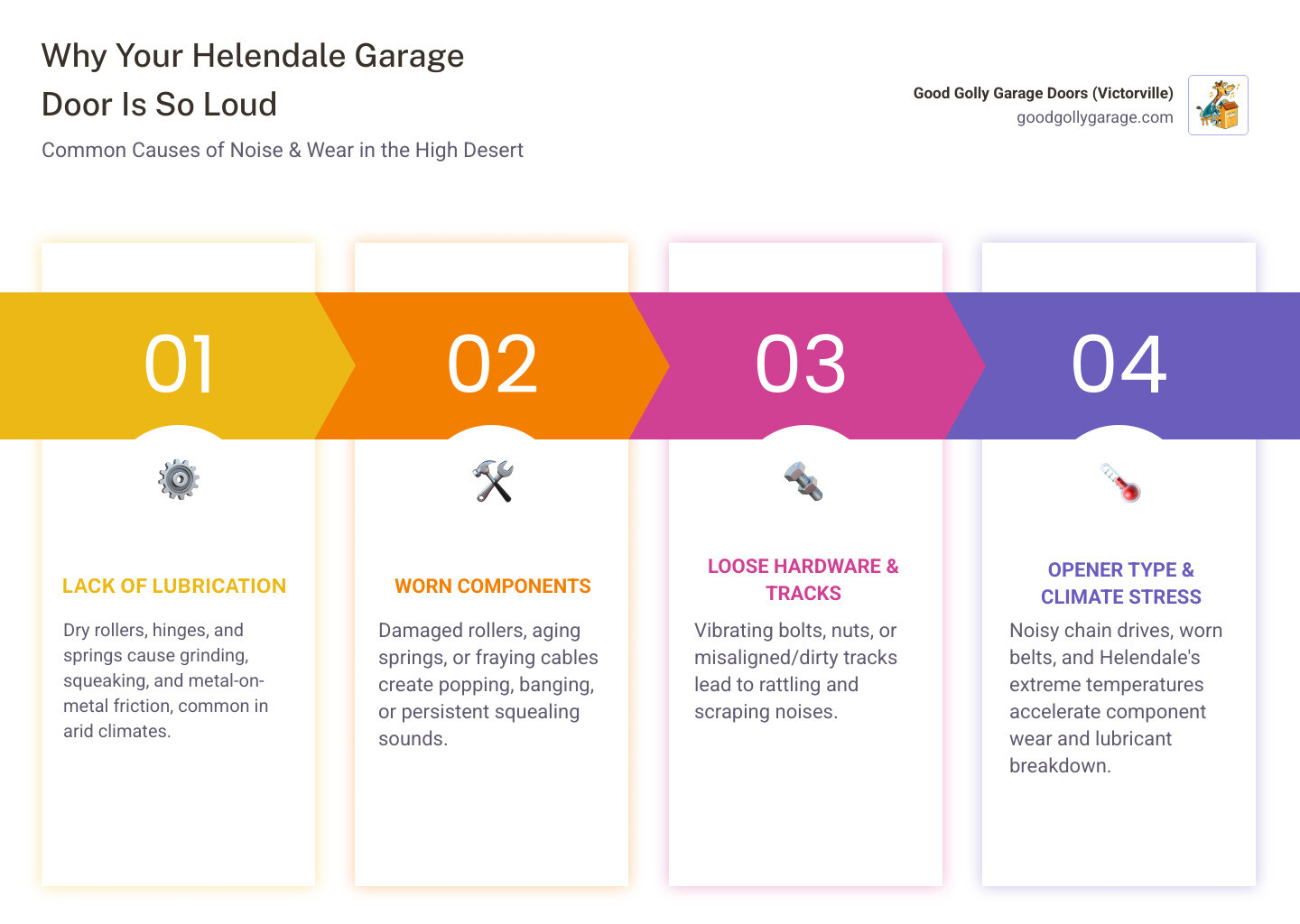
Common Causes of a Loud Garage Door:
- Lack of lubrication – Dry metal parts grinding against each other
- Worn rollers – Metal or damaged rollers creating grinding or squeaking sounds
- Loose hardware – Vibrating bolts, nuts, or brackets causing rattling
- Aging springs – Worn torsion or extension springs making popping or banging noises
- Opener issues – Chain drives or worn belts causing slapping or grinding sounds
- Misaligned tracks – Bent or dirty tracks creating scraping noises
- Desert conditions – Heat, dust, and temperature swings in Helendale accelerating wear
Most of these issues start small but worsen over time. The good news is that many can be fixed with simple maintenance or a quick repair.
Helendale’s high desert climate adds stress to your garage door. Extreme temperature swings cause metal parts to expand and contract, while blowing dust and sand increase friction. The intense summer heat also breaks down lubricants faster than in milder climates.
Living in Helendale means your garage door works harder than most. That 6 AM grinding noise isn’t just annoying – it’s your door asking for help before a complete breakdown.
For expert help with all your garage door repair needs, or to schedule a professional inspection, visit our Helendale garage door services page.
As Jason Henderson, I’ve led service teams through hundreds of garage door diagnostics. I can tell you that understanding Why Is My Loud Garage Door in Helendale CA matters is the first step to fixing it before a minor annoyance becomes a major repair. With the right approach, most noisy garage doors can be quieted quickly and affordably.
First, Pinpoint the Source of the Noise
To silence the noise, you first need to find its source. A careful visual inspection, listening test, and manual operation test can help isolate the problem. These steps will help determine if the noise comes from the door or the opener.
Identifying Different Garage Door Noises
Different sounds point to different culprits, so learning to distinguish them is key for an accurate diagnosis.
- Squealing Sounds: A high-pitched squeal often signals metal-on-metal friction from a lack of lubrication. This usually comes from worn rollers, dry hinges, or tracks needing attention. These issues are common causes of noisy or uneven door movement.
- Grinding Noises: Grinding usually indicates something is rubbing or catching, like misaligned or dirty tracks, or worn-out rollers. If the sound comes from the opener, it could be a failing motor or worn gears.
- Rattling and Vibrating: Rattling and vibrating noises are prime suspects for loose hardware, such as screws, nuts, bolts, or brackets. These vibrations can also indicate loose opener mounting brackets.
- Popping or Banging Sounds: Popping or banging sounds are often the most alarming and can indicate a serious issue. A loud pop might mean a spring has snapped or the door is unbalanced. Banging could mean the door is misaligned or has a major problem with its springs or cables.
Common causes include loose or worn-out parts (rollers, springs, hinges), or a malfunctioning garage door opener. Humidity, cold, spring type, and the age of the door or opener can also contribute to the noise.
How to Safely Test Your Door Manually
A manual test helps differentiate between opener issues and mechanical problems with the door itself. Safety is paramount: never attempt to adjust or repair garage door springs yourself, as they are under extreme tension and can cause serious injury.
Here’s how to safely test your door manually:
- Pull the Emergency Release Cord: With the garage door fully closed, pull the red emergency release cord hanging from the opener’s trolley. Pull it down and back to disconnect the opener. The door is now in manual mode.
- Lift the Door by Hand: Carefully lift the door by hand. A properly balanced door should feel light and easy to open with one hand.
- Check for Balance: Lift the door about halfway and let go. A well-balanced door should stay in place. If it slams shut or springs open, it’s unbalanced. An unbalanced door is a safety hazard requiring professional attention, as it usually indicates a spring problem.
- Feel for Resistance: While moving the door up and down, feel for any sticking, scraping, or binding. Does it move smoothly? Unusual resistance can help pinpoint friction or misalignment.
- Identify the Noise Source: If the door operates quietly when disconnected from the opener, the noise likely originates from your Garage Door Opener itself. If the noise persists, the problem lies with the door’s hardware, such as rollers, hinges, or tracks.
Manually operating the door is a crucial step to isolate opener issues from door component problems.
Why Is My Loud Garage Door in Helendale CA? Common Causes and Simple Fixes
Once you’ve identified the noise and its location, you can tackle the common causes. Many noisy garage door issues in Helendale are resolved with routine maintenance and DIY solutions. Here are the most frequent culprits and how to address them.
Lack of Lubrication: The Most Common Culprit
The top reason for a noisy garage door is a lack of lubrication. Metal parts like rollers, hinges, and springs constantly move against each other. Without lubrication, they create friction, leading to squeals and grinding. For more insights, check out The Mystery of the Noisy Garage Door: What’s Causing the Racket in Spring Valley Lake?.
The Fix: Use a high-quality silicone-based or white lithium-based garage door lubricant, which is specifically designed for these moving parts.
- Apply to Rollers: Focus on the bearings inside the rollers. If you have nylon rollers, avoid lubricating the nylon itself, as some lubricants can degrade the material. Silicone is generally best for nylon.
- Hinges: Lubricate the pivot points of all hinges.
- Springs: Apply lubricant to both torsion and extension springs.
- Opener Rail: If you have a chain or screw drive opener, lubricate the chain or screw drive itself (avoiding the belt on belt drives).
Important Note: Avoid products like WD-40. It’s not a true lubricant and can attract dust, making the noise worse. Proper lubrication is essential for quiet operation, especially in Helendale’s dusty environment. We’ll discuss frequency for this climate later.
Worn-Out Components That Cause Noise
Even with regular lubrication, parts wear out. Here are the components most likely to cause noise when they’re worn:
- Worn Rollers: Most doors have metal rollers that get noisy with age, causing squeaking, grinding, or wobbling as bearings fail.
- The Fix: Inspect rollers for wear. If your metal rollers are worn, upgrade to quieter nylon rollers, which need less lubrication and last longer. Rollers last 10-15 years, but Helendale’s climate can shorten that.
- Damaged Hinges: Hinges can become stiff, corroded, or bent, causing squeaking or grinding. They can also loosen over time.
- The Fix: Clean and lubricate the hinges, and tighten loose screws. Replace any bent or severely corroded hinges.
- Fraying Cables: The lift cables are under constant tension. Fraying cables can rub against components, creating noise and a significant safety hazard.
- The Fix: Fraying cables must be replaced immediately by a professional. Never attempt to handle or replace garage door cables yourself, as they are under extreme tension.
- Aging Springs: Garage door springs balance the door’s weight. As they age, they can lose tension or become brittle, leading to popping or banging noises, especially when they break.
- The Fix: If you suspect an issue with your springs, call a professional immediately. Springs are extremely dangerous to handle due to the immense tension they store. We’ll dig deeper into spring safety later.
Noisy doors can be caused by loose parts, worn components, or a malfunctioning opener. Promptly addressing these issues prevents more extensive repairs.
Your Garage Door Opener Type Matters
Your garage door opener type significantly affects noise levels. The three main types are chain drive, belt drive, and screw drive.
Here’s a comparison of how they typically stack up in terms of noise:
| Opener Type | Noise Level | Maintenance Needs | Durability |
|---|---|---|---|
| Chain Drive | Loudest | Regular lubrication of chain, occasional tension adjustment | Very durable, good for heavy doors |
| Belt Drive | Quietest | Minimal, occasional inspection for wear | Durable, often preferred for attached garages |
| Screw Drive | Moderate | Regular lubrication of screw mechanism | Durable, but can be sensitive to temperature changes |
- Chain Drive Openers: These common openers are the loudest. A metal chain pulls the trolley, creating a rattling sound. While robust, they are noisy.
- Belt Drive Openers: If Why Is My Loud Garage Door in Helendale CA is a constant concern, consider a belt drive opener. They use a quiet rubber belt instead of a chain and are ideal for attached garages where noise is a priority. A belt-drive model is often a smart long-term investment.
- Screw Drive Openers: These use a threaded steel rod and are quieter than chain drives. However, they can be sensitive to temperature changes, a factor in Helendale’s climate, and may require more frequent lubrication.
If your opener is the source of the noise, upgrading to a belt-drive system offers quieter operation. Modern DC-powered motors are also quieter than conventional models.
How Helendale’s High Desert Climate Contributes to Noise
Helendale’s high desert climate presents unique challenges for garage doors. Environmental factors like extreme temperatures, dust, and wind accelerate wear and tear, making your door more prone to noise.
Why Is My Loud Garage Door in Helendale CA During Summer and Winter?
Helendale’s significant temperature swings from summer to winter directly impact your garage door:
- Metal Expansion and Contraction: Metal components like tracks, rollers, and springs expand in the heat and contract in the cold. This movement can loosen hardware, stress materials, and cause misalignments, generating creaking or popping noises.
- Lubricant Breakdown in Heat: Intense summer heat in Helendale breaks down lubricants faster than in milder climates. This leaves parts dry, increasing friction and noise.
- Material Brittleness in Cold: Colder temperatures can make older plastic or rubber parts brittle, leading to cracking, increased friction, and noise.
While humidity and cold can contribute to noise, Helendale’s dry heat and dust are the dominant factors.
The Impact of Dust and Wind on Your Garage Door
The high desert’s dust and wind are particularly harsh on garage doors:
- Abrasive Dust Particles: Fine, abrasive dust and sand from Helendale’s winds get into moving parts like rollers and hinges, acting like sandpaper. This increases friction, causes premature wear, and leads to grinding noises.
- Grime Buildup in Tracks: Dust mixes with old lubricant to create grime that clogs tracks. This prevents rollers from moving smoothly, causing them to drag and create noise.
- Increased Friction and Clogged Moving Parts: The combination of dust and grime forces your garage door to work harder. This added strain creates more noise and accelerates wear on the opener motor and other parts.
To combat this, we recommend more frequent cleaning and lubrication. Homes in desert climates like Helendale may benefit from semi-annual tune-ups. For more localized advice, consult our Loud Garage Door Wrightwood Guide.
When to Stop DIY and Call a Professional
While many noisy door issues are DIY-friendly, some require an expert. Ignoring serious signs or attempting complex repairs can lead to further damage, costly repairs, or serious injury.
Why Is My Loud Garage Door in Helendale CA a Sign of a Bigger Problem?
A persistent or worsening loud garage door is often a warning sign of a bigger problem. It’s your door asking for professional attention before a minor issue becomes a major breakdown.
Here are some signs that your noisy door might be indicating a more significant issue:
- Unbalanced Door: An unbalanced door that doesn’t stay put when opened halfway puts immense strain on the opener, causing premature failure. It’s also a significant safety hazard.
- Bent or Misaligned Tracks: If your door scrapes, binds, or moves unevenly, the tracks might be bent or misaligned. This can cause rollers to pop out, creating a dangerous situation. Repairing bent or misaligned tracks is a common service.
- Failing Opener Motor: If a grinding noise comes from your opener and the door struggles to move, the motor might be failing. Grinding is a key indicator of a failing opener motor.
- Structural Damage to Panels: Extensive damage across multiple panels can compromise the door’s structural integrity, leading to noise and uneven movement. While we can often replace single panels cost-effectively, widespread damage may require more.
Excessive noise often indicates mechanical problems. If basic troubleshooting fails or the noise points to a major issue like failing springs or a misaligned door, it’s time to call a professional. For emergencies, consult our Helendale Garage Door Emergency Guide.
The Dangers of Spring Repair: A Job for Experts Only
We cannot stress this enough: Never attempt to repair or adjust garage door springs yourself. This is the most dangerous garage door repair and must be left to trained professionals.
- High-Tension Springs: Torsion and extension springs are under extreme tension to counterbalance the door’s immense weight.
- Risk of Serious Injury: If a spring breaks or is mishandled, it can release energy with explosive force, causing severe injury or death. Tools can become projectiles, and the door can slam shut.
Torsion springs store lethal tension and must be handled by trained technicians. DIY repairs can cause serious injury or damage. Spring replacement is dangerous and requires an expert service. Our team has the specialized tools and training for safe Garage Door Spring Repair.
Signs Your Noisy Door May Need Replacement
Sometimes, a noisy door isn’t asking for a repair but a replacement. While we aim to repair when possible, replacement is sometimes the more practical, cost-effective solution.
Here are signs that your noisy garage door might require replacement rather than just a repair:
- Extensive Panel Damage: If multiple panels are severely damaged, cracked, or rotting, replacing them individually can be as costly as a new door, with compromised structural integrity.
- Obsolete Parts: If your door or opener is very old, finding replacement parts can be difficult or impossible, especially for models no longer in production.
- Multiple Failing Components: Constantly repairing different parts—springs, cables, rollers, opener—is a sign the system is at its end of life. It can become a money pit.
- Age of the Door: Age is a factor in noise. A well-maintained door can last 15-30 years, but if yours is old and noisy despite repairs, a new installation is a wise investment. Component lifespans vary, from 10-15 years for openers to 10-30 years for tracks.
- Safety Concerns: If the door remains unreliable, unbalanced, or a safety risk after repairs, replacement ensures peace of mind.
If your door is noisy, hard to operate, or shows significant wear, consider a New Garage Door Installation. A new door solves noise issues and can improve curb appeal, energy efficiency, and security.
Frequently Asked Questions About Noisy Garage Doors
Here are answers to common questions we hear from Helendale neighbors about noisy garage doors:
How Often Should I Lubricate My Garage Door in a Climate Like Helendale’s?
In Helendale’s high desert climate, we recommend lubricating your garage door more frequently. While twice a year is standard, lubricating all moving metal parts (rollers, hinges, springs) every 3-6 months is better for our area. This proactive approach combats lubricant breakdown from heat and dust.
Can a Loud Garage Door Be a Safety Hazard?
Yes. A loud garage door often signals underlying mechanical problems that can become serious safety hazards if ignored. The noise can indicate risks to your family, for example:
- Unbalanced Doors: A noisy door often indicates unbalanced springs, which can cause the door to fall unexpectedly.
- Worn Components: Worn rollers, hinges, or frayed cables can cause the door to bind, jam, or even come off its tracks.
- Failing Opener: A struggling or noisy opener might fail to reverse properly, potentially trapping people or objects.
A noisy door can signal failing hardware or an old opener. Addressing the noise promptly isn’t just about quiet; it’s about ensuring the safe operation of your home’s largest moving part.
What Are the Quietest Types of Garage Door Openers?
For quiet operation, not all openers are equal. The quietest types are:
- Belt Drive Openers: These are the quietest option, using a rubber belt instead of a metal chain to reduce noise. Belt drives are ideal for homes with attached garages, especially with living spaces above.
- Jackshaft Openers: Mounted on the side of the door next to the torsion bar, these free up ceiling space and are known for extremely quiet operation.
- Direct Drive Openers: These have the motor inside the trolley, which minimizes moving parts and reduces noise.
While chain drives are common, they are the noisiest. If noise reduction is a priority for your Helendale home, a belt drive, jackshaft, or direct drive opener is your best choice.
Conclusion: Enjoy a Quieter Garage Door in Helendale
We hope this guide has shed light on Why Is My Loud Garage Door in Helendale CA and empowered you to address those noises. A noisy garage door isn’t just an inconvenience; it’s a sign that something needs attention. Understanding the cause—from lack of lubrication to worn parts or Helendale’s climate challenges—is the first step to a quieter, safer garage.
Regular maintenance, like lubrication and hardware checks, is key to preventing noise and extending your door’s lifespan. Always prioritize safety, especially with high-tension parts like springs, which require a professional.
If DIY fixes don’t work or you suspect a serious issue, don’t hesitate to reach out. At Good Golly Garage Doors, we provide reliable, fast, and transparent service to our neighbors in Helendale, CA and surrounding areas. We offer expert diagnosis and professional solutions to ensure your garage door operates smoothly and quietly.
 All Service Areas