

Don’t Let Your Garage Door Scream: Professional Fixes in Running Springs, CA
Expert Garage Door Services Powered by Good Golly Garage Doors
Is Your Garage Door Disturbing the Peace in Running Springs?
Loud Garage Door Repair in Running Springs CA is a common concern for homeowners who find their peaceful mountain mornings interrupted by grinding, squeaking, or banging noises every time they open or close their garage door. A noisy garage door isn’t just an annoyance—it’s often a warning sign that something needs attention, from worn rollers and loose hardware to more serious issues like broken springs or misaligned tracks.
Quick Solutions for a Noisy Garage Door:
- Tighten all loose nuts, bolts, and hardware along the door tracks and hinges
- Lubricate moving parts including rollers, hinges, and springs with silicone-based lubricant
- Inspect and clean tracks to remove debris and dirt buildup
- Check rollers for wear and consider replacing metal rollers with quieter nylon ones
- Call a professional if you hear loud bangs (possible broken spring), see frayed cables, or notice the door is off-track
Need expert garage door maintenance to keep your system running smoothly? Our team at Good Golly Garage Doors provides fast, reliable repairs in Running Springs.
I’m Jason Henderson, and through leading Good Golly Garage Doors, I’ve seen how addressing Loud Garage Door Repair in Running Springs CA quickly not only restores peace to your home but also prevents further damage down the road. Our trained technicians respond fast to diagnose and fix the root cause of garage door noise, ensuring your system operates safely and quietly.
What’s Causing the Racket? Common Culprits Behind a Noisy Garage Door
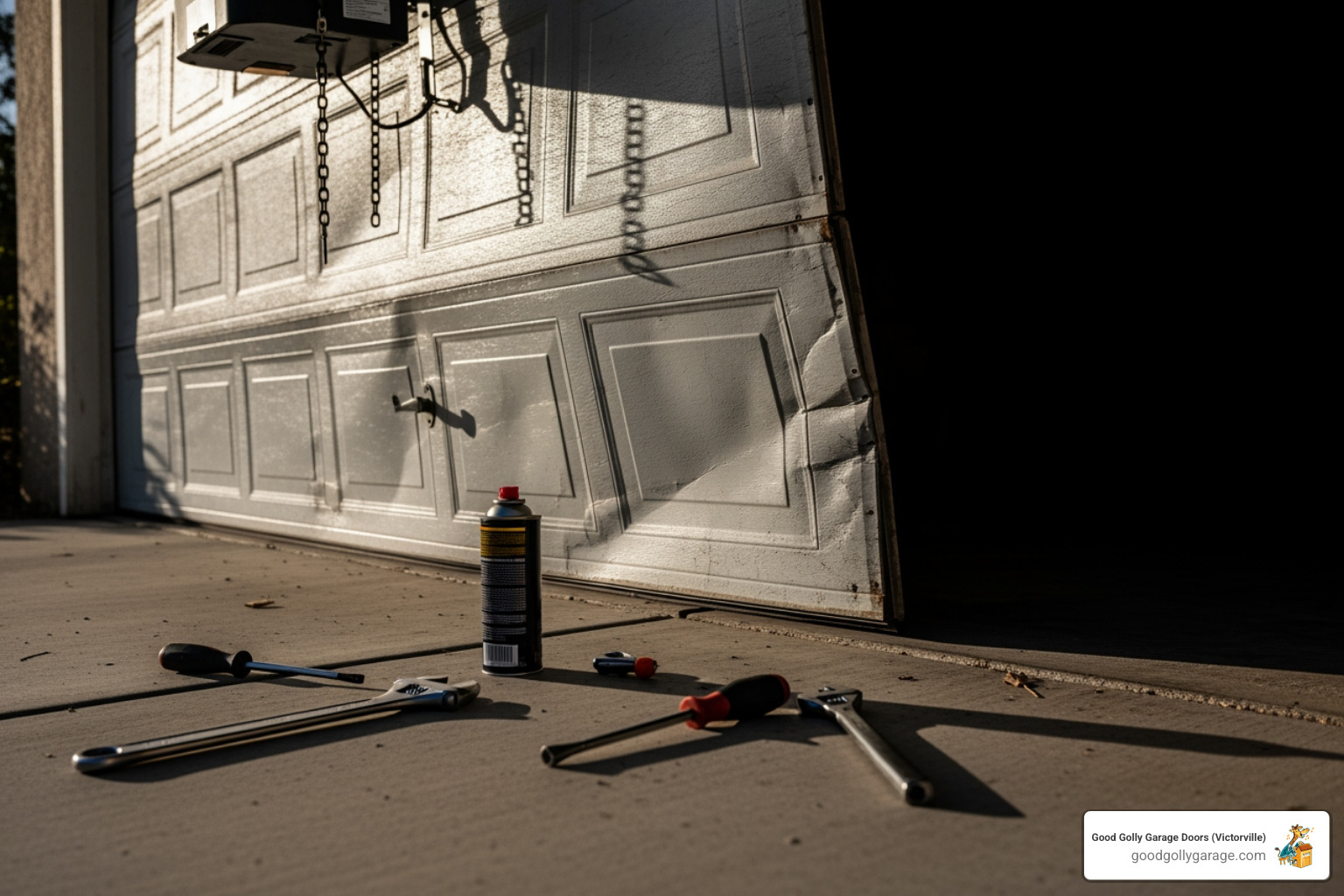
Is your garage door in Running Springs sounding less like a smooth operator and more like a rusty robot? You’re not alone. Many homeowners experience the frustration of a garage door that makes a racket every time it moves. Often, these noises are more than just annoying—they’re signals that something is amiss within the intricate system of your garage door. From scraping noises and grinding sounds to sudden popping sounds, each type of noise can point to a specific underlying issue.
The most common culprits behind a noisy garage door often boil down to a few key factors: a general lack of lubrication, worn parts that have seen better days, or loose hardware that needs a good tightening. Think of your garage door as a finely tuned machine; when one part isn’t working as it should, the whole system can start to protest with a cacophony of sounds. Ignoring these warnings can lead to bigger, more complex problems down the line, so it’s always best to investigate the cause promptly. For more insights into common garage door issues, you might find our article, The Mystery of the Noisy Garage Door: What’s Causing the Racket in Spring Valley Lake?, helpful.
Identifying Grinding and Scraping Sounds
If your garage door is creating grinding or scraping noises, it’s often a sign that something is rubbing where it shouldn’t be, or that parts are simply worn out.
- Worn Metal Rollers: These are a very common source of scraping sounds. Traditional metal rollers can wear down over time, especially their bearings, leading to a loud, metal-on-metal scraping as the door moves. The unsealed bearings in many metal rollers are particularly susceptible to dirt and debris, which can cause them to self-destruct and worsen the noise.
- Debris in Tracks: Sometimes, the simplest explanation is the right one. Dirt, small stones, leaves, or other debris can accumulate in the garage door tracks, causing the rollers to scrape and grind as they try to pass over the obstructions. A quick visual inspection and cleaning can often resolve this.
- Misaligned Garage Door Tracks: If the tracks themselves are bent, loose, or out of alignment, the rollers won’t be able to move smoothly. This can cause significant grinding and scraping as the door struggles to operate, putting undue stress on the entire system.
Decoding Squeaking and Screeching
Squeaking and screeching noises usually indicate a need for lubrication or that parts are rubbing together without sufficient cushioning.
- Dry Springs: The torsion or extension springs that counterbalance your garage door are under immense tension. If they aren’t properly lubricated, the coils can rub against each other, producing an irritating squeak or groan.
- Unlubricated Hinges: The hinges connecting the individual panels of your garage door, as well as the hinges that hold the rollers, need regular lubrication. Without it, they can become stiff and squeak with every movement.
- Worn Bearings: Beyond the rollers, other moving parts within the garage door system, such as the bearings in the pulleys (for extension springs) or the bearing plates (for torsion springs), can wear out. When their internal lubrication dries up or they become damaged, they can produce high-pitched squeaks.
- Unbalanced Door: An unbalanced garage door, often due to worn-out or improperly adjusted springs, can cause the opener to work harder and strain other components, leading to various squeaks and groans as the system struggles to lift and lower the heavy door.
Understanding Loud Bangs and Pops
Loud bangs and pops are the most alarming sounds a garage door can make, and they almost always signal a serious problem that requires immediate attention from a professional.
- Broken Torsion Spring: This is perhaps the most common cause of a sudden, extremely loud bang. Torsion springs are under enormous tension, and when they break, they release all that energy in an instant, sounding like a gunshot. A broken torsion spring means the garage door has lost its primary counterbalance, making it incredibly heavy and dangerous to operate.
- Broken Extension Spring: Similar to torsion springs, extension springs also store energy to assist the door’s movement. While their break might not be as deafening as a torsion spring, it will still produce a noticeable loud snap or bang.
- Loose Nuts and Bolts: While less dramatic than a spring break, a very loose bolt or nut supporting a critical component can sometimes cause a loud clank or pop if it suddenly shifts or gives way under stress.
- Warped Door Panels: In rare cases, severe warping or damage to a garage door panel can cause it to crack or shift suddenly, producing a loud popping sound. This often indicates structural integrity issues with the door itself.
If you’ve heard a loud bang, especially if your garage door is now refusing to open or close, it’s highly likely you have a broken spring. This is not a DIY fix due to the extreme danger involved. For more on garage door issues, check out our article, Why Is My Broken Garage Door in Running Springs, CA?.
Your First Line of Defense: DIY Fixes for a Quieter Garage Door
Before you pick up the phone, there are a few simple steps you, as a homeowner in Running Springs, can take to quiet down a noisy garage door. Many loud garage door issues stem from easily fixable problems like loose hardware or a lack of lubrication. Tackling these yourself can often resolve the issue without needing a service call.
Safety First: Always remember that garage doors are heavy and operate under high tension. Before attempting any DIY fixes, disconnect the power to your garage door opener to prevent accidental operation. Wear appropriate safety gear, such as gloves and eye protection. If you’re ever unsure or uncomfortable, it’s always best to call a professional.
Basic Tools: For most DIY quiet fixes, you’ll need a socket wrench set, a screwdriver, a quality silicone-based garage door lubricant, and a clean rag.
Visual Inspection: Start by simply looking at your garage door system. Open and close the door a few times (manually, if safe) and listen carefully. Try to pinpoint where the noise is coming from. Are there visible loose parts? Is there debris in the tracks? This initial observation can be incredibly helpful.
Step 1: A Simple Tightening and Inspection
One of the easiest and most effective ways to reduce garage door noise is to simply tighten everything up. Over time, the constant vibration and movement of the garage door can cause nuts and bolts to loosen.
- Check Nuts and Bolts: Systematically go through all the nuts and bolts on your garage door system. Pay close attention to the hinges, roller brackets, and the mounting hardware for the garage door opener. Use a socket wrench to gently tighten any fasteners that feel loose. Be careful not to overtighten, as this can strip threads or warp components.
- Inspect Brackets: Look at the brackets that hold the tracks to the wall. Ensure they are secure and not bending or pulling away from the wall. Tighten any loose bolts here as well.
- Examine Hinges: The hinges connecting your garage door panels are crucial. Check for any signs of wear, bending, or cracks. If a hinge is severely damaged, it may need to be replaced.
- Use a Socket Wrench: A socket wrench provides better grip and leverage than an open-ended wrench, making it easier to properly tighten fasteners without stripping them.
Step 2: The Importance of Proper Lubrication
Just like any moving machinery, your garage door needs regular lubrication to operate smoothly and quietly. Friction is a major source of noise, and lubrication helps reduce it.
- Silicone-Based Lubricant: It’s critical to use the right kind of lubricant. We recommend a high-quality, silicone-based garage door lubricant. Avoid using products like WD-40, which is a degreaser and can actually remove existing lubrication and attract dirt, making the problem worse in the long run.
- Lubricate Rollers: Spray the lubricant directly onto the bearings of the rollers (if they have them) and the part of the roller that contacts the track. If you have nylon rollers, focus on the stem where it enters the hinge.
- Lubricate Hinges: Apply lubricant to the pivot points of all the hinges, allowing it to penetrate the moving parts.
- Lubricate Springs: For torsion springs, apply a light coat of lubricant along the length of the spring. For extension springs, lubricate the pulleys and the cables that run through them.
- Don’t Forget the Opener Chain/Screw: If your opener is chain or screw-driven, consult your owner’s manual for specific lubrication instructions. A dry chain can be a significant source of noise.
For more detailed guidance on keeping your garage door in top shape, check out our comprehensive guide on More Info About Garage Door Maintenance.
Step 3: Cleaning Tracks and Checking Rollers
The tracks guide your garage door, and the rollers allow it to move freely. Issues with either can lead to significant noise.
- Wipe Down Tracks: Use a clean rag to wipe down the inside of both vertical and horizontal tracks. Remove any accumulated dirt, grease, or grime.
- Remove Debris: Carefully inspect the tracks for any small objects, leaves, or other debris that might be obstructing the rollers. Remove these obstructions.
- Inspect Rollers for Wear: Examine each roller. Look for chipped, cracked, or excessively worn wheels. If you have metal rollers, check for rust or damage to the bearings. Worn rollers can cause a wobbling or shaking motion, leading to more noise.
- Consider Nylon Rollers: If your metal rollers are old, worn, or simply too noisy, consider upgrading to nylon rollers. Nylon rollers are significantly quieter, more durable, and often require less maintenance because they don’t have exposed bearings that collect dirt. If you decide to replace them yourself, do so one at a time to maintain the door’s stability.
When to Call for Professional Loud Garage Door Repair in Running Springs CA
While DIY efforts can often resolve minor noise issues, there are critical times when professional intervention for Loud Garage Door Repair in Running Springs CA is not just recommended, but essential. Attempting complex repairs without the proper training, tools, and understanding of garage door mechanics can lead to severe injury or further damage to your system.
If you’re dealing with safety hazards, complex repairs, or simply lack the specialized tools required for a job, it’s time to call in the experts. Professional garage door repair companies, like us at Good Golly Garage Doors, are equipped to handle urgent issues and often provide same-day service, ensuring your family’s safety and restoring your peace of mind quickly.
The Hidden Danger: Why Broken Spring Repair Is Not a DIY Job
Of all the garage door repairs, addressing a broken spring is the most dangerous and should never be attempted by a homeowner.
- High Tension System: Both torsion and extension springs are under extreme tension, designed to counterbalance the immense weight of your garage door. This stored energy is incredibly powerful.
- Risk of Serious Injury: If a spring is improperly handled or released, it can snap back with violent force, causing severe injuries such as broken bones, lacerations, or even death. Specialized tools and training are required to safely manipulate these components.
- Sudden Uncoiling: A spring that suddenly uncoils or breaks during an attempted DIY repair can cause the garage door to crash down, or parts to fly off at high speed.
- Property Damage: Beyond personal injury, an uncontrolled spring can cause significant damage to your garage door, opener, or even your vehicle.
When you hear a loud bang and suspect a broken spring, step away from the door and call a professional immediately. For more safety tips and expert advice, be sure to visit our Expert Tips section.
Key Signs You Need an Expert for Loud Garage Door Repair in Running Springs CA
Beyond broken springs, several other signs indicate that it’s time to call a professional for Loud Garage Door Repair in Running Springs CA:
- Door Off-Track: If your garage door has come off its tracks, it’s a dangerous situation that requires professional realignment. Attempting to force it back can cause more damage or injury.
- Frayed or Broken Cables: The cables work in conjunction with the springs to lift and lower the door. If you notice any fraying, rust, or a broken cable, do not operate the door. These cables are also under tension and can snap, posing a serious hazard.
- Door Feels Heavy: If your garage door feels unusually heavy when you try to open it manually, it’s a clear sign that the springs are losing their tension or are no longer properly balanced. This puts immense strain on your garage door opener and can lead to its premature failure.
- Loud Bang Followed by Failure: As mentioned, this is the classic symptom of a broken spring. If your door was operating normally, then you heard a sudden, loud noise, and now the door won’t move, or moves unevenly, it’s a spring issue.
- Visible Damage to Panels or Tracks: If you see bent, cracked, or severely damaged panels, or if the tracks are visibly bent or warped, these issues go beyond simple tightening and lubrication and require professional assessment and repair.
Don’t let a noisy garage door escalate into a dangerous or more complex problem. If you’re experiencing any of these signs, it’s time to call the experts. We’ve seen similar issues in nearby areas, as detailed in our article on Noisy Garage Door Wrightwood, CA.
Upgrading for Peace and Quiet in Your Running Springs Home
Sometimes, the best solution to a perpetually loud garage door is an upgrade. Modern garage door systems offer significant improvements in quiet operation and efficiency.
- Belt-Drive Openers: If you currently have a chain-drive opener, you might notice it’s quite noisy. Chain-drive openers are known for being louder. Upgrading to a belt-drive garage door opener can dramatically reduce noise levels. Belt-drive models use a rubber belt instead of a metal chain, resulting in much smoother and quieter operation.
- Insulated Garage Doors: Beyond energy efficiency, insulated garage doors can also help dampen sound. The insulation material adds mass and reduces vibrations, making the door itself operate more quietly and preventing outside noise from entering your garage.
- Quiet Nylon Rollers: As discussed, replacing worn metal rollers with high-quality nylon rollers is an excellent way to reduce scraping and grinding noises. Nylon rollers are designed for quieter operation and are more durable.
- Modern Garage Door Systems: Older garage door models (pre-1990) are generally much noisier and less safe than modern ones. If your garage door system is quite old, a full replacement with a new, high-quality system can provide a significant upgrade in quietness, safety, and reliability.
Considering an upgrade? Our team can help you select and install the perfect quiet solution for your home. Learn more about our services in More Info About Garage Door Opener Installation.
Frequently Asked Questions About Loud Garage Doors
We often get asked common questions about noisy garage doors. Here are some of the most frequent inquiries from homeowners in Running Springs and surrounding areas.
How Can Regular Maintenance Prevent a Loud Garage Door?
Regular maintenance is the cornerstone of a quiet and well-functioning garage door. It’s not just about fixing problems when they arise, but actively preventing them.
- Preventative Care: A proactive approach to maintenance can catch small issues before they become big, noisy problems. This includes routine checks of all components for wear and tear.
- Annual Tune-Up: We recommend an annual professional tune-up for your garage door system. During this service, our technicians will inspect all moving parts, check the balance of the door, tighten hardware, and lubricate components. This thorough check-up helps ensure smooth and quiet operation.
- Lubrication Schedule: Establishing a regular lubrication schedule for your garage door’s moving parts (rollers, hinges, springs) is crucial. Consistent lubrication reduces friction and prevents the squeaks and grinding that come from dry components.
- Professional Inspection: An expert eye can spot subtle signs of wear or misalignment that you might miss. Early detection means minor adjustments instead of major repairs.
- Extends Lifespan: Regular maintenance not only keeps your door quiet but also extends the overall lifespan of your garage door system, saving you from more extensive repairs in the long run.
For more details on keeping your garage door in optimal condition, check out our article: Don’t Just Fix It, Maintain It: Expert Garage Door Care in Running Springs.
What Are the Obvious Signs My Garage Door Needs Repair?
Beyond just noise, there are several clear indicators that your garage door needs attention:
- Unusual Noises: Any new or worsening sounds like grinding, squeaking, scraping, or banging are red flags.
- Slow or Jerky Movement: If your door is struggling to open or close, moves unevenly, or gets stuck mid-way, it’s a sign of mechanical trouble.
- Door Won’t Open or Close: This is an obvious one. If the door refuses to respond to commands, or only opens/closes partially, it needs immediate professional assessment.
- Sagging Door Sections: Visible sagging or unevenness in the garage door panels indicates structural issues or problems with the counterbalance system.
- Gaps Around the Door: If you notice new gaps around the perimeter of your closed garage door, it could mean the door is misaligned or has structural damage.
Why Is My New Garage Door Already Making Noise?
It can be frustrating when a brand-new garage door starts making noise. While less common, it does happen, and there are a few reasons why:
- Improper Installation: Even new doors can be noisy if they weren’t installed correctly. Misaligned tracks, improperly tensioned springs, or loose hardware from the start can all lead to noise.
- Settling Parts: Sometimes, components need a brief “settling in” period. However, if the noise persists beyond a few days or worsens, it’s likely more than just settling.
- Lack of Initial Lubrication: Some installers might not fully lubricate all moving parts during installation, leading to friction and noise as soon as the door starts operating.
- Hardware Loosening: Just like older doors, the nuts and bolts on a new door can also loosen over time due to vibrations, especially in the first few weeks or months of use.
If your new garage door is making excessive noise, it’s best to contact the installer or a professional garage door service to have it inspected.
Restore Quiet and Safety to Your Running Springs Home
A loud garage door is more than just an annoyance; it’s a clear warning that something in your system needs attention. Whether it’s the scraping of worn rollers, the squeak of dry hinges, or the alarming bang of a broken spring, these noises shouldn’t be ignored. Addressing them promptly is key to preventing more serious, and potentially dangerous, issues down the road.
While some basic DIY maintenance, like tightening loose hardware and proper lubrication, can often quiet minor issues, it’s crucial to recognize when professional expertise is needed. High-tension components like springs are extremely dangerous to handle without specialized training and tools. For homeowners in Running Springs, CA, ensuring the safety and reliability of your garage door is paramount.
At Good Golly Garage Doors, we understand the unique needs of our community in Running Springs. We offer reliable, fast, and transparent service, prioritizing your satisfaction and building trust with a human touch. Our experienced technicians are ready to diagnose and resolve any garage door noise or issue, restoring peace and safety to your home. Don’t let your garage door scream; let us bring back the quiet.
For more information about our comprehensive garage door services in the area, visit our page on More Info About Our Services in Running Springs, CA.
 All Service Areas