
Green Valley Garage Door Woes: Unlocking the Mystery of a Stuck Door
Expert Garage Door Services Powered by Good Golly Garage Doors
That Sinking Feeling When Your Garage Door Is Stuck
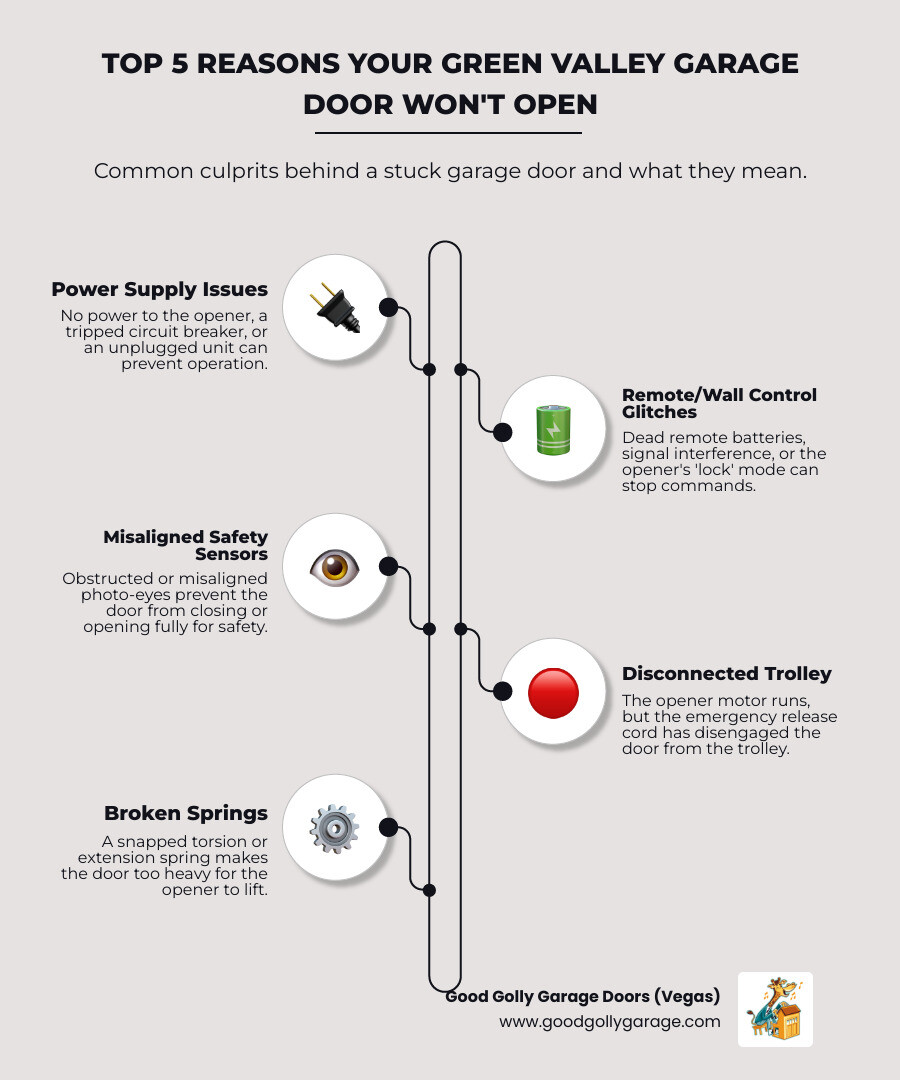
The question, “Why Is My Garage Door Won’t Open Green Valley Nv?” typically has one of these common causes:
- Power supply issues – unplugged opener, tripped circuit breaker, or dead outlet
- Broken torsion or extension springs – often announced by a loud bang
- Dead remote batteries or lock mode – simple fixes that take seconds
- Misaligned safety sensors – dirty or blocked photo-eyes preventing operation
- Disconnected trolley – opener motor runs but door doesn’t move
- Damaged tracks, rollers, or cables – visible bending, fraying, or misalignment
You press the button, but nothing happens. Or worse, the motor hums while the door stays shut. For Green Valley homeowners, a stuck garage door is more than an inconvenience; it can trap your car, compromise home security, and derail your day. The good news is that most problems have clear causes and simple solutions.
Before you attempt any repairs, understand that garage doors are heavy and operate under extreme tension. Springs, cables, and tracks can cause serious injury if handled improperly. Always disconnect power before inspecting your system, never touch springs or cables, and know when to step back and call a professional.
I’m Jason Henderson, founder of Good Golly Garage Doors, and I’ve spent years helping homeowners diagnose and resolve the exact issues that cause these frustrating garage door problems in Green Valley. In this guide, I’ll walk you through the troubleshooting process step by step, so you can identify what’s wrong and decide whether it’s a quick fix or time to bring in expert help.
For comprehensive garage door services throughout Las Vegas, visit our main garage door repair page. When you need immediate assistance, schedule your Green Valley garage door service with our team.
First Steps: Simple Checks You Can Do In 5 Minutes
When your garage door refuses to open, it’s easy to imagine the worst. But before you panic, let’s go through some quick checks. Many garage door issues in Green Valley stem from minor problems you can often fix yourself in minutes. We’ll start with the most common culprits.
Check The Power Supply
A complex-seeming problem often has a simple cause: no power. Garage door openers need electricity to function, so if your door is unresponsive or the opener light is off, check the power first.
- Is the opener plugged in? Vibrations can wiggle the opener’s power cord loose. Give it a firm push to ensure it’s securely connected. If the light bulb on the opener isn’t lit, it’s a strong sign of a power issue.
- Tripped circuit breaker: Check your electrical panel for a tripped breaker. It will be in the “off” position or between “on” and “off.” Flip it back to “on.” If it trips again, there’s a deeper electrical problem that requires a professional.
- GFCI outlet: Many openers use a Ground Fault Circuit Interrupter (GFCI) outlet. These have “test” and “reset” buttons. If the outlet has tripped, press the “reset” button. If using an extension cord, try plugging the opener directly into the outlet.
- Loose wiring: While less common, loose wiring at the wall control can prevent activation. Check for any visible loose connections.
Inspect Your Remote And Wall Control
If your opener has power but isn’t responding to your remote, the problem might be with the controls.
- Dead remote batteries: This is the most common and easiest fix. If your remote isn’t working, try replacing its batteries.
- Remote signal interference: Electronics in Green Valley homes, like LED lights or Wi-Fi routers, can interfere with your remote’s signal. Try using the remote closer to the opener or check if the remote signal antenna is obstructed.
- Lock mode engaged: Many wall panels have a “lock” or “vacation” button. If engaged, it disables remotes. Check your wall control and disengage the lock button if it’s active.
- Wall switch wiring: The wiring to your wall control can become loose. If the wall button isn’t working, inspect the wiring connections.
- Reprogramming remotes: Your remote can fall out of sync with the opener. Most openers have a “learn” button to reprogram your remote. Consult your manual for instructions.
Look For Manual Locks
A simple but often overlooked reason your garage door won’t open in Green Valley is the manual lock.
- Slide lock engaged: Many doors have a manual slide lock on the inside that slides into the track. If this is engaged, the opener can’t lift the door. Ensure it’s disengaged.
- Manual T-handle lock: Some older doors have a keyed T-handle lock on the outside. Make sure it is fully unlocked. Trying to open a locked door with an opener can cause severe damage.
Top Mechanical Reasons Why Your Garage Door Will Not Open In Green Valley, Nv
If your basic checks did not resolve the issue, it’s time to look at the mechanical heart of your garage door system. These problems are typically more serious and often require professional intervention due to the dangers involved.
Broken Garage Door Springs
Broken springs are the most common and dangerous mechanical failure. They do the heavy lifting, counterbalancing the door’s weight.
- The loud bang: Many Green Valley homeowners report hearing a sudden, loud bang, like a firecracker, when a spring breaks under tension.
- Door feels heavy: If you try to lift the door manually (after disengaging the opener) and it feels incredibly heavy, a broken spring is the likely culprit. A working spring system counterbalances about 90% of the door’s weight.
- Torsion vs. extension springs: There are two main types: torsion springs are mounted horizontally above the door, while extension springs run along the sides of the horizontal tracks. For more detailed information about different spring types and their mechanisms, the International Door Association provides comprehensive resources on garage door safety and components.
- Lifespan: Springs are rated for about 10,000 cycles (one open/close). With average use, this translates to a lifespan of about 7 years.
- Extreme danger warning: Springs are under immense tension. Never touch or try to adjust them. Attempting to replace a spring yourself can lead to serious injury or death. If you suspect a broken spring, call a professional immediately.
Disconnected Trolley Or Stripped Opener Gear
If your opener motor runs but the door does not move, there’s a disconnect between the two or an internal opener issue.
- Opener motor runs, door does not move: This is the classic sign of a disconnected trolley, the component that travels along the track to move the door.
- Emergency release cord: The trolley is disengaged using the red emergency release cord for manual operation. If it was pulled by accident, you can re-engage it. With the door closed, pull the cord down and toward the opener until it clicks back into place.
- Grinding noise: A grinding sound from the opener with no door movement likely means a stripped main drive gear. These nylon gears are designed to fail to protect more expensive parts. Replacing a gear repair kit is an advanced task best left to a professional.
Misaligned Or Obstructed Safety Sensors
Safety sensors prevent the door from closing on an obstruction. If they are not working, your door will refuse to close or will reverse.
- Door reverses upon closing: This is the most common symptom. The door starts to close, then reverses.
- Blinking sensor lights: Look for the small indicator lights on the sensors, located about 6 inches off the ground. Blinking or unlit lights signal a problem; they should be solid when aligned.
- Photo-eye obstruction: Even a spiderweb or leaf can block the infrared beam between the two sensors (photo-eyes). Clear any obstructions with a soft cloth.
- Sensor alignment check: The sensors must point directly at each other. If bumped, the beam breaks. Gently adjust them until both indicator lights are solid.
Damaged Tracks, Rollers, Or Cables
These parts guide the door’s movement. Damage to any of them can stop the system.
- Bent tracks: A bent or dented track will cause rollers to catch, preventing movement.
- Rollers out of track: If the door looks uneven, one or more rollers may have popped out of the track.
- Frayed or snapped cables: Cables work with the springs to lift the door. A snapped or frayed cable is a serious issue that will stop the door from opening evenly, if at all.
- Uneven movement or scraping sounds: Grinding, scraping, or squealing noises, along with hesitant movement, indicate issues with tracks, rollers, or cables.
These issues often require specialized tools and expertise to repair safely.
Your Troubleshooting Guide: Safely Diagnosing The Problem
Now that we have covered the common culprits, let’s put it all together into a safe, systematic approach to diagnosing why your garage door will not open in Green Valley.
Safety First: Before You Begin
Garage door systems are powerful and potentially dangerous.
- Disconnect power: Always unplug your garage door opener from the ceiling outlet before any inspection or repair.
- Wear safety glasses: Protect your eyes from debris, dust, or unexpected movement.
- Never touch springs or cables: These parts are under extreme tension and can cause severe injury. Leave all spring and cable work to trained professionals.
- Understand the risks: Be aware of hidden dangers. When in doubt, call for help.
How To Use The Emergency Release Cord
The emergency release cord allows you to operate the door manually when the automatic system fails.
- Locate the red handle: Find the red rope and handle hanging from the trolley on the opener rail.
- Pull down: With the door fully closed, firmly pull the handle straight down to disengage the trolley. You should hear a click.
- Manually open the door: Carefully lift the door by hand. Be prepared for its full weight if a spring is broken. If the springs are working, it should feel relatively light.
- Securing the door open: To keep the door open, clamp vice grips on the vertical tracks just below the bottom roller. This prevents it from sliding down.
- When to use it: Use the release during power outages or opener malfunctions. Remember to re-engage the trolley once the issue is resolved.
Why Your Garage Door Will Not Open In Green Valley, Nv: A Diagnostic Checklist
Here is a step-by-step checklist to help you pinpoint the problem:
- Check power: Is the opener plugged in? Is the circuit breaker tripped? Is the GFCI outlet reset?
- Test remotes and wall control: Are remote batteries fresh? Is the “lock” button engaged? Does the wall button work?
- Inspect for manual locks: Is the slide lock or keyed lock engaged?
- Look for broken springs: Did you hear a loud bang? Does the door feel extremely heavy? Do not touch the springs.
- Listen to the opener motor: Does the motor run but the door does not move? Is there a grinding noise?
- Inspect safety sensors: Are the sensor lights solid and clean? Is anything obstructing the beam?
- Check tracks, rollers, and cables: Are tracks bent? Are rollers out of place? Do you see frayed or snapped cables?
- Test manual operation (carefully): After pulling the emergency release, how does the door feel? Is it balanced or extremely heavy?
When To Call A Professional For Your Green Valley Home
Some garage door issues are simple DIY fixes, while others require a professional’s expertise. Knowing the difference saves time, frustration, and prevents injury.
DIY Fixes Vs. Professional-Only Repairs
Let’s break down which tasks are generally safe for a homeowner and which ones are best left to a professional service.
DIY Tasks (Generally Safe):
- Battery replacement: Swapping batteries in your remote or keypad.
- Sensor cleaning and alignment: Wiping photo-eyes and gently adjusting them.
- Clearing obstructions: Removing debris from the sensor path or tracks.
- Checking power supply: Resetting breakers or GFCI outlets.
- Disengaging manual locks: Ensuring locks are not engaged.
- Reprogramming remotes: Following your opener’s manual to re-sync controls.
- Lubricating moving parts: Applying appropriate lubricant to hinges, rollers, and tracks.
Professional-Only Repairs:
- Broken springs: These are incredibly dangerous and require training and proper tools to replace safely.
- Snapped cables: Cables are under high tension and require correct handling.
- Opener motor repair or replacement: Internal motor issues, logic board work, or complex electrical problems should be handled by experts.
- Track alignment or replacement: Aligning tracks requires precision for safe operation.
- Roller replacement: Professional replacement ensures the correct type is installed and the door remains balanced.
- Anything involving high-voltage electrical wiring: This is a job for a licensed technician.
When you have tried the DIY steps and your door is still stuck, or if you see any professional-only issues, it is time to schedule a garage door service. Help is available for Green Valley homeowners with reliable and safe repairs.
Repairing Vs. Replacing Your Garage Door Opener
Sometimes, the question is not just about repair, but whether it is time for a complete replacement.
- Opener lifespan: The average garage door opener lasts 10–15 years. If your unit is in this age range, frequent breakdowns suggest it is nearing the end of its life.
- Signs of a failing opener: Besides not opening, signs include unusual noises, intermittent operation, or failing safety features.
- Obsolete parts: For older openers, finding replacement parts can be difficult or impossible, making replacement the only option.
- Upgrading to smart features: Modern openers offer conveniences like smartphone control, battery backups (helpful for Green Valley), and advanced security. A failing old opener presents a good opportunity to upgrade to a smarter, more reliable unit.
- Considering replacement for older units: If your opener is old and has multiple problems, a new installation often provides better long-term value, improved safety, and greater peace of mind.
Frequently Asked Questions About Stuck Garage Doors
There are a lot of common questions from Green Valley residents about their garage doors. Here are some of the most frequent ones.
Can The Green Valley Weather Affect My Garage Door?
Yes. Green Valley’s climate can affect your garage door’s operation.
- Extreme heat effects: Scorching summers can cause metal parts to expand, potentially affecting alignment or stressing components. Heat also dries out lubricants, increasing friction and wear.
- Lubrication issues: High temperatures can cause lubricants to break down. Regular lubrication is key to smooth operation.
- Weather stripping damage: Intense UV rays can make the rubber or vinyl weather stripping brittle and cracked, causing the door to stick.
- Winter freezing: While less common, Green Valley can have cold snaps. If moisture under the door freezes, it can freeze the door to the ground. Clear snow and ice from the opening during cold periods.
How Do I Open My Garage Door During A Power Outage?
A power outage is a classic reason a garage door will not open in Green Valley.
- Using the emergency release: The red emergency release cord is designed for this. Pull it to disengage the opener, then manually lift the door.
- Manual lifting: If your springs are in good condition, the door should be relatively easy to lift by hand once disengaged.
- Battery backup systems: Many newer openers have battery backup systems, allowing operation during a power outage. This is a highly recommended feature for the area.
- Emergency key release lock: If you have no other entry to your garage, consider an external emergency key release lock. This lets you disengage the opener from the outside with a key.
How Often Should I Have My Garage Door Maintained?
Regular maintenance is the best way to prevent unexpected breakdowns. Professional maintenance at least once a year is recommended.
- Annual professional tune-up: An annual professional tune-up includes a full inspection, hardware tightening, lubrication, balance check, and safety feature test. This proactive approach identifies minor issues before they become major repairs.
- Lubricating moving parts: You can help by regularly lubricating hinges, rollers, and tracks with a garage-door-specific lubricant.
- Tightening hardware: Vibrations can loosen bolts and screws over time. A professional will tighten all hardware to ensure it is secure.
- Prevents unexpected failures: Regular maintenance can significantly extend the life of your garage door and opener and help you avoid future operational problems.
Get Your Garage Door Back On Track
A malfunctioning garage door disrupts your daily life in Green Valley. We have covered common reasons why a garage door will not open, from simple power issues to serious mechanical failures like broken springs. While some troubleshooting is safe, always prioritize safety, especially around high-tension parts like springs and cables.
If you have gone through the checklist and your garage door is still stuck, or if you suspect a complex issue beyond a simple DIY fix, do not hesitate to reach out. The team at Good Golly Garage Doors is dedicated to providing reliable, customer-first service to Green Valley neighbors. The problem will be diagnosed accurately, your options will be explained clearly, and your garage door will be brought back on track safely and efficiently.
When you are facing a garage door emergency in Las Vegas, help is available. For immediate assistance, schedule your Green Valley garage door service.
 All Service Areas