

Is Your Garage Door Screaming? What’s Making That Noise in North Las Vegas
Expert Garage Door Services Powered by Good Golly Garage Doors
Understanding the Racket: Common Causes of Garage Door Noise
Why Is My Loud Garage Door North Las Vegas NV making such a racket? Your garage door could be noisy due to several common issues:
- Worn or rusty springs that squeak and groan under tension
- Lack of lubrication on hinges, rollers, and tracks
- Loose hardware causing rattling and vibrations
- Misaligned or dirty tracks creating grinding sounds
- Failing garage door opener with worn chains, belts, or motors
- Broken springs that produce loud banging noises
- Metal expansion and contraction from North Las Vegas’s extreme heat
If your garage door has gone from quiet to sounding like a car crusher, you’re not alone. Many North Las Vegas homeowners face this due to our harsh desert climate. Scorching temperatures, dust, and sand accelerate wear on moving parts. Metal expands and contracts, lubricants break down, and dust acts like sandpaper on rollers and hinges. Understanding the source of the squeaks, grinding, or rattling is the first step toward restoring peace and quiet.
For a comprehensive look at garage door issues, check out our guide on 7 Garage Door Noises You Shouldn’t Ignore and What They Mean, and if you’re ready to get the problem fixed, visit our Garage Door Repair Las Vegas NV page.
I’m Jason Henderson, founder and CEO of Good Golly Garage Doors. I’ve spent years helping homeowners address Why Is My Loud Garage Door North Las Vegas NV and similar issues. My team and I are committed to diagnosing the source of your garage door noise and delivering lasting solutions that restore your home’s comfort and security.
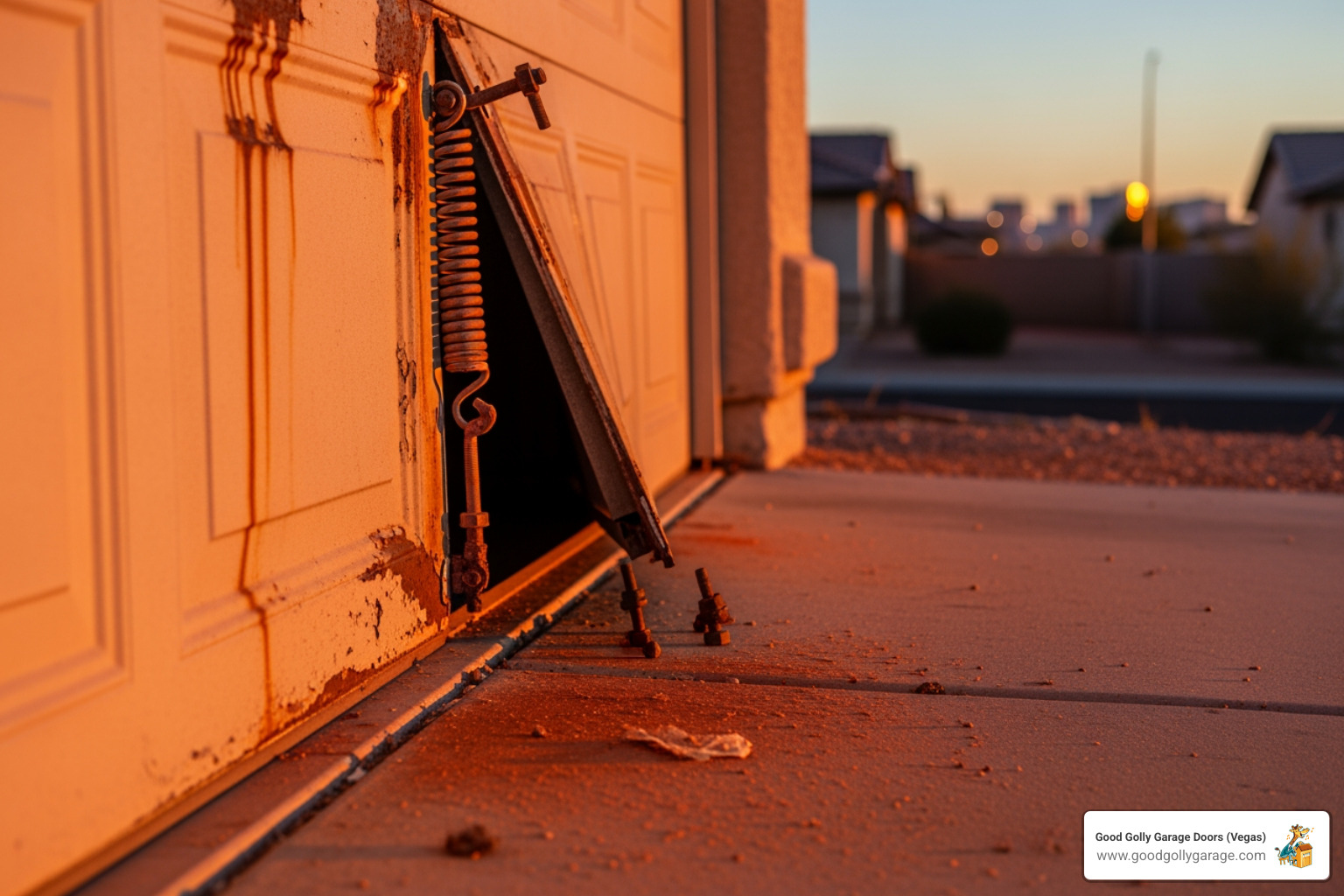
Why Is My Loud Garage Door North Las Vegas NV? Diagnosing the Din
It’s natural for a garage door to make some noise, but when it starts to sound like a heavy metal concert, it’s a clear sign something is amiss. The most common reasons a garage door in North Las Vegas becomes loud often stem from wear and tear on its many moving parts.
If you’re hearing:
- Squeaking Noises: Often points to worn rollers, hinges, or springs crying out for lubrication. These high-pitched sounds are usually the easiest to diagnose and, sometimes, to fix yourself.
- Grinding Sounds: Can indicate dirty or misaligned tracks, or rollers that are struggling to move smoothly. Imagine sand in a finely tuned machine – that’s what dust and grit can do to your tracks and rollers.
- Banging or Popping: This is a more serious sound. A loud bang can be a tell-tale sign of a broken spring, while popping might come from coils rubbing together or a roller defect.
- Rattling Vibrations: Typically caused by loose nuts, bolts, or other hardware that have vibrated free over time. An unbalanced door can also lead to excessive rattling.
Let’s dive deeper into the culprits behind these unsettling sounds.
The Role of Springs and Tracks
Your garage door springs are the unsung heroes, counterbalancing the door’s weight. When they start to wear out, they often do so with a lot of noise.
- Rusty Springs: Garage door springs can rust when exposed to humidity. This rust creates friction between the coils, leading to loud clinking or popping noises. While regular lubrication helps, significant rust can cause permanent damage. Both torsion springs (lasting up to 20,000 cycles) and extension springs (rated for 10,000 cycles) can have this problem.
- Broken Torsion Spring: A broken torsion spring is a dramatic and dangerous cause of a loud garage door. It often announces itself with a sudden, loud bang. The door then becomes extremely heavy, unbalanced, and unsafe to operate. This is a job for professionals only.
- Extension Springs: While torsion springs are mounted horizontally above the door, extension springs run along the sides. They are generally considered noisier than torsion springs due to their design and how they stretch and contract.
- Misaligned Tracks: The tracks guide your garage door’s rollers. If these tracks become even slightly bent or misaligned, the rollers won’t glide smoothly. Instead, they’ll scrape, grind, or jam, producing a terrible racket. You can often identify misaligned tracks by looking for gaps between the roller and the track.
- Bent Tracks: Similar to misalignment, a visibly bent track will impede roller movement, leading to grinding and friction. This can happen from accidental impact or even from the door going off track.
- Debris in Tracks: The dust and sand of North Las Vegas can accumulate in garage door tracks. These particles act like sandpaper, causing rollers to grind and stick instead of rolling smoothly. Keeping your tracks clean is a simple but effective maintenance step.
For more insights into the mysterious sounds coming from your garage door, explore our guide on The Mystery of Your Loud Garage Door in Crestline Solved.
Issues with Your Garage Door Opener
Your garage door opener is the system’s powerhouse, and a struggling unit will make its presence known. Openers last up to 15 years, but an aging or malfunctioning one can be a major source of noise.
- Straining Motor: If your opener’s motor sounds like it’s struggling, it could indicate an issue with the door’s balance (meaning the springs aren’t doing their job) or an internal problem with the motor. This straining can lead to loud grinding or groaning noises.
- Loose Chain or Worn Belt: Many openers use a chain or belt drive. A loose chain can rattle or slap against the rail, creating noise. A worn belt can cause similar issues or jerky operation. A grinding sound from the opener often signals a loose chain or belt that needs adjustment.
- Old Opener: As openers age, their internal components—gears, bearings, and the motor itself—can wear out, leading to increased noise. An older opener might simply be nearing the end of its lifespan.
- Vibration: Sometimes, the opener’s vibrations are being amplified. If the opener isn’t securely mounted or lacks vibration dampeners, its normal operational hum can turn into a loud, resonating noise. An opener isolator kit can help reduce these vibrations.
If your garage door opener is acting up, a professional can diagnose whether it needs a simple adjustment, repair, or a full replacement. For comprehensive opener services, visit our page on Garage Door Repair Las Vegas NV.
The Desert’s Impact: How Climate Affects Your Garage Door
The North Las Vegas climate, with its extreme heat, dust, and high winds, can be tough on your garage door. These conditions accelerate wear and tear on components, often leading to increased noise.
- North Las Vegas Climate: Our scorching summers and dry air create a challenging environment for mechanical systems. Metal components expand and contract with the drastic temperature swings, and lubricants break down faster.
- Extreme Heat: High temperatures can cause metal parts to expand, and then contract as temperatures cool. This constant cycling can weaken springs, warp tracks, and loosen hardware over time. The heat also degrades plastic and rubber components, making them brittle and noisy.
- Dust and Sand: The desert’s fine dust and sand are relentless. They can infiltrate every moving part of your garage door system—hinges, rollers, and tracks. This abrasive grit acts like sandpaper, accelerating wear and causing squeaks and grinding noises.
- Metal Expansion: As mentioned, metal expands in the heat. This can subtly alter the alignment of tracks and the tension of springs, contributing to friction and noise.
- Component Wear: All these environmental factors combine to accelerate the wear and tear on all garage door components. What might last longer in a milder climate can have a shorter lifespan here in North Las Vegas.
Regular maintenance is key to combating these environmental challenges. Learn more about how to protect your garage door in our climate on our Las Vegas NV Garage Door Maintenance page.
Why Is My Loud Garage Door North Las Vegas NV So Affected by Heat?
The intense heat of North Las Vegas has specific effects that make your garage door noisier beyond general wear and tear.
- Metal Contraction (and Expansion): Extreme heat causes metal to expand, which can warp tracks, alter spring tension, and cause parts to rub together. As temperatures cool, the metal contracts, loosening components and leading to rattling. This constant cycle of expansion and contraction is very stressful on the system.
- Lubricant Breakdown: High temperatures cause lubricants to break down and dry out much faster than in cooler climates. When lubricants fail, metal-on-metal friction increases dramatically, leading to loud squeaking, grinding, and premature wear.
- Warped Tracks: The expansion and contraction of metal can cause garage door tracks to subtly warp or shift out of alignment over time. Even a slight deviation can cause rollers to bind and create significant noise.
- Spring Fatigue: The repeated heating and cooling cycles, combined with the constant stress of lifting a heavy door, can lead to spring fatigue. This weakens the springs, putting more strain on the opener and generating more noise.
Understanding these climate-specific challenges helps us tailor our maintenance and repair solutions to best serve our North Las Vegas community. For a general overview of our services in the area, visit our main Las Vegas NV page.
Solutions for a Quieter Door: DIY Maintenance vs. Professional Repair
When your garage door gets noisy, you might consider a DIY fix. While some minor issues can be addressed this way, it’s crucial to know the difference between a quick fix and a long-term solution, and when to call a professional.
| Quick Fixes (DIY) | Long-Term Solutions (Professional Recommended) |
|---|---|
| Lubricating moving parts (hinges, rollers, springs) | Replacing worn-out rollers (especially upgrading to nylon) |
| Tightening loose nuts and bolts | Adjusting or replacing broken/fatigued springs |
| Cleaning debris from tracks | Realigning bent or severely misaligned tracks |
| Adjusting photo-eye sensors | Upgrading to a quieter garage door opener (e.g., belt-drive) |
| Checking for minor obstructions | Repairing or replacing damaged panels |
| Installing proper garage insulation and weather stripping |
Safety Concerns: Safety is paramount: garage doors are heavy and operate under immense spring tension. DIY repairs on components like springs are extremely dangerous and can lead to severe injury or further damage.
DIY Dangers: The springs, whether torsion or extension, are under high tension and can release with tremendous force if handled improperly. This is why we always advise against homeowners attempting spring repairs. Electrical components of the opener also pose a risk of shock.
Spring Tension Risk: Garage door springs handle most of the door’s weight. A mistake can release stored energy, causing serious harm. Unless you have proper training and tools, leave spring issues to the experts.
DIY Maintenance for a Loud Garage Door in North Las Vegas NV
For the less intimidating noises, there are several maintenance steps you can safely perform to quiet your garage door:
- Lubrication: Lubrication is often the simplest fix for squeaks. Use a silicone-based spray lubricant (not WD-40) on moving metal parts like roller bearings, hinges, and the torsion spring. Don’t lubricate the tracks, as this attracts dirt. In our dusty climate, lubricate every four to six months.
- Tightening Hardware: The vibrations from daily operation can loosen nuts, bolts, and screws. Use a wrench to gently tighten any loose hardware you find. Be careful not to overtighten.
- Cleaning Tracks: Remove any visible dirt, dust, sand, or debris from your garage door tracks using a stiff brush or a damp cloth. This prevents rollers from grinding and sticking.
- Inspecting Rollers: Visually inspect your rollers for any that appear worn, cracked, or chipped. If you have metal rollers, check for excessive wear. Worn rollers don’t roll smoothly, leading to noise. You can try lubricating the bearings, but if they’re significantly damaged, replacement is the best option.
- Testing Balance: Disconnect your garage door from the opener by pulling the red emergency release cord. Manually lift the door halfway. If it stays in place, it’s balanced. If it springs up or crashes down, your springs likely need professional attention.
For more tips on maintaining a quiet garage door, explore our guide on Noisy Garage Door Spring Valley Lake CA.
When to Call a Professional
While DIY efforts can address minor noises, some problems demand the expertise of a professional garage door technician. Knowing when to call us can save you time, money, and prevent dangerous situations.
You should always call a professional if you experience:
- Broken Springs: A loud bang and a door that won’t open are clear signs of a broken spring. This is a high-risk repair that requires specialized tools and training.
- Frayed Cables: The cables work with the springs to lift the door. If you notice any fraying or corrosion, do not operate the door. Frayed cables can snap, causing the door to crash down.
- Off-Track Door: A garage door that has come off its tracks is a significant safety hazard. Attempting to force it back on can cause further damage to the door, tracks, and rollers.
- Opener Malfunction: If your opener is making grinding noises, reversing unexpectedly, or failing to lift the door, it’s best to have a professional diagnose the issue. Opener repairs can involve electrical and intricate mechanical parts.
- Significant Damage: Any major damage to the door panels, tracks, or multiple components warrants a professional assessment.
Your home’s security and your family’s safety are too important to leave to chance. For complex issues, trust our skilled technicians to provide safe and effective solutions. For more detailed guidance, see our Loud Garage Door Wrightwood Guide.
Upgrades for a Quieter Garage Experience
Sometimes, repairs aren’t enough for the peace and quiet you want. If your door is noisy due to its age or design, upgrades offer a long-term solution for noise reduction. Investing in these upgrades can transform your garage into a serene space and reduce sound transmission into your home. These solutions tackle the root causes of noise, not just the symptoms.
For a deeper dive into understanding and solving noisy garage door problems, our article Decoding the Din: What Makes Your Garage Door Loud in Adelanto CA offers valuable insights.
Quieter Garage Door Openers and Components
If your garage door’s operational noise is a constant source of frustration, upgrading specific components can make a world of difference.
Here are some options for quieter operation:
- Belt Drive Openers: These are significantly quieter than traditional chain drive openers. They use a rubber belt, which absorbs vibrations and reduces noise, making them an excellent choice for garages attached to living areas.
- Jackshaft Openers: These wall-mounted openers free up ceiling space and are known for their quiet operation. They typically use a direct drive system, eliminating the noisy chain or belt mechanism entirely.
- Direct Drive Openers: These openers have the motor directly inside the trolley that moves along the rail, eliminating the need for a separate chain or belt. This design significantly reduces noise and vibration.
- Nylon Rollers: Upgrading from metal to nylon rollers with sealed ball bearings can drastically reduce noise. Nylon rollers eliminate the metal-on-metal contact that causes squeaking and grinding. They are also more durable and require less maintenance. With a lifespan of up to 20 years, this is a wise long-term investment.
- Insulated Doors: While primarily for temperature control, an insulated garage door also helps dampen sound. The added density and layers of insulation absorb vibrations and reduce the amount of noise that can escape (or enter) your garage.
Considering these upgrades can lead to a dramatically quieter garage door system. Find more detailed information on making your garage door quieter in our Noisy Garage Door Wrightwood CA guide.
The Role of Insulation
Beyond just the door itself, the overall insulation of your garage can play a significant role in reducing noise, especially if you have living spaces adjacent to or above your garage.
- Garage Insulation: Adding insulation to your garage walls and ceiling can create a sound barrier, preventing operational noise from transferring into your home. It also dampens echoes within the garage.
- Sound Dampening: Insulation materials like foam boards, fiberglass, or specialized acoustic panels can absorb sound waves, reducing both airborne noise (like the motor humming) and impact noise (like the door moving).
- Wall Insulation: If your garage walls are unfinished, insulating them and adding drywall can dramatically reduce sound transmission. This creates a more finished, sound-resistant barrier between your garage and home. Insulating a garage can significantly improve your home’s overall acoustic comfort.
- Weather Stripping: Sealing gaps around the garage door with high-quality weather stripping and a good bottom seal not only keeps out dust and heat (a big plus in North Las Vegas!) but also blocks sound.
- Reduced Vibration: Proper insulation and sealing can also help reduce the overall vibration of the garage structure, contributing to a quieter environment.
By combining these insulation strategies with quieter components, you can transform your garage into a much more peaceful space. For further insights into quieting your garage, check out Noisy Garage Door Spring Valley Lake CA 2.
Frequently Asked Questions About Loud Garage Doors
We hear a lot of questions from homeowners in North Las Vegas about their noisy garage doors. Here are some of the most common ones we encounter.
What Are the Dangers of Fixing a Noisy Garage Door Myself?
Attempting DIY repairs on your garage door system can be extremely dangerous. The primary risks include:
- High-Tension Springs: Garage door springs are under immense tension and can snap if mishandled, causing severe injuries or even death. They are the most dangerous component for DIY repair.
- Heavy Door Weight: Garage doors are very heavy. If the springs are broken or the door is unbalanced, it can come crashing down, causing serious injury or damaging property.
- Electrical Shock: Garage door openers are connected to your home’s electrical system. Repairing electrical components without proper knowledge can lead to electrical shock.
- Making the Problem Worse: Incorrect repairs can lead to further damage to the garage door system, resulting in more costly professional repairs.
- Personal Injury Risk: Any repair involving heavy moving parts carries a risk of pinched fingers, crushed limbs, or falls from ladders.
We strongly advise against attempting to repair springs, cables, or an off-track door yourself. It’s always safer to call a qualified professional.
How Can I Tell if My Garage Door Spring Is Broken?
A broken garage door spring is one of the most common and serious issues that cause excessive noise. Here are the tell-tale signs:
- Loud Bang: This is often the first and most noticeable sign. You’ll hear a very loud, sharp crack or bang, often sounding like a gunshot.
- Visible Gap in Spring: If you have torsion springs (mounted horizontally above the door), you’ll likely see a clear gap in one of the coils. For extension springs (running along the sides), you might see a visibly broken or detached spring.
- Door Won’t Open: The garage door opener will struggle or fail to lift the door, as the springs are no longer providing the necessary counterbalance.
- Crooked Door: The door may appear to be hanging crooked, especially if only one of two springs has broken.
- Heavy Manual Lifting: If you disconnect the opener and try to lift the door manually, it will feel incredibly heavy.
If you observe any of these signs, stop operating the door immediately and contact a professional for repair.
How Often Should I Perform Maintenance on My Garage Door?
Regular maintenance is crucial for preventing noise and extending the lifespan of your garage door components. We recommend the following:
- Routine Inspection: Perform a visual inspection monthly. Listen for new noises, watch for jerky movement, and ensure safety sensors are clear.
- Lubrication Schedule: Lubricate all moving metal parts every four to six months. In our dusty North Las Vegas climate, seasonal lubrication is ideal. Use a silicone-based spray for most parts and white lithium grease for metal-on-metal contact.
- Hardware Tightening: Check and tighten all nuts, bolts, and screws on your door’s hardware twice a year to prevent rattling.
- Professional Tune-Up: Schedule a professional garage door tune-up at least once a year. In North Las Vegas, a pre-summer checkup and a post-monsoon season inspection are ideal. A professional tune-up involves lubricating parts, tightening hardware, testing door balance, inspecting springs/cables, and checking opener performance. This proactive approach can catch small issues before they become major, noisy problems.
By following these maintenance steps, you can significantly reduce the likelihood of your garage door becoming excessively loud and ensure its smooth, safe operation for years to come.
Conclusion: Restore Peace and Quiet to Your North Las Vegas Home
A noisy garage door is more than an annoyance; it’s a warning sign of potential issues that could lead to costly repairs. The dust and heat of North Las Vegas accelerate wear on parts like springs and tracks, while openers can struggle. Understanding the source of the noise is the first step toward a quieter home.
We’ve explored the various reasons Why Is My Loud Garage Door North Las Vegas NV, from simple lubrication needs to the critical dangers of broken springs. While some DIY maintenance can go a long way in preventing noise, certain repairs, especially those involving the high-tension springs, should always be left to experienced professionals. Investing in upgrades like quieter openers or better insulation can also provide long-term solutions for a more peaceful environment.
At Good Golly Garage Doors, we believe in proactive maintenance and expert service to keep your garage door operating smoothly and quietly. Our team provides reliable, customer-first service with fast response times and transparent solutions.
Don’t let your garage door continue to scream for attention. Restore the peace and quiet to your North Las Vegas home and ensure the safety and longevity of your garage door system. Schedule your professional garage door repair today!
 All Service Areas