

Is Your Door Acting Up? Garage Door Repair Troubleshooting in Round Rock TX
Expert Garage Door Services Powered by Good Golly Garage Doors
Is Your Garage Door Acting Up? Here’s What to Check First
Garage Door Repair Troubleshooting in Round Rock TX is something many homeowners face without warning — one morning the door won’t open, or it starts making a grinding noise that wasn’t there yesterday. With Round Rock’s wide temperature swings, humid summers, and occasional severe storms, garage doors here take a beating. Daily use adds up fast, and small problems can turn into bigger, more expensive ones if ignored.
Here are the most common garage door issues and what to check right away:
- Door won’t open or close – Check power to the opener, replace remote batteries, and look for obstructions in the track.
- Loud bang or snap – Stop using the door immediately. This likely means a broken spring — call a professional.
- Grinding or squeaking noise – Loose hardware or dry rollers are usually the cause. Lubricate moving parts with a silicone-based spray.
- Door reverses before closing – Your safety sensors may be misaligned or dirty. Clean the lenses and check alignment.
- Door moves unevenly or feels heavy – The door may be off-balance or have a worn cable. Test balance manually and call a pro if needed.
- Opener hums but door doesn’t move – The motor may be running but disconnected, or a spring may have failed.
- Door is off its track – Stop using it entirely and call a professional. Do not try to force it back.
I’m Jason Henderson, founder and CEO of Good Golly Garage Doors, and my background in service-based business operations has given me hands-on insight into what it takes to solve Garage Door Repair Troubleshooting in Round Rock TX quickly and safely. In this guide, I’ll walk you through exactly what you can check yourself — and when it’s time to step back and call in a pro.
Related content about Garage Door Repair Troubleshooting in Round Rock TX:
Identifying Common Issues and Garage Door Repair Troubleshooting in Round Rock TX
When your garage door starts acting up, the first step is always a visual inspection. In our experience serving the Round Rock community, many issues stem from the unique environmental factors of Central Texas. The intense heat during our summers can cause metal components to expand, while sudden humidity shifts can lead to rust on cables or track misalignment.
If you notice your door moving in a jerky fashion or getting stuck halfway, it’s often a sign that the tracks are dirty or the rollers are reaching the end of their lifespan. Generally, garage doors last between 15 and 30 years, but this timeline is heavily influenced by how often you use the door and how well you stay on top of maintenance. For those who want to ensure their system is in top shape, a Garage Door Inspection in Round Rock TX can catch these minor hiccups before they leave your car trapped in the garage.
Common “red flags” to look for during your inspection include:
- Visible gaps in the coils of your torsion springs.
- Frayed or “fuzzy” looking cables.
- Rollers that are cracked, flat-spotted, or wobbly.
- Sections of the door that appear to sag when the door is open.
For a deeper dive into local repair standards, check out our Best Round Rock Garage Door Repair Guide to help you navigate these common Texas-sized headaches.
Troubleshooting a Door That Won’t Open or Close
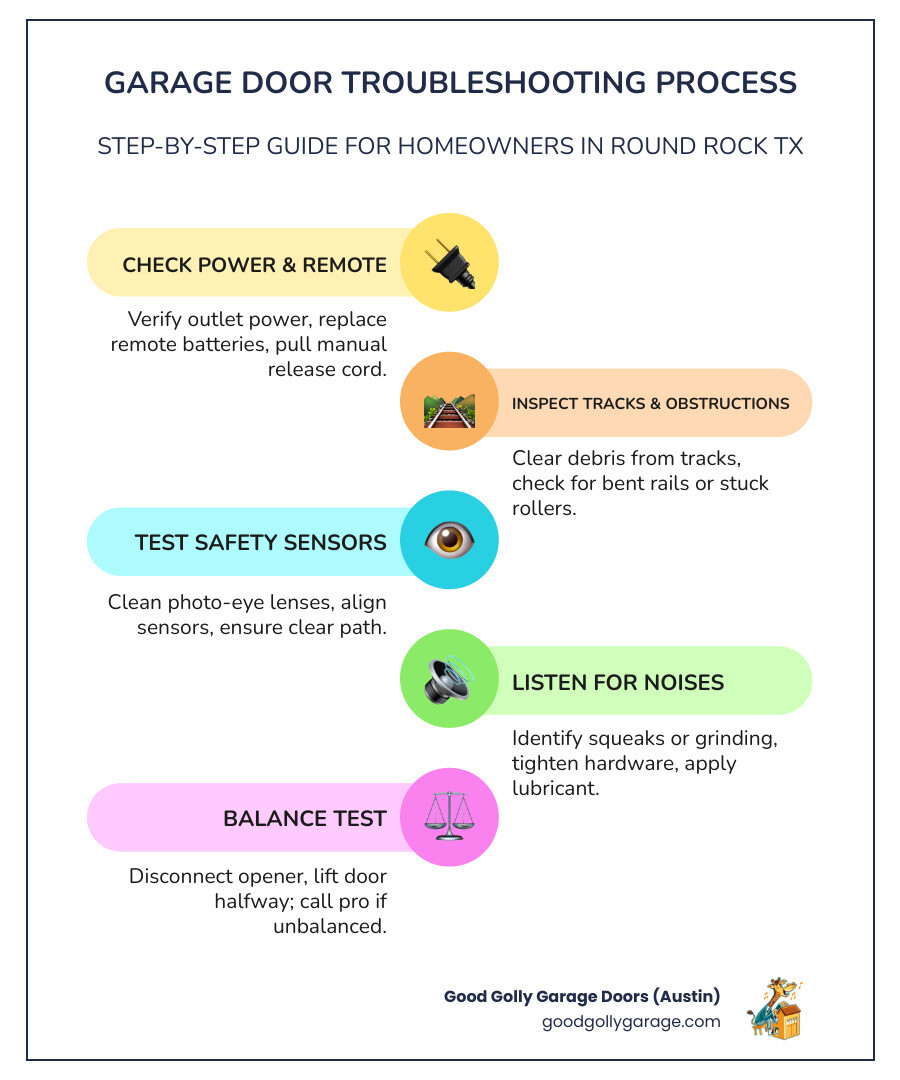
It’s the classic Monday morning nightmare: you press the button, and… nothing. Before you panic about being late to work, start with the basics. First, ensure the opener is actually plugged into a working power outlet. It sounds simple, but a tripped breaker or a loose plug is a frequent culprit.
Next, check your remote. If the wall station works but the remote doesn’t, you likely just need fresh batteries. If the remote still won’t trigger the door after a battery swap, you might be dealing with a signal interference issue or a failing transmitter. We offer specialized Garage Door Remote Repair in Round Rock for those tricky electronics that refuse to cooperate.
Other things to check:
- The Manual Release: Ensure the red emergency cord hasn’t been pulled, disconnecting the carriage from the opener chain or belt.
- Track Obstructions: Even a small pebble or a stray garden tool in the track can trigger the safety reverse mechanism.
- The Motor: If you hear a humming sound but the door doesn’t move, the motor is trying to work, but the door might be physically locked or held back by a broken spring.
Solving Garage Door Repair Troubleshooting in Round Rock TX for Noisy Systems
A noisy garage door is more than just an annoyance for your neighbors; it’s usually a cry for help from the hardware. Squeaking, grinding, or rattling typically indicates that parts are rubbing together without proper lubrication or that hardware has vibrated loose over time.
To quiet things down, we recommend a “tighten and lube” approach. Use a wrench to snug up any loose nuts or bolts on the tracks and hinges. However, be extremely careful not to touch any bolts painted red, as these are under high tension. For the moving parts, always use a dedicated silicone-based or lithium garage door lubricant. Avoid WD-40, as it is a degreaser that will actually attract more dirt and grime over time.
If the noise persists, it might be time for an upgrade. Switching from old steel rollers to high-quality nylon rollers can significantly reduce the decibel level of your door. Regular Preventive Garage Door Maintenance in Round Rock is the best way to keep your system whisper-quiet. For a full breakdown of how to maintain your system, see our Garage Door Maintenance in Round Rock TX Complete Guide.
Step-by-Step Guide to Safe DIY Troubleshooting
Safety is our number one priority. While some aspects of Garage Door Repair Troubleshooting in Round Rock TX are perfectly safe for a handy homeowner, others involve extreme tension that can be life-threatening.
A great place to start your DIY journey is with the safety sensors. These “photo-eyes” sit about six inches off the ground on either side of the door. If they are dirty or knocked out of alignment, your door will refuse to close as a safety precaution. Simply wiping the lenses with a soft cloth and ensuring they are pointed directly at each other can solve a “door won’t close” issue in seconds.
Consistent Garage Door Maintenance in Round Rock involves a few simple tasks you can perform every few months. To help you decide when to pick up the tools and when to pick up the phone, here is a quick reference:
| Task | DIY Friendly? | Frequency |
|---|---|---|
| Clean and Align Sensors | Yes | Monthly |
| Lubricate Rollers and Hinges | Yes | Every 6 Months |
| Tighten Loose Hinges/Bolts | Yes | Annually |
| Replace Remote Batteries | Yes | As Needed |
| Test Door Balance | Yes | Annually |
| Replace Torsion Springs | NO | Professional Only |
| Repair Frayed Cables | NO | Professional Only |
| Fix Off-Track Door | NO | Professional Only |
Learning How to Start a Maintenance Routine is the single best way to extend the life of your door and avoid emergency service calls.
Managing Garage Door Repair Troubleshooting in Round Rock TX for Safety Sensors
If your garage door starts to close and then immediately reverses, your sensors are likely the culprit. Most modern systems use LED indicator lights to tell you what’s wrong. Typically, a solid green light on both sides means everything is aligned. If you see a flickering light or a yellow/orange light, the “beam” is broken.
Check for:
- Path Blockage: Even a spiderweb or a hanging leaf can trip the sensor.
- Lens Cleanliness: Dust from Round Rock’s dry spells can coat the glass.
- Wiring Issues: Check the small wires leading to the sensors for any signs of fraying or damage from pets or weed-whackers.
If you find yourself constantly battling sensor issues, you might consider Smart Garage Door Opener Solutions, which often feature more robust diagnostic tools and smartphone alerts to tell you exactly why the door didn’t close.
Checking Garage Door Balance and Alignment
An out-of-balance door is a primary cause of premature opener failure. When a door is balanced, the springs do the heavy lifting, not the motor. To check this, pull the red emergency release cord to operate the door manually.
Lift the door halfway and let go. A well-balanced door should stay in place or move only slightly. If it slams shut or shoots upward, the spring tension is incorrect. This puts massive strain on your opener’s gears and motor. If you notice sagging sections or if the door feels incredibly heavy to lift by hand, it’s time to consult our Round Rock Best Opener Repair Guide or call us for a tension adjustment.
When to Stop Troubleshooting and Call a Professional
There is a point where DIY becomes dangerous. Garage doors are the largest moving objects in most homes, weighing hundreds of pounds and held up by springs under enough tension to cause severe injury.
If you hear a loud bang from the garage that sounds like a gunshot, that is almost certainly a torsion spring snapping. Do not attempt to open the door, even manually, as it will be incredibly heavy and could fall unexpectedly. Similarly, if you see a cable that has snapped or is visibly frayed, the door is no longer safe to operate.
Other situations requiring Emergency Garage Door Repair in Round Rock include:
- Off-Track Doors: If the door is hanging crooked or has come out of the metal tracks, trying to move it can cause it to crash down or permanently damage the door panels.
- Snapped Cables: These are the “muscles” of your door; without them, the door is a safety hazard.
- Complete Opener Failure: If the motor is smoking or making a heavy grinding noise, you likely need Garage Door Opener Repair Services to replace internal gears or the logic board.
For complex issues, it’s always better to rely on Professional Garage Door Repair Troubleshooting in Round Rock TX to ensure the job is done right the first time.
Frequently Asked Questions About Round Rock Garage Doors
How often should I perform maintenance in Round Rock’s climate?
We recommend a professional “tune-up” at least once a year. Round Rock’s climate involves high humidity and extreme summer heat, which can dry out lubricants and cause metal components to fatigue faster than in milder regions. Homeowners should perform their own visual checks and lubrication every six months to stay ahead of the weather. For more details, see our Preventive Maintenance Tips.
What does a loud bang from the garage mean?
As mentioned earlier, a loud bang is the classic sound of a torsion spring breaking. These springs have a limited lifespan, usually measured in “cycles” (one open and one close). When they reach their limit, they snap with significant force. This is a high-priority safety hazard. If this happens to you, look into our Emergency Repair Solutions immediately.
When is it time for a full replacement instead of a repair?
If your door is over 15–20 years old and requires frequent, costly repairs, replacement is often the more economical choice. Other reasons for a new door include significant structural damage (like a car hitting the door), poor energy efficiency, or a desire to increase your home’s curb appeal. If you’re considering an upgrade, check out our guides on Garage Door Replacement in Round Rock and our Residential Installation Guide.
Conclusion
At Good Golly Garage Doors, we know that a malfunctioning garage door is more than just a minor inconvenience — it’s a disruption to your family’s safety and daily routine. Whether you’re dealing with a simple sensor misalignment or a dangerous broken spring, our team is dedicated to providing the Round Rock community with fast, transparent, and reliable service.
We pride ourselves on our “human touch,” ensuring you understand exactly what’s wrong and how we’re going to fix it. Don’t let a small squeak turn into a major breakdown. If you’ve tried the troubleshooting steps above and your door is still acting up, we’re here to help.
Schedule Professional Garage Door Repair with Good Golly Garage Doors today and get your home back on track!
 All Service Areas