
Emergency Garage Door Repair in Spanish Oaks, TX
Struggling with a broken garage door in Spanish Oaks? Get immediate, 24/7 emergency repair services to ensure your door's functionality and security. Contact us now!
Is Your Garage Door Stuck or Broken?
When your garage door fails, it is not just a minor inconvenience; it is an immediate breach in your home’s security and a complete halt to your daily mobility. If your door is unresponsive, off-track, or creating a safety hazard, request immediate service.
Residents in Spanish Oaks know that a malfunctioning garage door often happens at the worst possible time—early in the morning before a commute or late at night during a storm. You need a solution that prioritizes speed without sacrificing the quality of the mechanical work. Good Golly Garage Doors provides rapid, reliable repair services designed to restore peace to your daily routine and security to your property.
- Same-day service ensures your door is operational within hours, not days.
- 24/7 availability means we are on call whenever an emergency strikes.
- Expert technicians deliver efficient, high-quality repairs on all major brands and models.
All services come with a warranty for parts and labor, ensuring your investment is protected long after the repair is complete.
What You Get With Our Emergency Service
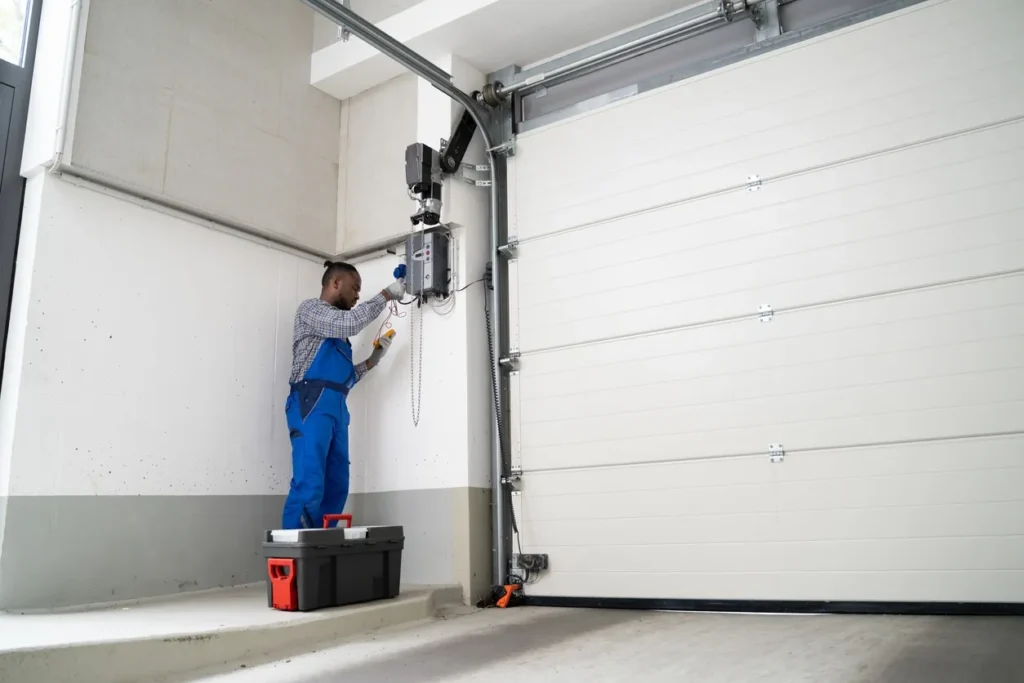
When you call for emergency assistance, you are looking for more than just a quick patch; you need a comprehensive restoration of the door’s mechanical integrity. A garage door system is comprised of hundreds of moving parts, and failure in one area often indicates stress in another. Our emergency response team arrives equipped to handle high-tension failures and structural issues immediately.
We understand that in Spanish Oaks, security and aesthetics are paramount. A door stuck halfway open exposes your belongings and entry points to the public. Our service scope includes a full diagnostic of the counterbalance system, electrical inputs, and physical hardware. We do not make you wait for standard business hours to secure your home. Whether it is a snapped cable at midnight or a burned-out motor on a Sunday, our trucks are stocked with high-cycle springs, commercial-grade cables, and reinforced hinges to finish the job in a single visit.
You can expect the following during an emergency call:
- Rapid Dispatch: We prioritize calls where vehicles are trapped, or the home is insecure.
- Safety Inspection: Technicians immediately secure the heavy door panels to prevent accidental free-fall during the repair.
- Full Inventory Access: Our mobile units carry parts for the most common lift systems, minimizing the need for return trips.
- Noise Mitigation: We utilize nylon rollers and belt-drive adjustments to ensure the repair leaves your door quieter than before.
How Our Garage Door Repair Process Works
Navigating a repair should not be a guessing game. We utilize a structured, transparent process to ensure you understand exactly what is broken, why it failed, and what is required to fix it permanently. We move quickly from assessment to execution so you can return to your day.
- Assessment and Diagnostics: First, the technician performs a multi-point safety check. This involves testing the balance of the door by disconnecting the opener and manually lifting the panels. If the door feels heavy or shoots up, the spring tension is incorrect. We inspect cables for fraying, rollers for bearing failure, and the track for misalignments that cause friction.
- Clear Explanation and Quote: Next, before any tool touches your door, you receive a detailed explanation of the failure. We explain the difference between a simple adjustment and a necessary part replacement. You receive a firm quote for the work required. There are no hidden fees or surprise charges added after the work begins.
- The Repair Phase: Then, the technician executes the repair. This often involves winding high-tension torsion springs, replacing drum cables, or resetting the logic board on your operator. We adhere to strict safety protocols, especially when dealing with the counterbalance system, which is under extreme tension and can be dangerous for untrained individuals.
- Testing and Calibration: Finally, we do not leave until the door passes a full cycle test. We adjust the limit switches to ensure the door closes tightly against the concrete without reversing, and we test the safety eye sensors to guarantee they reverse the door upon detecting an obstruction. We also lubricate all moving metal parts to prevent future wear.
Critical Components We Repair and Replace
Understanding what has gone wrong helps you make informed decisions. Most emergencies stem from a few specific components that bear the weight of the door’s operation.
- Torsion and Extension Springs: The springs do the heavy lifting, not the opener. Springs have a rated cycle life (usually 10,000 to 20,000 cycles). When a spring breaks, it sounds like a gunshot, and the door becomes dead weight—often too heavy to lift manually. We replace these with high-cycle tempered steel springs matched exactly to the weight of your door panels.
- Lift Cables: Cables work in tandem with springs. In the humid and heat-variable climate of Texas, moisture can lead to rust, eventually causing cables to snap. If a cable breaks, the door may tilt dangerously to one side. We install galvanized, aircraft-grade cables designed to resist corrosion and support heavy loads.
- Garage Door Openers: If the motor hums but the chain or belt doesn’t move, the internal gear may be stripped. If the wall button works but the remotes do not, the receiver logic board may have failed due to a power surge. We repair internal components when possible or install new, smart-enabled units that offer battery backup.
- Off-Track Doors: If a door is hit by a vehicle or closes on an obstruction, the rollers can pop out of the track. This is a critical situation; forcing the door can cause the panels to buckle or the glass to shatter. We carefully reset the door, align the vertical and horizontal tracks, and check the structural integrity of the rollers.
When a Replacement Is Better Than a Repair
While our goal is always to repair your existing system to save you time and money, there are specific scenarios where continuing to patch an old door becomes a financial drain and a safety risk. Making the decision to replace rather than repair depends on the age of the unit, the extent of the damage, and safety compliance.
- Catastrophic Structural Damage: If the steel sections are cracked, bent, or bowed (often from a vehicle impact), the structural integrity of the door is compromised. A compromised section cannot support the wind load required in our region. If two or more sections are damaged, the cost of individual panel replacement often exceeds the cost of a brand-new door system.
- Lack of Safety Features: Doors installed prior to 1993 may lack modern safety reversal systems (infrared eyes). If your opener malfunctions and lacks these mandated safety sensors, we strongly recommend a replacement to ensure the safety of pets and children. Modern systems also include rolling code technology to prevent code grabbing by thieves.
- Recurring Mechanical Failures: If you are calling for repairs every six months, the system has likely reached the end of its viable life. Metal fatigue affects tracks, hinges, and springs. Continuing to replace individual parts on a 20-year-old system is often less cost-effective than installing a new, warranty-backed system that offers better insulation and quieter operation.
Local Factors Affecting Your Garage Door
Operating a garage door in Spanish Oaks presents specific challenges due to the regional climate. The environmental conditions in this part of Texas directly impact the longevity of your hardware.
- Extreme Heat Impact: Summer temperatures frequently exceed 90°F. Heat causes metal tracks and springs to expand, which can lead to binding if the door is not properly aligned. Furthermore, extreme heat thins out standard lubricants, causing them to drip off and leaving metal parts unprotected. We use lithium-based grease that remains stable in high temperatures to prevent grinding.
- Moisture and Humidity: Spring and fall bring precipitation that can impact the wooden framing around your garage door or cause rust on bottom brackets. Water infiltration at the seal can also damage the electronics in the safety sensors. We check the bottom weather stripping and perimeter seals to ensure your garage remains dry and energy-efficient.
- Soil Shifting: The ground conditions in our area can shift, causing the concrete floor of your garage to settle unevenly. Even a slight shift can throw the door’s alignment off, causing the locking mechanism to jam or the door to reverse unexpectedly. Our technicians check the level of the track relative to the floor to account for these subtle structural shifts.
Why Professional Service Matters
Attempting DIY repairs on a garage door is one of the most dangerous home maintenance tasks. The counterbalance system holds tension capable of lifting a 300-pound object; releasing that tension incorrectly can result in severe injury or property damage. Professional intervention guarantees that the repair is conducted safely and meets all manufacturer specifications.
- Licensed and Insured Work: You need the assurance that the technician working on your property is vetted and backed by proper insurance. This protects you from liability in the event of an accident during the repair.
- Access to OEM Parts: We source parts directly from major manufacturers. This ensures that a replacement spring or circuit board is not a generic “one-size-fits-all” component, but a part engineered specifically for your door’s weight and lift profile.
- Compliance with Local Standards: Homes in this area often have specific HOA guidelines or aesthetic standards. We ensure that any visible hardware or replacement panels match the existing style of your home, maintaining your curb appeal and property value.
Maintenance to Prevent Future Emergencies
Once your emergency is resolved, proactive maintenance is the key to preventing a recurrence. A garage door is the largest moving object in your home and requires regular attention to function safely.
- Lubrication Schedule: Metal-on-metal contact creates friction, the enemy of your door system. We recommend lubricating rollers, hinges, and springs every six months using a non-silicone, garage-specific lubricant. Do not use WD-40, as it is a solvent that strips away existing grease and attracts dust.
- Balance Testing: Every few months, disconnect the opener (with the door closed) and lift the door manually. It should lift smoothly and stay open around three to four feet off the ground. If it slams down, the springs are losing tension and require professional adjustment.
- Sensor Alignment: Keep the photo-eye sensors clean and free of cobwebs. If the LED lights on the sensors are blinking, they are misaligned. A simple adjustment to face them directly toward each other can prevent the door from refusing to close.
Secure Your Home Today
A broken garage door leaves your home vulnerable and your schedule in chaos. You do not need to wait days for a solution or struggle with a heavy door manually. Good Golly Garage Doors offers the expertise and immediate response required to handle any mechanical failure, from snapped cables to burnt-out openers.
We provide transparent pricing, industrial-grade parts, and a commitment to safety that gives you confidence in your home’s security. Whether you are dealing with a noisy door or a complete system failure, our team is ready to restore functionality immediately.
Don’t let a broken door compromise your safety. Contact us now to dispatch a technician to your home.
Proudly Serving Austin, TX, and Surrounding Areas
From the neighborhoods of Austin to Round Rock and Buda, we provide the best garage door services you can find across the area. Whether it’s the impact of Texas heat and sudden storms on garage door components, we ensure our solutions are tailored to your needs. Wherever you are, Good Golly Garage Doors is ready to deliver.
View All Cities
 All Service Areas