Flashy Hero Title Second Line
Restore Security and Access Immediately After a Garage Door Failure
When your garage door fails, it creates an immediate breach of security for your home and locks away your primary mode of transportation. Good Golly Garage Doors responds with urgency to restore functionality and secure your property in Austin, ensuring you aren’t left vulnerable or stranded.
Request immediate emergency service here to secure your home today.
- Receive rapid dispatch for same-day repair services regardless of the hour or weather conditions.
- Rely on experienced technicians equipped to handle high-tension spring failures, derailed tracks, and opener malfunctions on the spot.
- Benefit from transparent, upfront pricing that prioritizes the solution without hidden emergency fees.
All repairs are conducted in full compliance with local building codes, backed by comprehensive warranties and accessible financing options for unexpected replacements.
Immediate Resolution for Critical System Failures
An emergency garage door situation usually falls into one of two categories: the door will not open, trapping your vehicle inside, or the door will not close, leaving your home exposed to theft and the elements. In either scenario, the mechanism has likely suffered a catastrophic failure that renders standard operation impossible. Waiting for a standard appointment slot is rarely an option when the safety of your home is compromised.
Our emergency service focuses on triage and immediate rectification. The priority is to stabilize the heavy door panels, release tension from compromised components, and restore the travel path of the door. This service covers the spectrum of mechanical and electrical failures that occur without warning.
Addressing High-Tension Spring Breaks
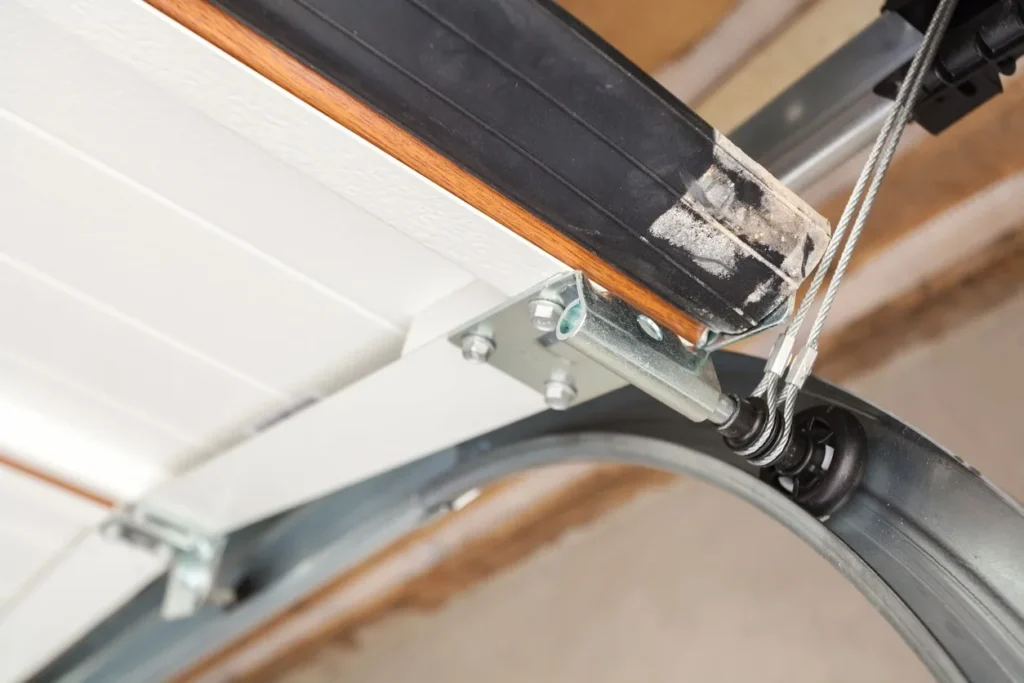
The most common cause of a trapped vehicle is a broken torsion or extension spring. These springs bear the immense weight of the door. When they snap, the door becomes dead weight that the electric opener cannot lift.
- Technicians arrive with a variety of spring sizes to match the specific weight and height of your door.
- The broken spring is safely unwound and removed.
- New springs are installed and wound to the precise tension required to balance the door, allowing it to be lifted manually with one hand.
Correcting Derailed and Off-Track Doors
A door that has come off its tracks is a dangerous projectile waiting to fall. This often happens when a vehicle clips the track or a lift cable snaps, causing the door to hang at a precarious angle.
- The service team secures the door panels to prevent them from falling completely.
- Using heavy-duty equipment, the door is realigned into the vertical and horizontal tracks.
- Rollers are inspected for damage and replaced if the stem has bent during the derailment.
- The tracks are adjusted to ensure the gap between the door and the frame is uniform, preventing future binding.
Resolving Opener Malfunctions and Electrical Faults
Sometimes the mechanical hardware is intact, but the motorized opener refuses to engage. This often happens during extreme weather or power surges.
- Diagnostic tools are used to test the capacitor, logic board, and gear assembly within the motor unit.
- If the gear assembly is stripped, it is replaced to restore the drive chain or belt movement.
- If the logic board has shorted out, technicians program a replacement board or bypass the unit to secure the door manually until a full replacement is feasible.
The Emergency Repair Execution Process
When you request emergency service, the goal is to minimize downtime and eliminate safety hazards efficiently. The process removes the guesswork and follows a strict protocol to ensure the door is safe to operate immediately after the technician leaves.
- Initial Site Assessment and Stabilization: Upon arrival, the technician first assesses the position of the door. If the door is stuck open or hanging crookedly, the immediate step is to clamp the track and brace the sections. This prevents the door from crashing down while the technician inspects the specific point of failure.
- Diagnostic and Firm Quote: Once the door is stabilized, the technician identifies exactly what broke and, more importantly, why it broke. For example, a cable may have snapped because a bearing plate seized. You receive a clear explanation of the root cause and a firm price for the repair work required. There are no open-ended estimates; you know exactly what the cost is before tools are applied.
- Part Replacement and Calibration: The technician retrieves the necessary components from the fully stocked truck. The damaged parts are removed, and new hardware is installed. Critical to this step is calibration. Installing a spring is not enough; it must be wound to the specific inch-pounds of torque required for your specific door panels.
- Safety Inspection and Testing: Finally, the door is run through several full cycles. The technician tests the safety reverse mechanism (the photo-eye sensors) to ensure the door auto-reverses if an object blocks the path. The down-force limit is adjusted so the door seals tightly against the concrete without crushing the bottom seal.
Assessing Damage: Repair vs. Replacement Decisions
In emergency situations, the instinct is often to patch the problem quickly. However, there are specific thresholds where a repair is essentially a sunk cost, and replacement is the more financially sound and safe decision. Technicians provide the data you need to make this choice objectively.
When Repair is the Correct Path
If the structural integrity of the individual door sections is sound, repair is usually the best option.
- Single Component Failure: If a single spring snaps but the cables, tracks, and rollers are in good condition, replacing the spring returns the door to 100% functionality.
- Sensor Misalignment: If the door won’t close solely because the safety eyes were bumped, a simple realignment and wiring check resolves the issue permanently.
- Gear Kit Stripping: If an opener motor runs but the chain doesn’t move, replacing the internal plastic gears is a standard fix that extends the life of the opener by several years.
When Replacement is Necessary
There are instances where repair is structurally unsafe or fiscally irresponsible.
- Compromised Door Sections: If a vehicle has hit the door and bent the steel sections, the structural integrity is gone. A bent section cannot be hammered flat; it will always buckle under the pressure of opening and closing, leading to future track damage.
- Rotted Wood Jambs or Headers: If the hardware has torn out of the wood frame due to rot or termite damage, reinstalling the hardware is dangerous. The frame itself must be addressed, or the door system must be replaced to fit a new framing structure.
- Obsolete Safety Standards: If the garage door opener was manufactured before 1993 and lacks modern safety sensor eyes, federal regulations often prevent technicians from repairing the unit. In this case, a replacement with a modern, code-compliant unit is required.
Regional Factors Affecting Garage Doors in Austin
The local environment plays a significant role in how garage doors fail and how they must be repaired. The climate in this region accelerates specific types of wear and tear that homeowners must be aware of. Good Golly Garage Doors tailors repair solutions to withstand these local stressors.
Humidity and Metal Corrosion
High humidity levels, common in the region, attack the unpainted metal components of a garage door system.
- Rusting Cables: Braided steel cables can rust from the inside out. While they may look fine superficially, the core strands can weaken and snap under tension. Emergency repairs often involve upgrading to galvanized or stainless steel cables that resist corrosion.
- Swelling Wood: For homes with carriage-house style wood doors or wood framing, humidity causes expansion. This changes the dimensions of the door relative to the track, causing the door to stick or bind. Adjustments must account for seasonal expansion and contraction.
Heat Impact on Electronics
The intense summer heat reaching into the 90s°F creates a hostile environment for garage door openers located near the ceiling, where temperatures are highest.
- Capacitor Failure: The starting capacitor in the motor acts like a battery to jolt the motor into action. Excessive heat can cause these to swell and burst, rendering the opener dead. Technicians carry heat-rated capacitors to prevent recurring failures.
- Logic Board Shorts: Heat can degrade the solder joints on the circuit boards. Diagnostic testing specifically checks for heat-related electrical intermittent failures.
Storm Resilience and Code Compliance
Severe weather, including thunderstorms and hail, poses a physical threat to the door panels.
- Wind Load Requirements: While primarily an inland concern, strong storm fronts can generate wind pressures that buckle standard doors. Repairs often involve adding reinforcement struts to the interior of the door panels to increase rigidity against positive and negative wind pressure.
- Seal Integrity: Heavy rain requires a perfect seal at the bottom of the door. If the bottom rubber seal is cracked or dry-rotted from the heat, water will penetrate the garage. Emergency service includes checking and replacing these seals to protect the interior from water damage.
Professional Standards and Service Protocols
The difference between a temporary patch and a permanent solution lies in the standards adhered to during the repair. Emergency service does not imply a shortcut in quality; it implies an acceleration of the timeline.
- Truck Inventory Readiness: A critical aspect of emergency service is the ability to finish the job in a single visit. Service vehicles are stocked with a wide array of high-cycle springs, cables, rollers, hinges, and opener parts. This eliminates the need to order parts and leave the home unsecured overnight.
- High-Cycle Component Upgrades: When a part fails, it is often replaced with a component of higher quality than the original builder-grade part. For example, replacing standard 10,000-cycle springs with 25,000-cycle springs ensures the repair lasts significantly longer than the original installation.
- Safety Verification: Before the technician departs, the system undergoes a multi-point safety check. This includes verifying the balance of the door (it should hover halfway up without falling or shooting up), checking the tightness of all lag bolts securing the track to the wall, and lubricating all moving parts to reduce friction and noise.
Securing Your Home and Schedule
A broken garage door disrupts your life and leaves your home accessible to anyone. The solution requires immediate, professional intervention that addresses the root cause of the failure while respecting the specific environmental challenges of the area. By choosing a service that prioritizes rapid response, code compliance, and quality parts, you transition from a state of emergency to a state of security without delay. For rapid, reliable restoration of your garage door system, contact us immediately.
 All Service Areas